




 Share








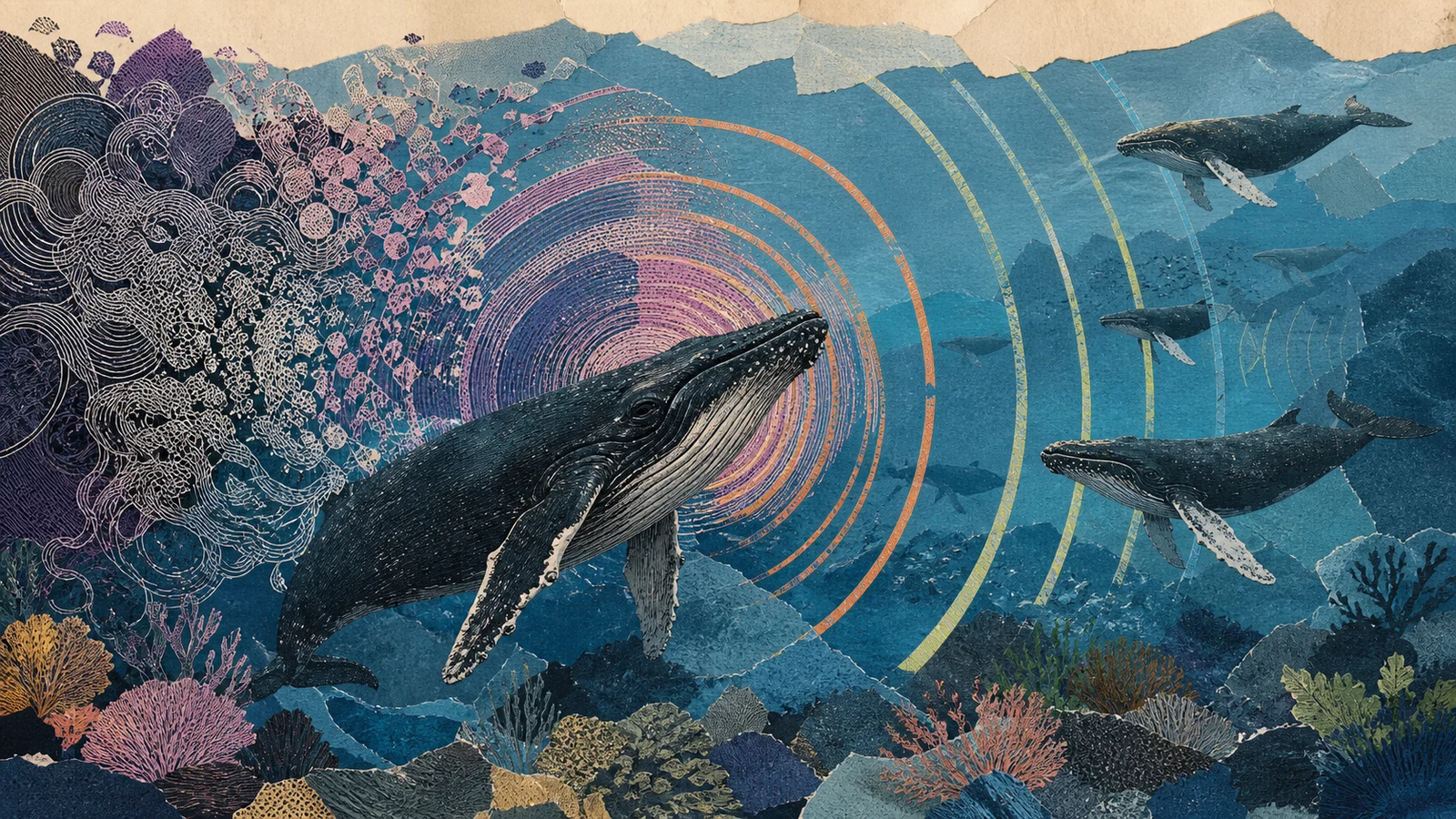
On a breeding ground, male humpback whales do not each perform a private composition. At a given time, singers in a population converge on the same long, ordered song. Small changes accumulate as whales copy one another, so the shared version usually becomes more elaborate from year to year.
Researchers followed eastern Australian humpbacks across thirteen consecutive years and found a second pattern interrupting that gradual evolution. Every few years, an existing song was rapidly replaced by a different song moving through the population. At the moment of replacement, the incoming version was consistently simpler than the elaborate one it displaced. Complexity then began climbing again until another turnover.
The team called these population-wide replacements cultural revolutions. The phrase describes social learning, not politics or protest. No whale votes to retire the old arrangement, and the study did not translate what any phrase means. Its evidence lies in structure and transmission: many males match a common sequence, neighboring populations can pass songs across vast distances, and a sudden simpler version resets the accumulation of detail. The ocean carries a tradition that is simultaneously stable enough to copy and restless enough to be overthrown.
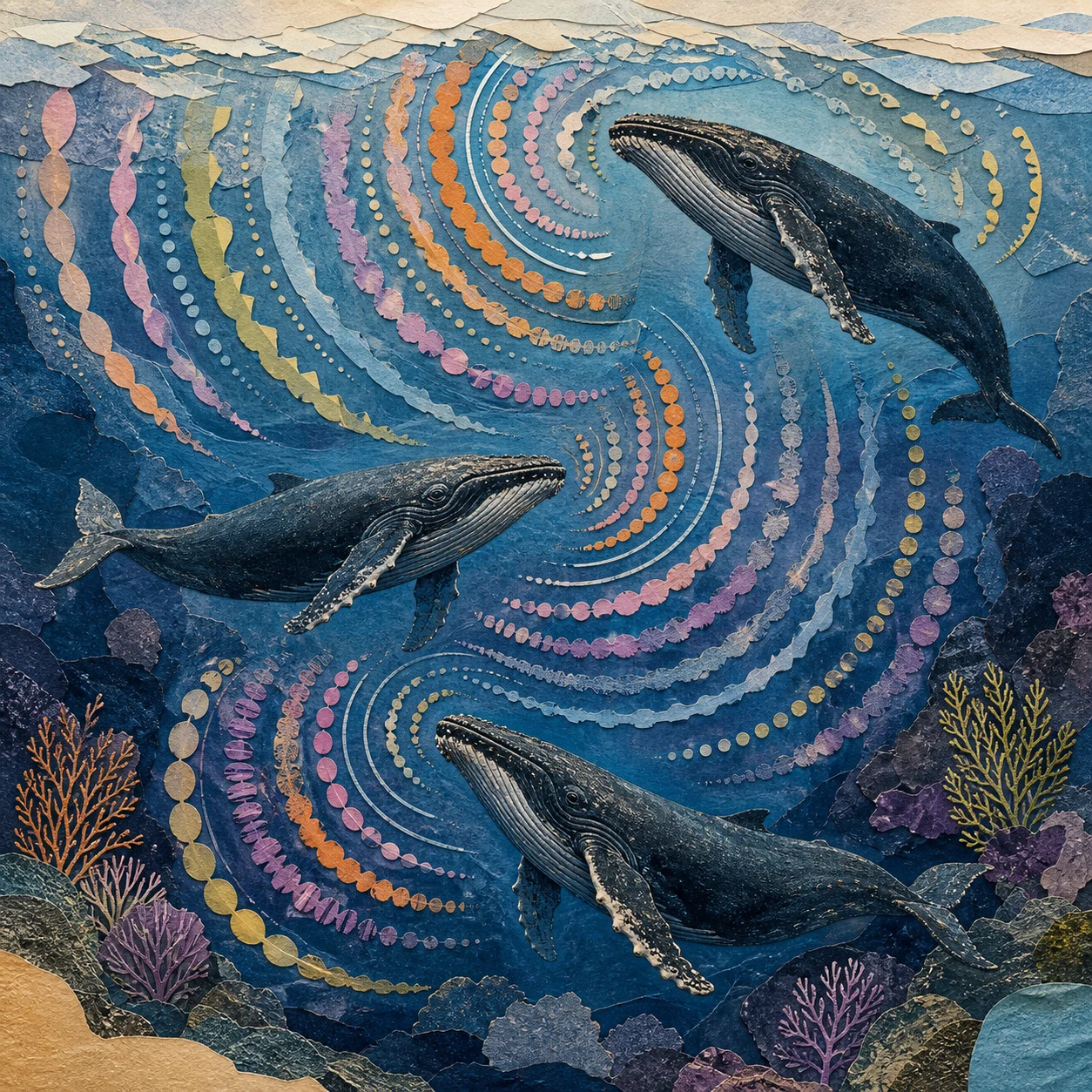
A humpback song is not one repeated note. Singers combine sound units into phrases, repeat phrases as themes, and cycle through themes in a long ordered performance. Researchers can therefore measure complexity through the number and variety of those components. That hierarchy makes a song detailed enough to track across recordings without pretending that human musical rules govern it.
The eastern Australian record covered thirteen consecutive years, allowing gradual adjustments and abrupt replacements to appear in the same dataset. Within a season, males in the population largely matched one another. Across seasons, the shared arrangement changed. The researchers could compare the complexity at the end of one song’s run with the newly arrived structure that followed it.
Gradual cultural evolution added material. Units changed, themes accumulated, and sequences became more elaborate as the population continued singing a version. Copying was not perfect duplication frozen in time. It carried modifications through the group. A song could remain recognizable while gaining enough parts to become harder to learn and reproduce.
The revolution broke that buildup. In each replacement examined, the new song was less complex than the one it displaced. The researchers proposed that learning capacity may impose a ceiling: as an arrangement becomes elaborate, a simpler unfamiliar song can be especially attractive or easier to acquire. That explanation is a hypothesis generated by the repeated pattern, not a measured limit inside a whale’s brain.
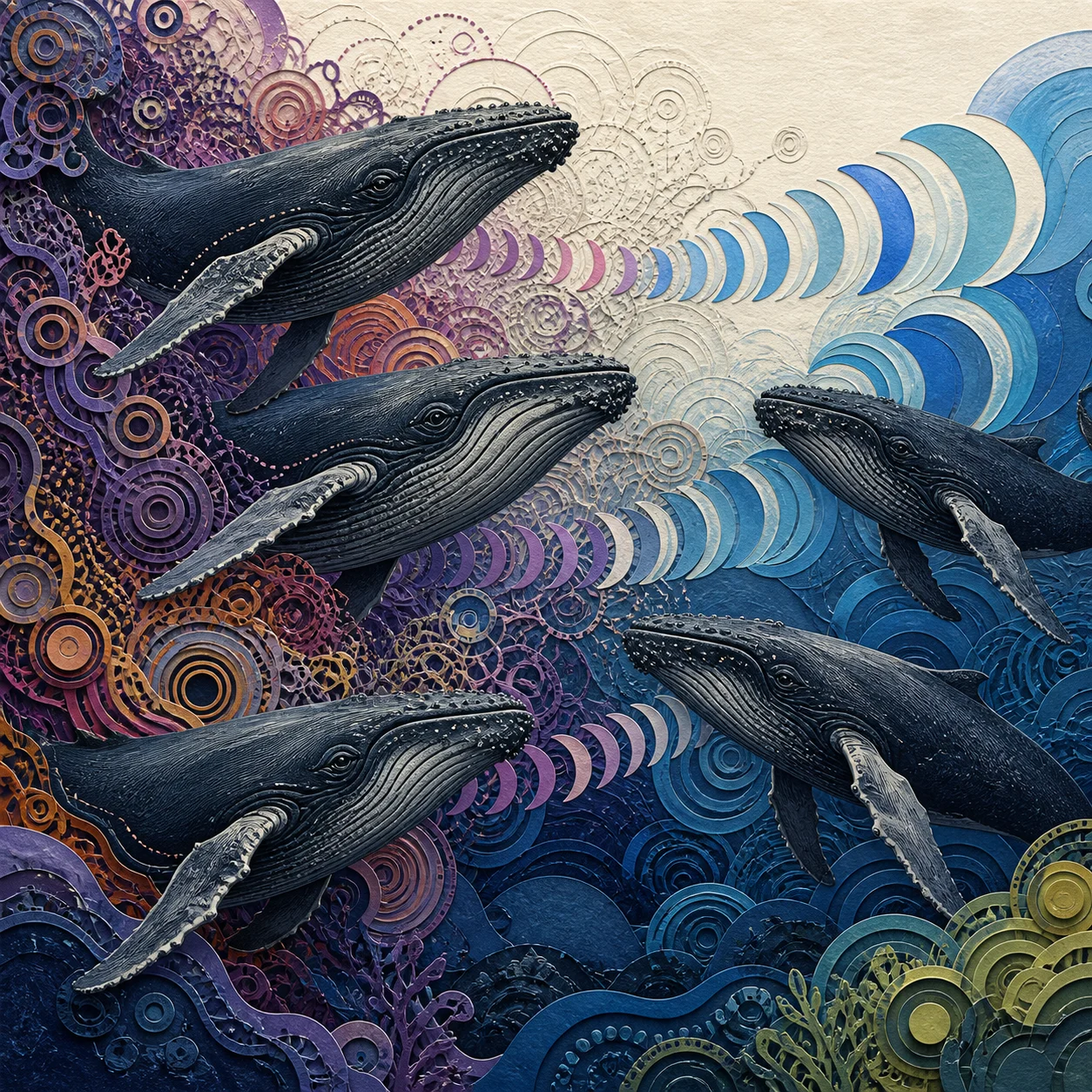
Song movement also reveals connection between populations. Humpback groups that breed in different South Pacific regions do not live as sealed acoustic islands. Cultural material can spread across them, sometimes over ocean-basin scales. A version arriving through contact can move rapidly enough that many singers abandon the local arrangement and converge on the newcomer.
Only males are known to produce these elaborate breeding songs, and their social function is still investigated. Song occurs strongly around breeding and migration, but structural change does not tell researchers exactly what listeners prefer or what a phrase communicates. The study measured shared form, complexity, and replacement. It did not decode a whale language.
Calling the pattern culture uses a biological definition: behavior is learned socially and transmitted among members of a group rather than being fixed solely by genes. Humpback song fits because individuals acquire a population’s current version and new forms spread between singers. The word does not require schools, archives, or conscious plans to preserve tradition.
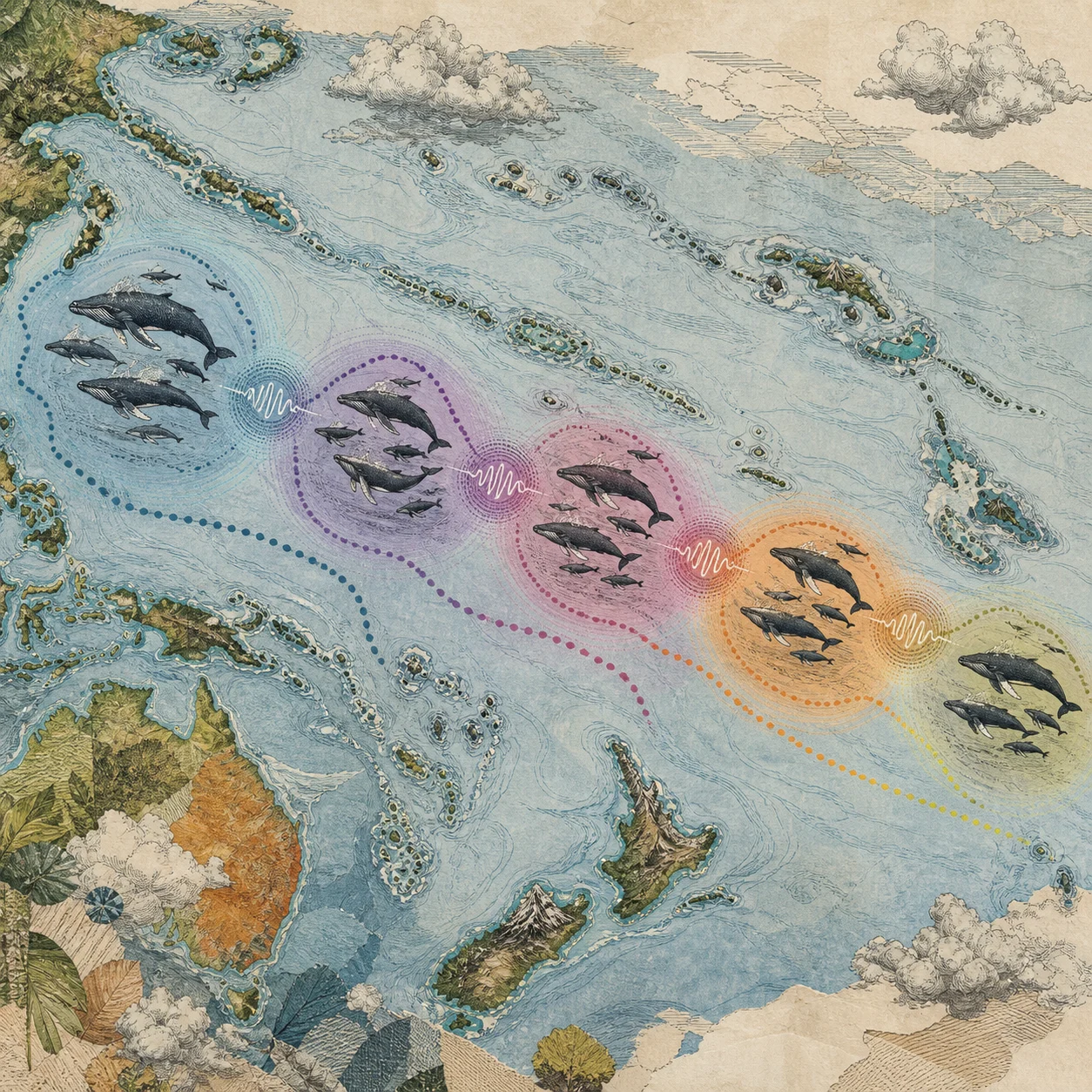
The scale is the startling part. A human tune can travel by recording, print, or broadcast. A whale’s version travels through animals that migrate, hear, remember, and sing. Yet a recognizable sequence can move across populations and become the new local standard. Each singer contributes sound; together they create a moving geographic record of contact.
The cycle keeps two forms of change in tension. Embellishment rewards continuity: copy the current song and add variation. Replacement rewards novelty: take up a substantially different, often simpler arrangement. Neither process needs a central leader. Population-level order can emerge from many whales attending to one another over repeated seasons.
A revolution in this research is therefore audible, not political. It marks the sudden turnover of a learned convention shared by male whales. The comparison is memorable because the old song can disappear so thoroughly, but the scientific result stays grounded in recordings: complex traditions build, simpler ones arrive, and the building starts again.
Recordings make the pattern visible after the sound has faded. Analysts can transcribe recurring units, group them into phrases and themes, and compare one season with the next. The categories describe organization rather than meaning. A repeated unit is evidence of structure; it does not tell us that the whale has named an object, issued a command, or composed with a human goal in mind.
Sources