




 Share








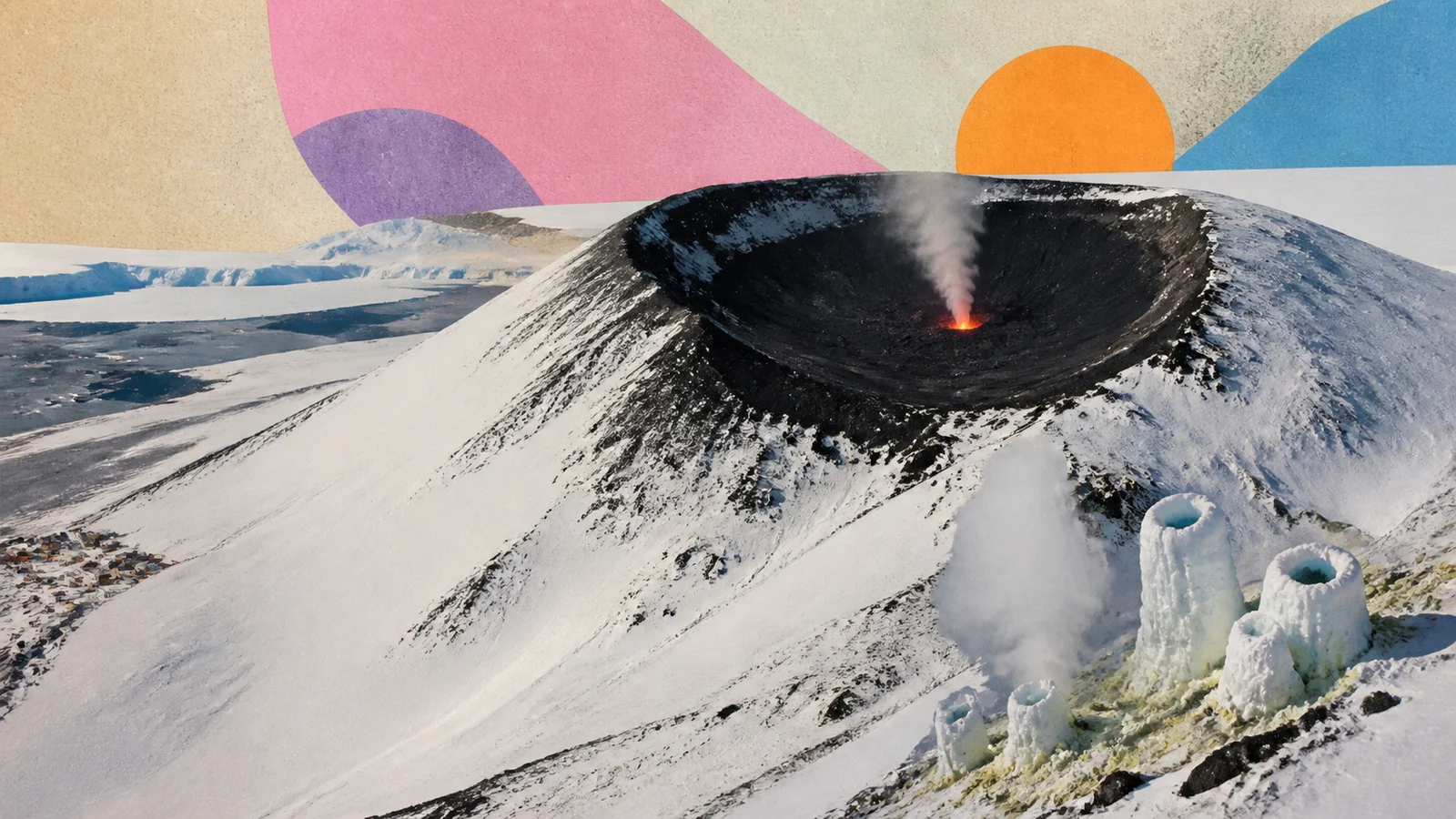
Mount Erebus rises 3,794 meters above Ross Island, within sight of Antarctica’s McMurdo Station. It is widely described as the world’s southernmost active volcano, and inside its summit caldera a lava lake has churned since at least 1972. Satellite thermal imagery can pick the hot opening from an island otherwise dominated by snow, ice, and shadow.
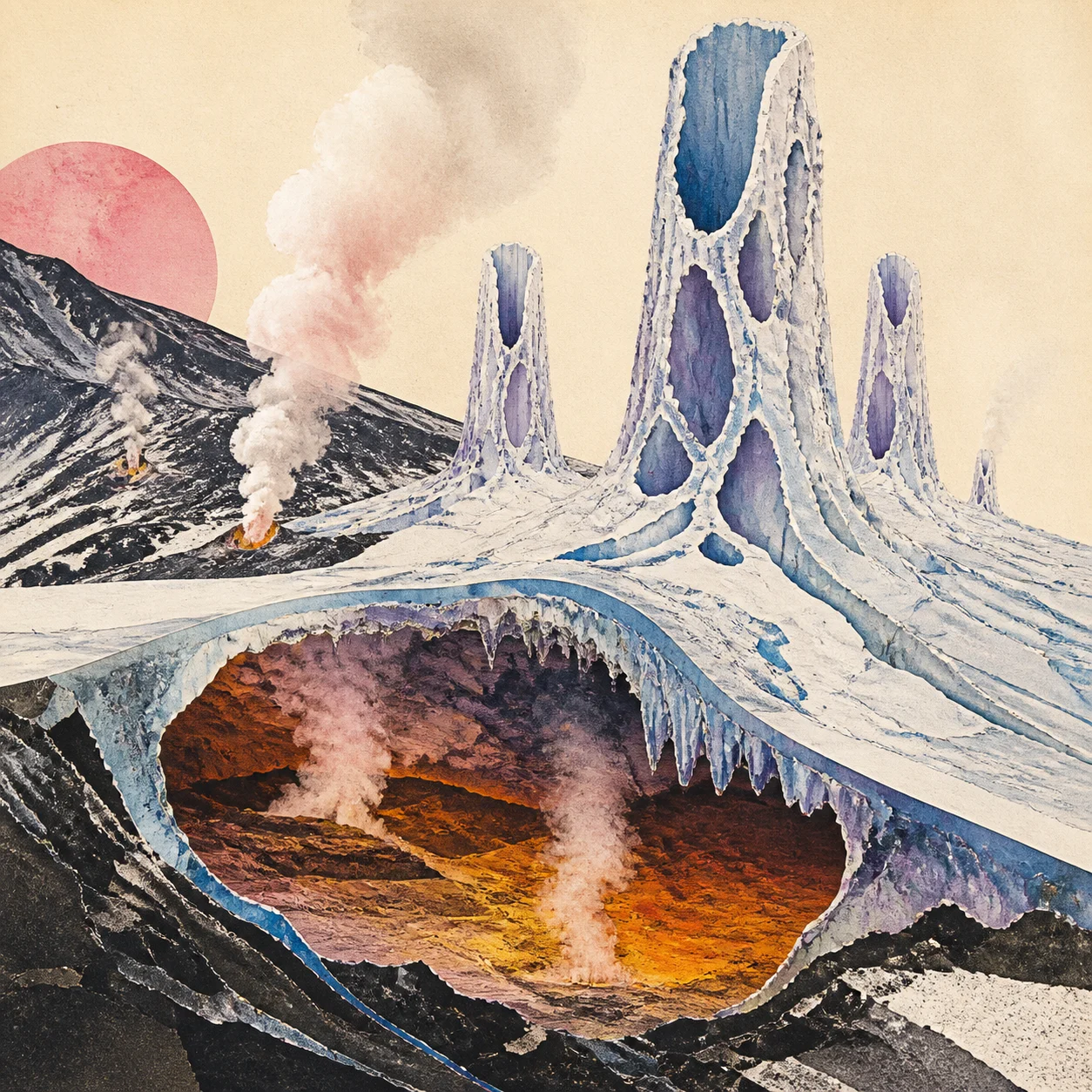
The lake is fed by unusual phonolite magma associated with a carbon-dioxide-rich continental rift system. Erebus regularly releases gas and steam, and occasional Strombolian bursts throw volcanic bombs from the vent. Farther downslope, heat and vapor escaping through fractures meet freezing air, building hollow ice towers over warm openings. Fire and ice do not cancel one another; they occupy different layers of one active mountain.
Researchers use seismometers, gas measurements, satellite instruments, and natural variations in Earth’s electric and magnetic fields to examine the system from surface to mantle. The volcano is not a giant exposed cauldron across Antarctica, nor does “southernmost” settle every possible definition of polar volcanism. Erebus is a specific persistent exception: a long-lived lake of molten rock breathing through a frozen landscape.
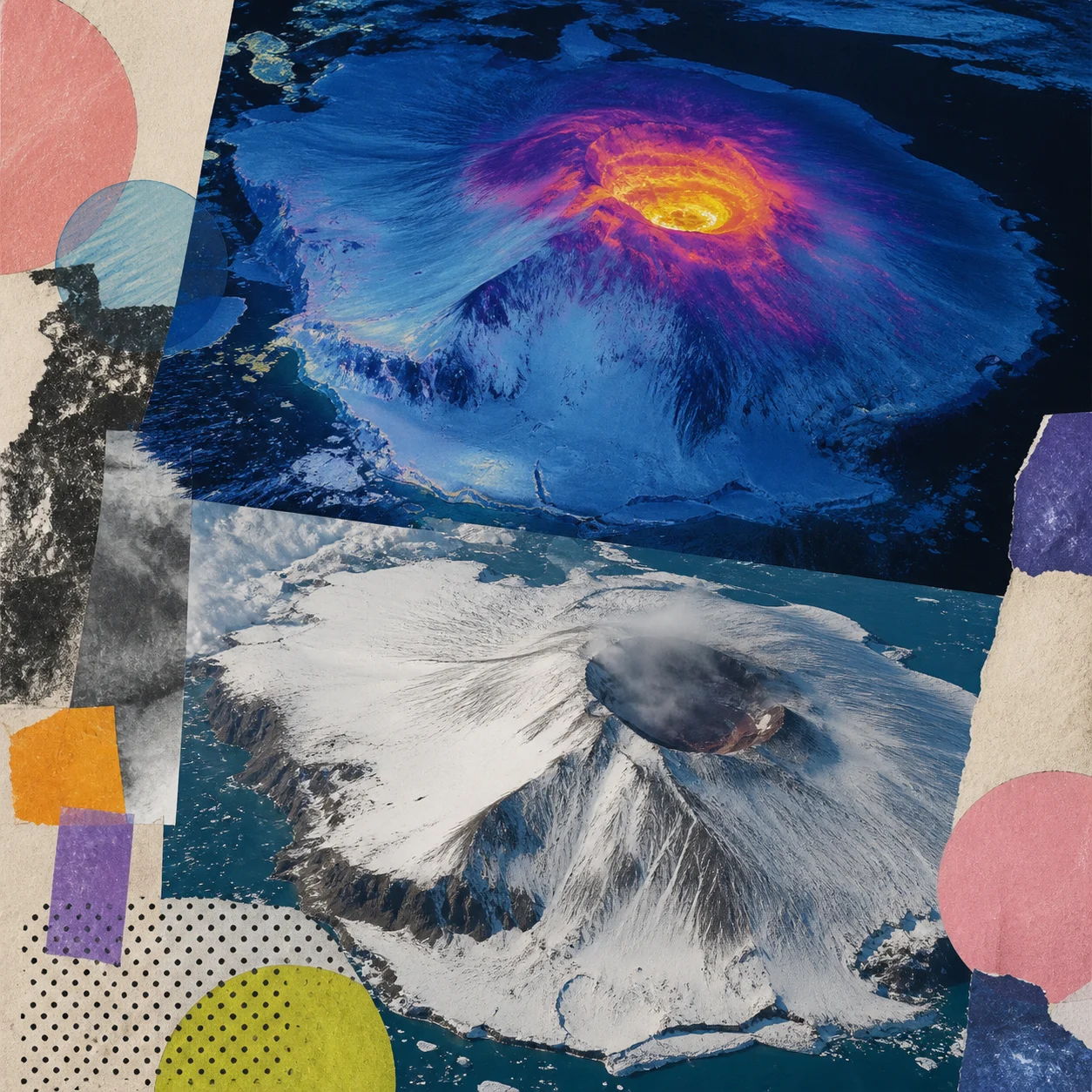
Ross Island was built by four volcanoes near the coast of West Antarctica. Erebus remains active while ice covers most of the surrounding terrain. Its summit reaches 12,447 feet, high enough that fieldwork combines volcanology with the hazards of altitude, cold, wind, and a remote polar environment. McMurdo Station sits roughly 25 miles away, close by Antarctic standards.
A lava lake is not simply rainwater replaced by magma. It is an exposed reservoir at the top of a connected volcanic plumbing system, maintained when heat and material arrive often enough to prevent a complete crust from sealing the surface. At Erebus, the lake has been continuously observed since at least the early 1970s, making it an unusually persistent window into an active conduit.
The molten rock is phonolite, an evolved alkaline composition relatively rich in sodium and potassium and comparatively poor in silica. Erebus belongs to a continental rift setting where crust and mantle are being pulled apart. The magma’s volatile system is dominated by carbon dioxide rather than the water-rich pattern more familiar at many volcanic arcs.
Those gases help connect deep and shallow activity. Geophysical measurements indicate a steep conduit rising through the upper mantle, then bending laterally in the deep crust before feeding shallower storage and the summit. Researchers interpret the bend as part of a structural valve that controls episodic movement of magma and carbon dioxide toward the phonolite chamber.
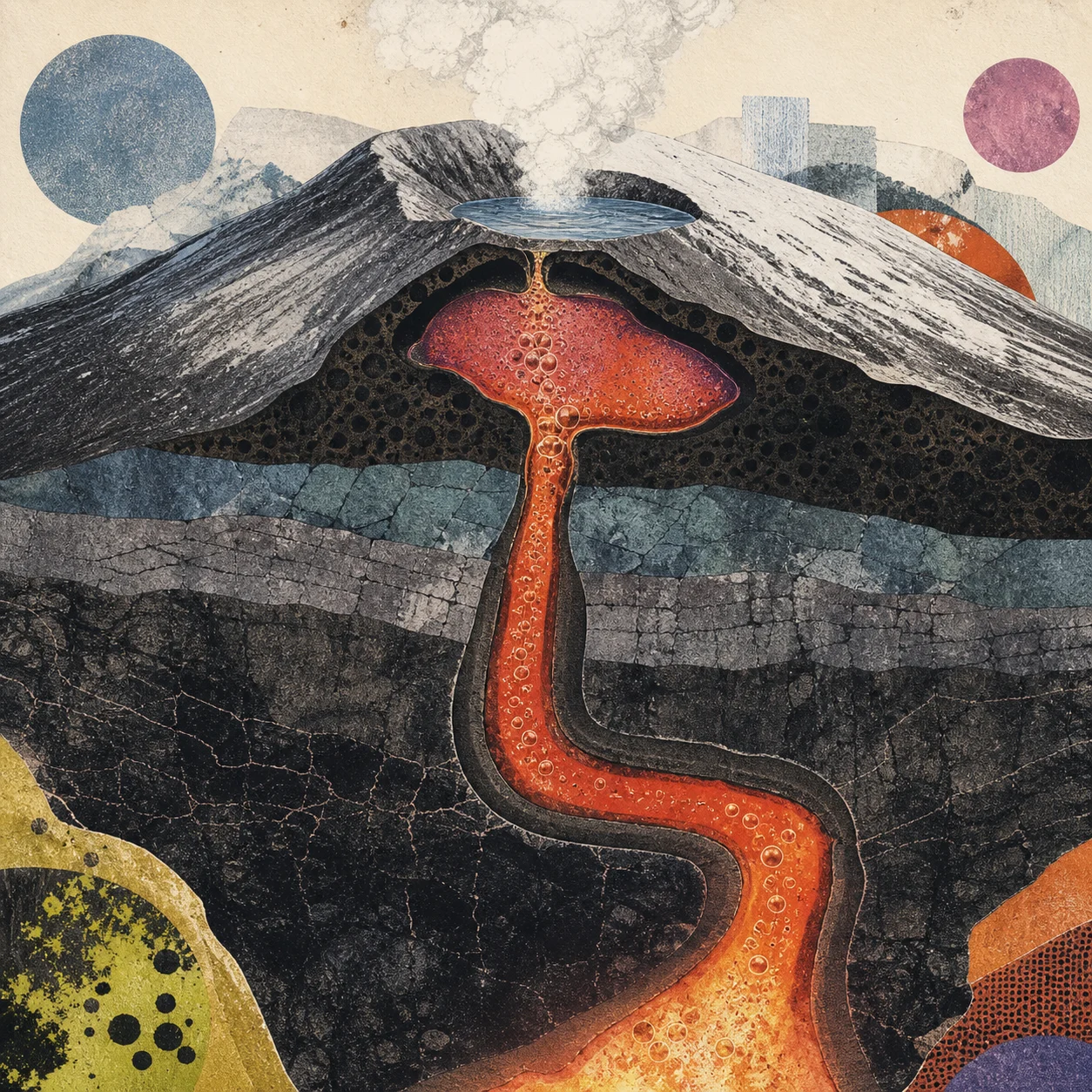
At the surface, the lake is restless rather than placid. Gas bubbles rise through molten rock, persistent emissions form a plume, and occasional Strombolian explosions eject bombs. The bursts are named for a style of discrete gas-driven eruption, not a constant continent-scale emergency. Activity can be vigorous inside the crater while research stations continue operating at a distance.
Ice creates a second architecture around warm ground. Steam and volcanic gases escaping through fissures can freeze layer by layer in Antarctic air, forming hollow towers above fumaroles. Beneath some vents, warmth carves cave-like spaces into ice. These structures change as heat, vapor, snow, and wind interact; they are temporary frozen chimneys, not stone monuments.
Remote sensing makes the contrast measurable. Thermal infrared instruments distinguish the hot lava lake and exposed rock from colder snow and shadow. Satellite views provide broad context, while instruments installed near the summit record seismic motion, gas chemistry, deformation, and visual activity. No single picture shows the entire path from mantle source to plume.
Researchers have also used natural variations in Earth’s magnetic and electric fields to probe conductivity beneath the mountain. Magma and fluids conduct differently from cold solid rock, allowing geophysicists to infer structures too deep to drill. The resulting model links a mantle source, a bend in the deep crust, shallower storage, and the visible lake without pretending the interior has been directly photographed.
Erebus entered written exploration history in 1841, when James Clark Ross and his crew sailed past and saw the volcano erupting. Members of Ernest Shackleton’s expedition reached the summit in 1908. Modern observation replaces heroic glimpses with repeated measurements, but the mountain still imposes distance, weather, and seasonal limits on every instrument and field team.
The phrase “fire and ice” works here because it points to actual energy flow. Magma remains molten in a sustained summit system. Heat and gas move upward through rock. Water vapor freezes at the surface into towers while glaciers and snowfields persist nearby. The juxtaposition is not a fantasy composite; it is a stack of environments separated by meters of elevation and material.
Its superlative deserves precision. Erebus is commonly identified as the southernmost active volcano, a claim about its location and current activity rather than the absence of every other volcanic or geothermal process beneath Antarctic ice. The lava lake is the stronger fact: open, observed, and maintained for decades in one of Earth’s coldest landscapes.
Sources