




 Share







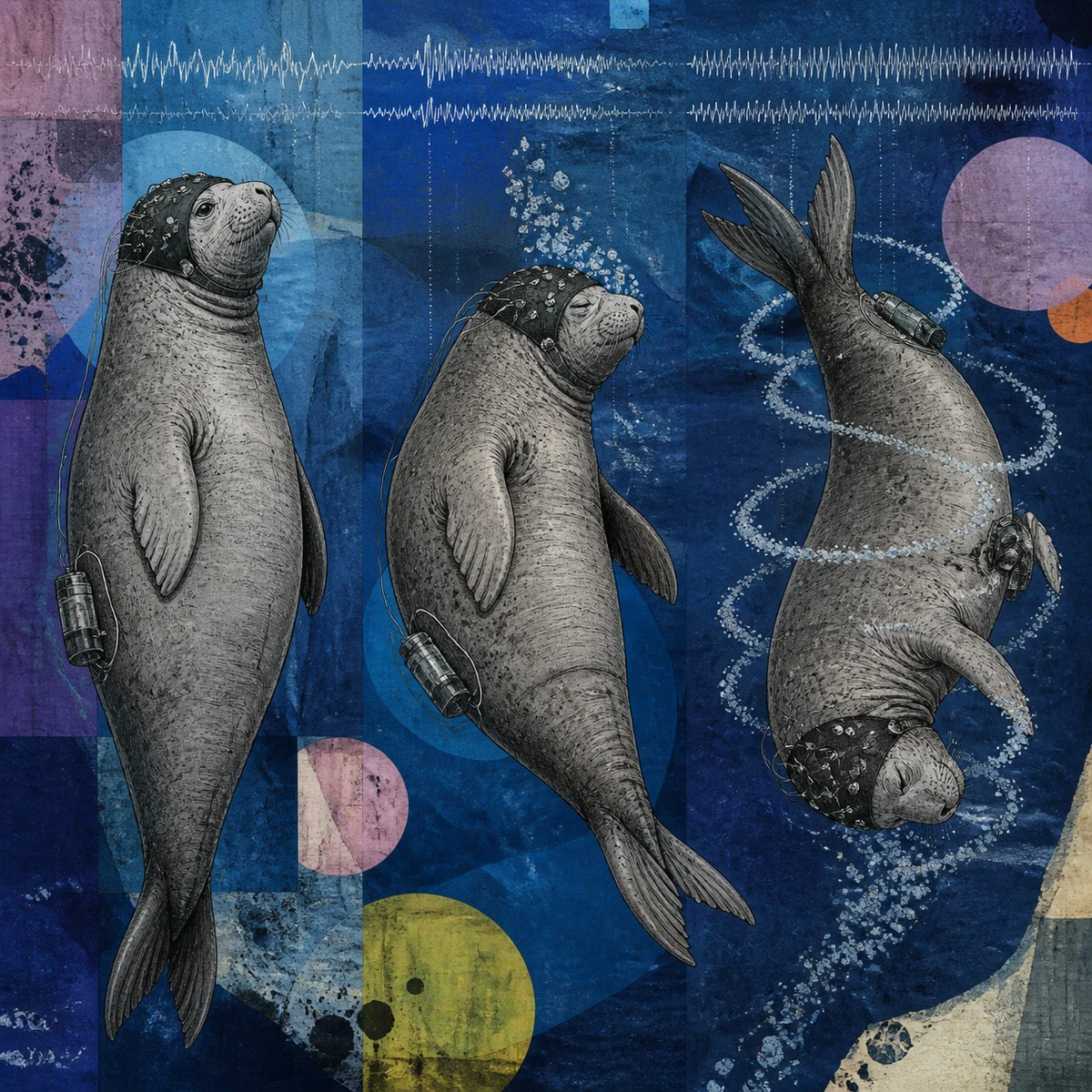
Researchers fitted juvenile female northern elephant seals with a neoprene headcap carrying EEG sensors like those used in human sleep studies. Time-depth recorders and accelerometers logged each animal’s movement beside its brain activity. Data from 13 free-ranging seals included 104 sleep dives, the first direct brain recordings of sleep in a wild marine mammal.
Sleep occupied about 10 minutes inside dives lasting roughly 30 minutes. A seal entered slow-wave sleep while maintaining a controlled downward glide. When the brain shifted into rapid-eye-movement sleep, muscle paralysis reduced postural control; the negatively buoyant body rolled upside down and drifted in a corkscrew “sleep spiral.” Over shallower continental-shelf water, some seals instead rested motionless on the seafloor.
The EEG signatures let researchers train an algorithm and estimate sleep from months of dive data for 334 adult seals. At sea, the animals averaged only about two hours of sleep per day, compared with roughly ten hours on the beach. Deep resting likely lowers exposure to surface predators, but the study measured behavior rather than interviewing a seal about safety. Spiraling is also one sleep posture, not every descent. The remarkable fact is direct: a breath-holding mammal can enter slow-wave and REM sleep while continuing to sink through dark water.
Sources