




 Share








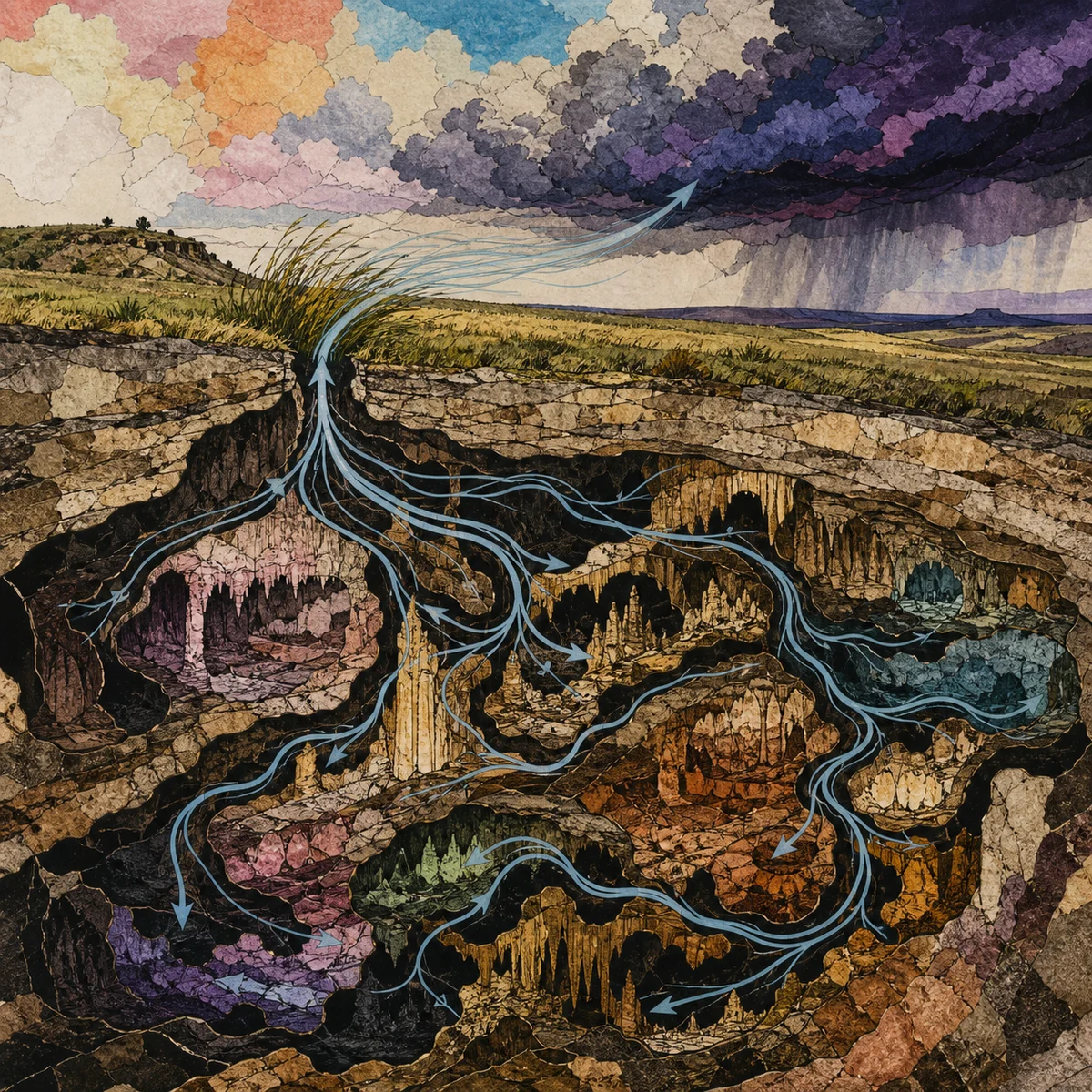
Wind Cave contains an enormous connected volume of air but communicates with the surface through small natural openings. The atmosphere outside changes pressure as weather systems pass. Air in the cave changes more slowly, so any mismatch drives a current through the entrance until the two systems move toward balance.
When outside pressure rises above cave pressure, air is forced underground. When outside pressure falls, the comparatively higher-pressure cave air rushes out. The narrow entrance concentrates that exchange like a partly closed mouth; the National Park Service has measured airflow above 70 miles per hour at the walk-in opening. Visitors can feel a vast invisible room equalizing with the sky.
This “breathing” is not a fixed inhale-exhale cycle and the cave has no biological rhythm. Direction and force follow barometric differences, which can reverse with the weather. The amount of moving air also gives researchers clues about the volume of passage beyond the mapped network. NPS notes that less than ten percent of the cave may have been found, although airflow cannot reveal whether the unseen volume consists of many tiny passages or one large chamber. The wind gave the cave its name and remains a pressure gauge for rooms no explorer has entered.
Sources