




 Share








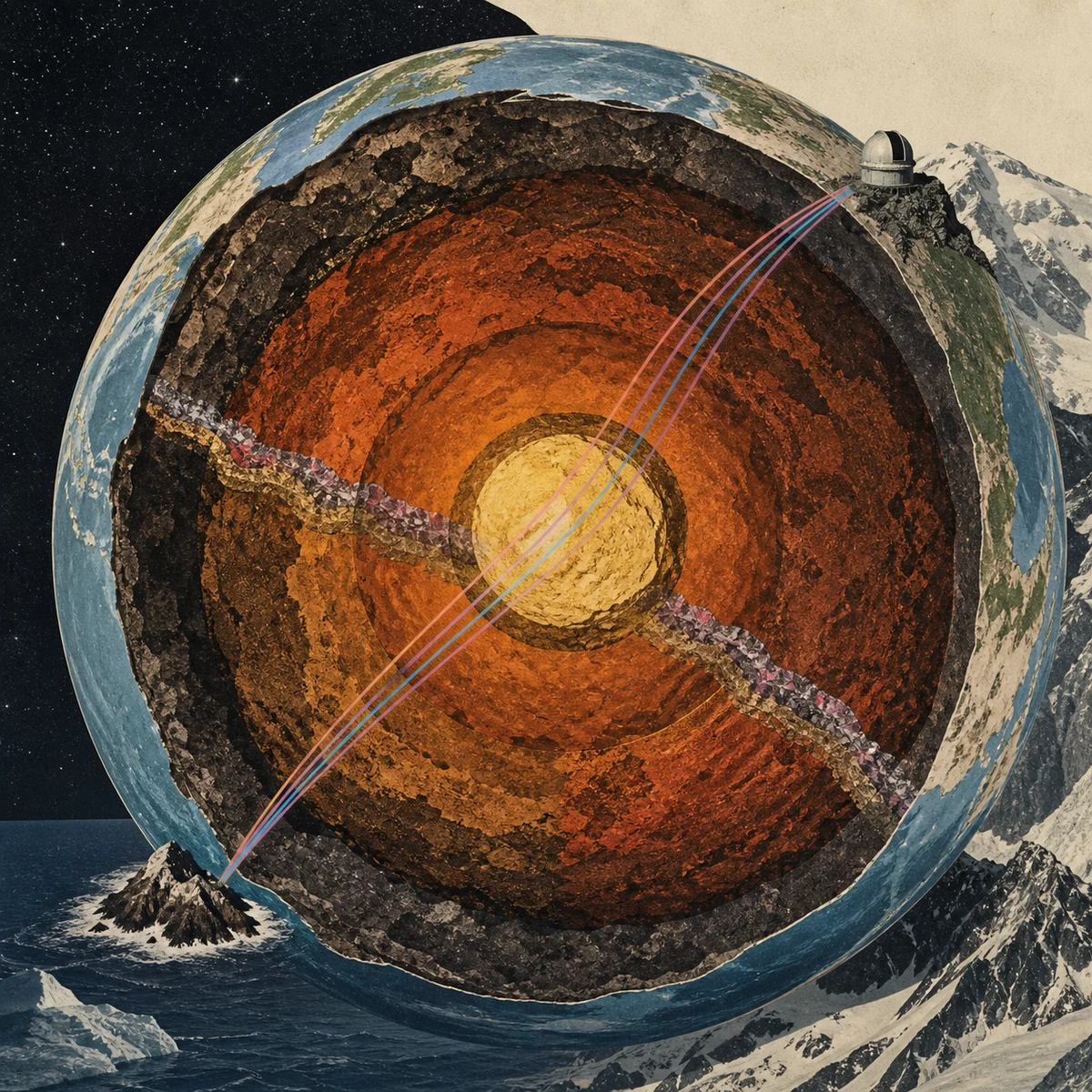
Earth’s solid inner core rotates with the planet, but it can move a fraction faster or slower than the mantle above it. Researchers tested that relative motion with seismic waves from 121 repeating earthquakes near the South Sandwich Islands, recorded from 1991 through 2023. Similar quakes send energy along nearly the same underground paths, making tiny timing changes easier to detect.
The matching waveforms indicated that the inner core’s earlier “super-rotation” weakened around 2010. Afterward, it moved slightly slower than the mantle and surface, so from our reference frame it began backtracking. Signals from historical nuclear tests added earlier comparison points. The shifts are measured in fractions, not a planetary reversal anyone could feel.
The core has not stopped rotating in space. It remains part of a spinning Earth thousands of kilometers below us. Researchers think interactions with the liquid outer core’s magnetic field and gravity from the mantle may influence its changing pace. The study establishes a relative slowdown across roughly four decades of evidence; how that motion varies over longer cycles remains a question written in echoes from earthquakes.
Sources