Share
Share







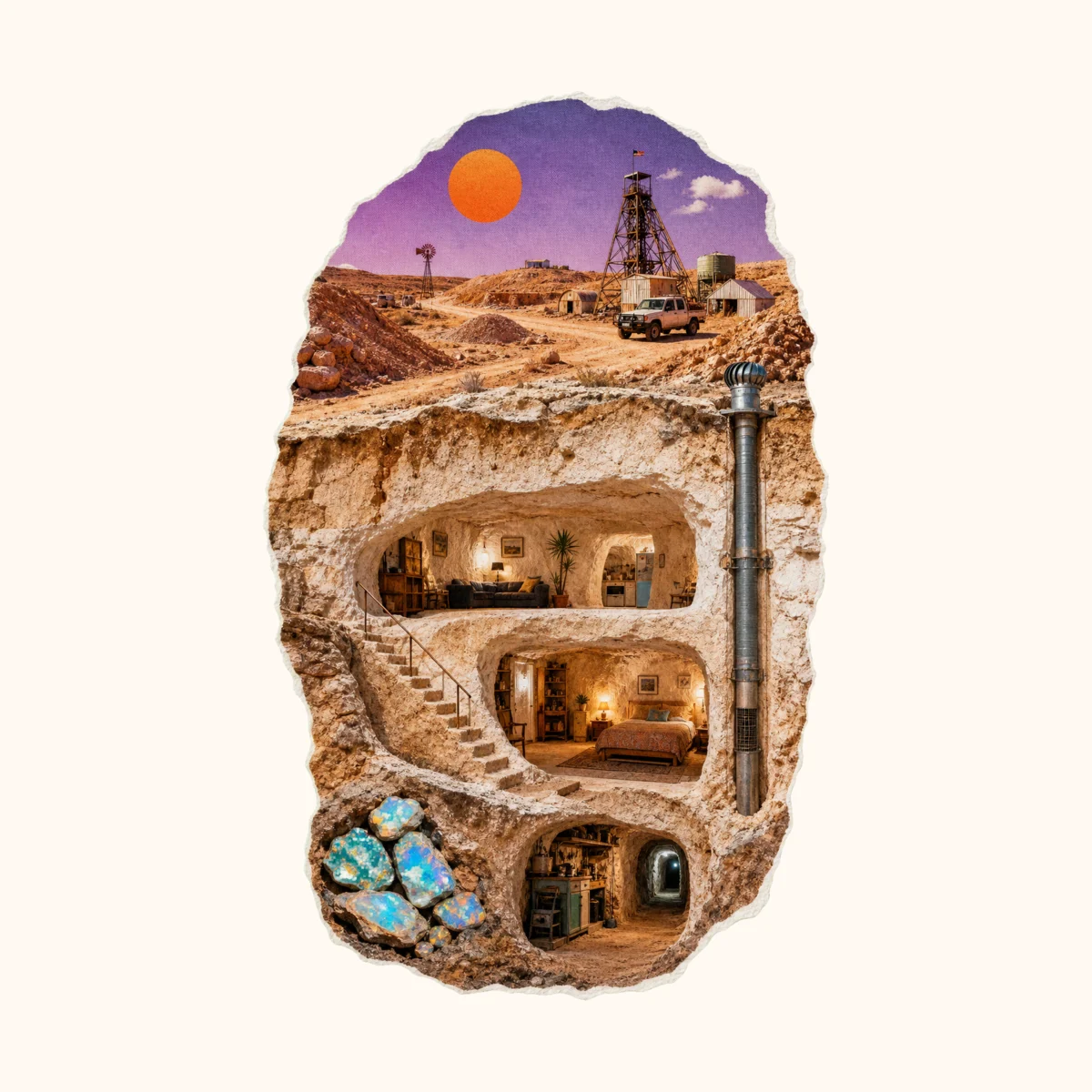
On the surface, Coober Pedy looks scattered across a hard South Australian desert. Much of the town’s daily life is somewhere else: inside rooms excavated from sandstone hills. These underground homes are called dugouts, and local sources estimate that roughly half of residents live in them. The rock does work that walls and air conditioners must struggle to do aboveground, holding interior temperatures around 23°C to 25°C through severe desert swings.
The habit grew out of mining. Coober Pedy became famous for opal, and digging was already the town’s defining activity. After World War I, returned soldiers brought experience of life in trenches, helping establish the dugout tradition. A practical response to heat gradually became an architecture: bedrooms, living rooms, businesses, and visitor spaces cut into the same ground people searched for stone.
The result is not a town that abandoned the surface so much as one that doubled itself. Roads, shafts, spoil heaps, and low entrances mark the visible settlement; behind those entrances, the terrain becomes insulation, roof, and wall at once. Coober Pedy’s strangeness comes from its logic. In a place where the sun makes ordinary construction work harder, residents used the landscape as the building rather than fighting it.