




 Share








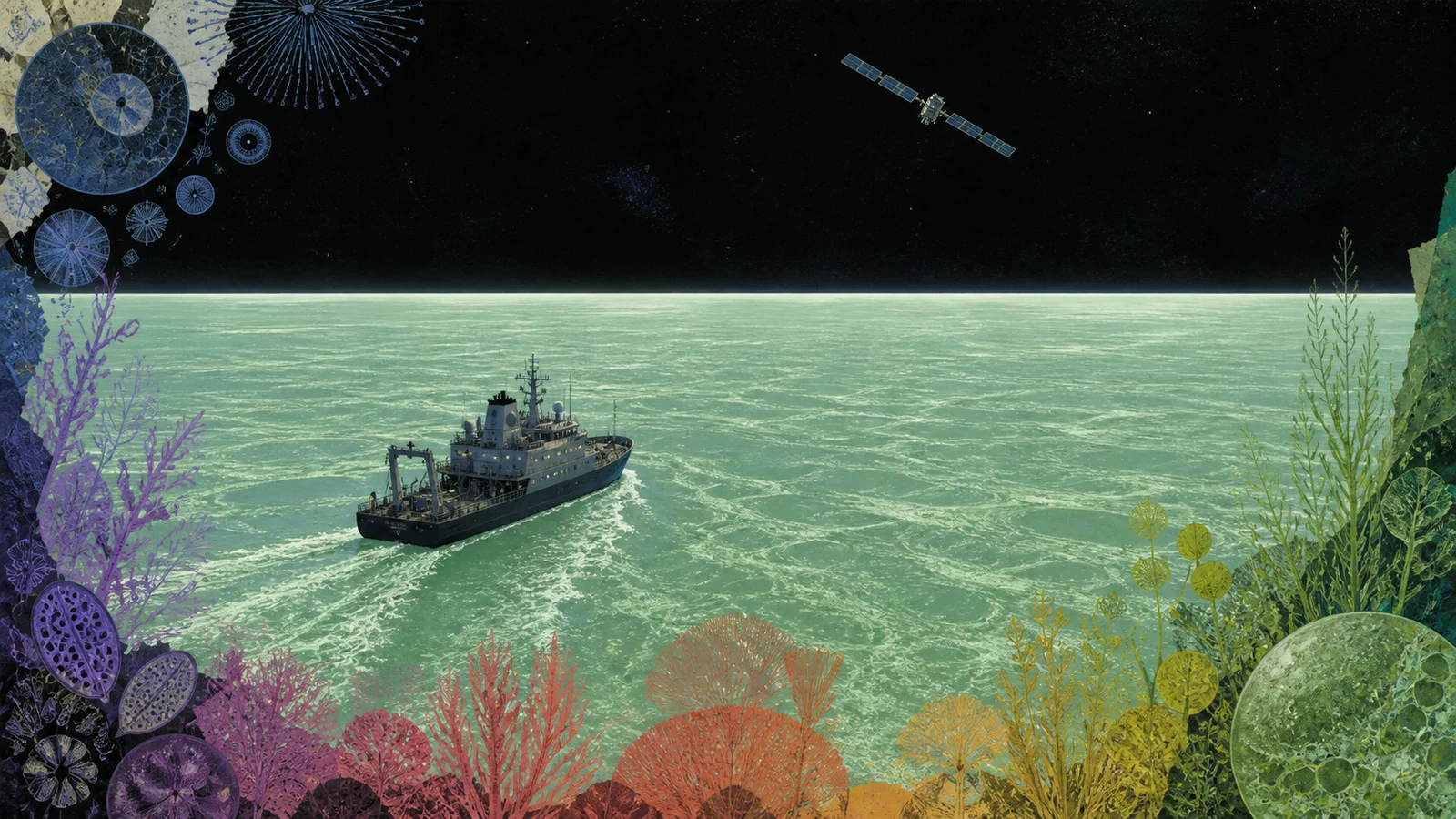
Sailors have described nights when the ocean resembled a snowfield: a steady white glow reaching to the horizon, broad enough for a ship to travel through without reaching darkness. Unlike the brief blue sparks of disturbed plankton near a beach, a milky sea can remain continuously luminous and may not brighten in a wake.
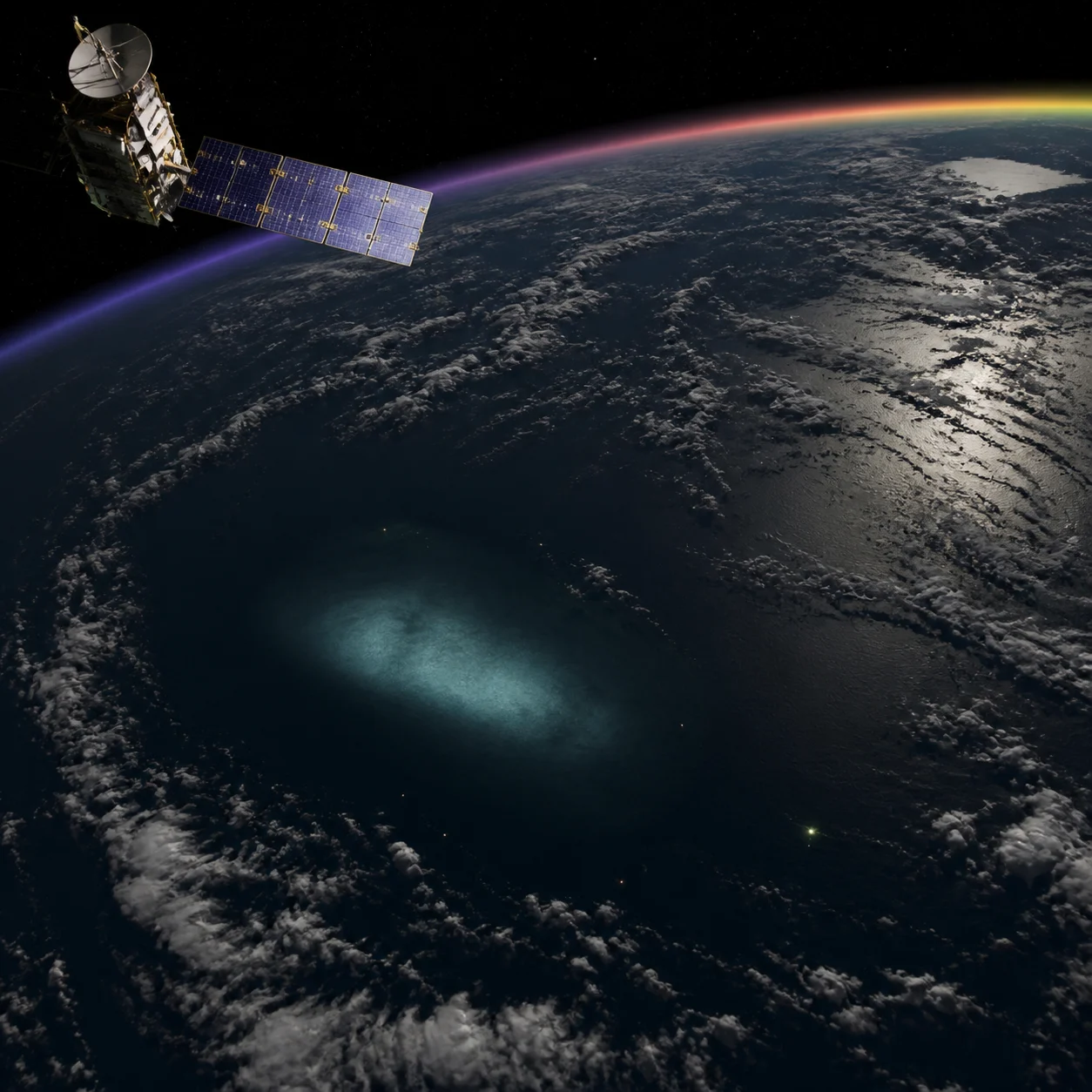
The leading explanation is an enormous concentration of light-producing bacteria associated with algae or phytoplankton. Only one event has been directly sampled, so the ecology remains difficult to pin down. Reports suggest the glow can persist for days or weeks—long enough for an exceptionally sensitive satellite instrument to see it from orbit.
Researchers use the day-night band on the VIIRS sensor to search for faint, persistent patches over water, then compare them with clouds, moonlight, city glow, ships, and historical accounts. Satellite detections make future sampling more plausible, but they do not retroactively verify every old ship report. The mechanism is strongly supported; the rare event is still elusive. A sea can become its own pale sky, and science is only beginning to catch it in the act.
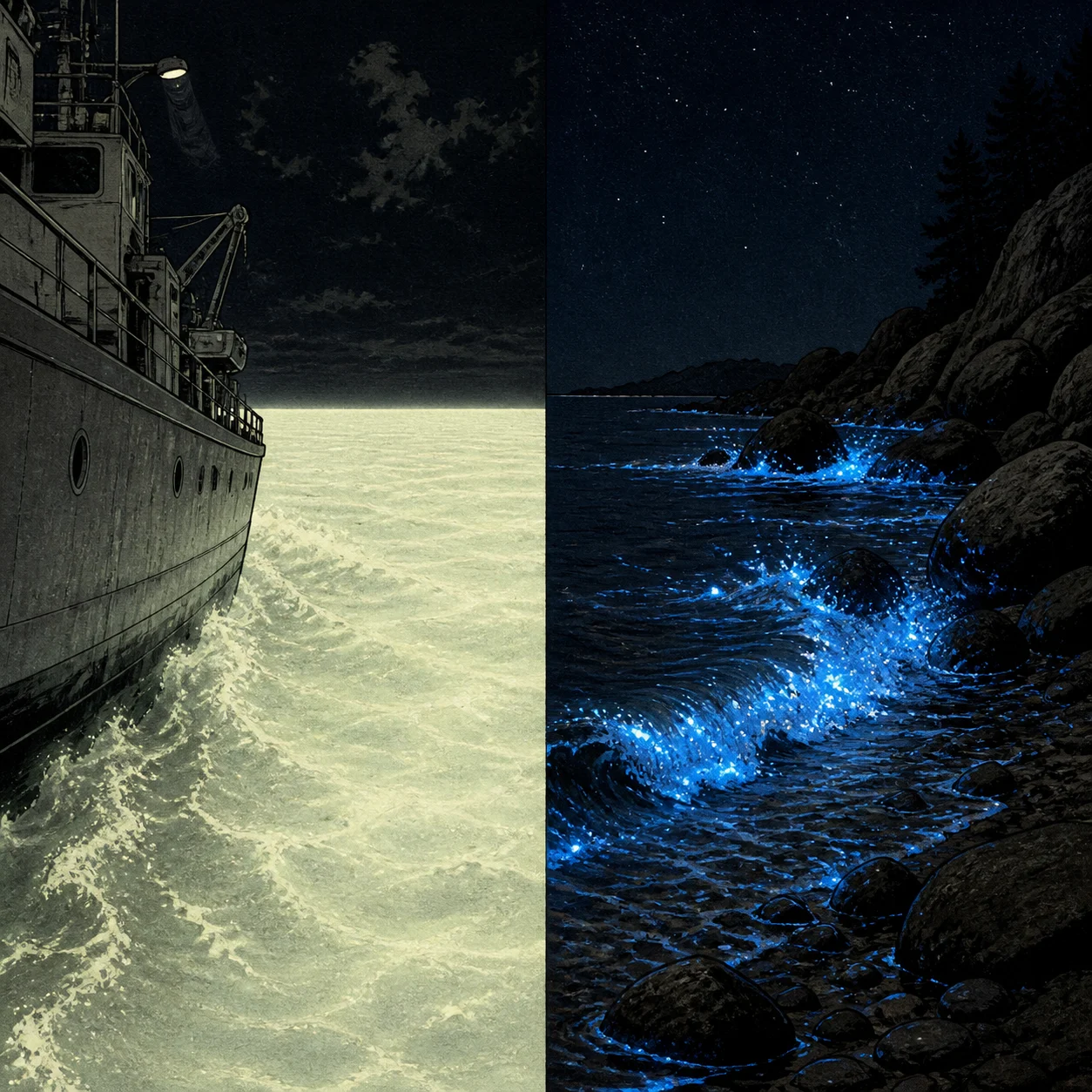
Most familiar marine bioluminescence behaves like a motion detector. Microscopic organisms flash when waves, paddles, hands, or swimming animals disturb the water. A milky sea is described differently. The light is pale, steady, and spread across an enormous area. Ship wakes can pass through without producing the familiar burst of brighter sparks, making the surface look less like fireworks than a continuous luminous field.
Written accounts reach back centuries. Mariners described horizon-wide whiteness, sometimes comparing the water with snow or a clouded sky. Such reports were consistent enough to sustain scientific interest, but they were usually made far from research vessels and major shipping lanes. By the time a message reached land, the glowing patch could be thousands of kilometers away or gone entirely.
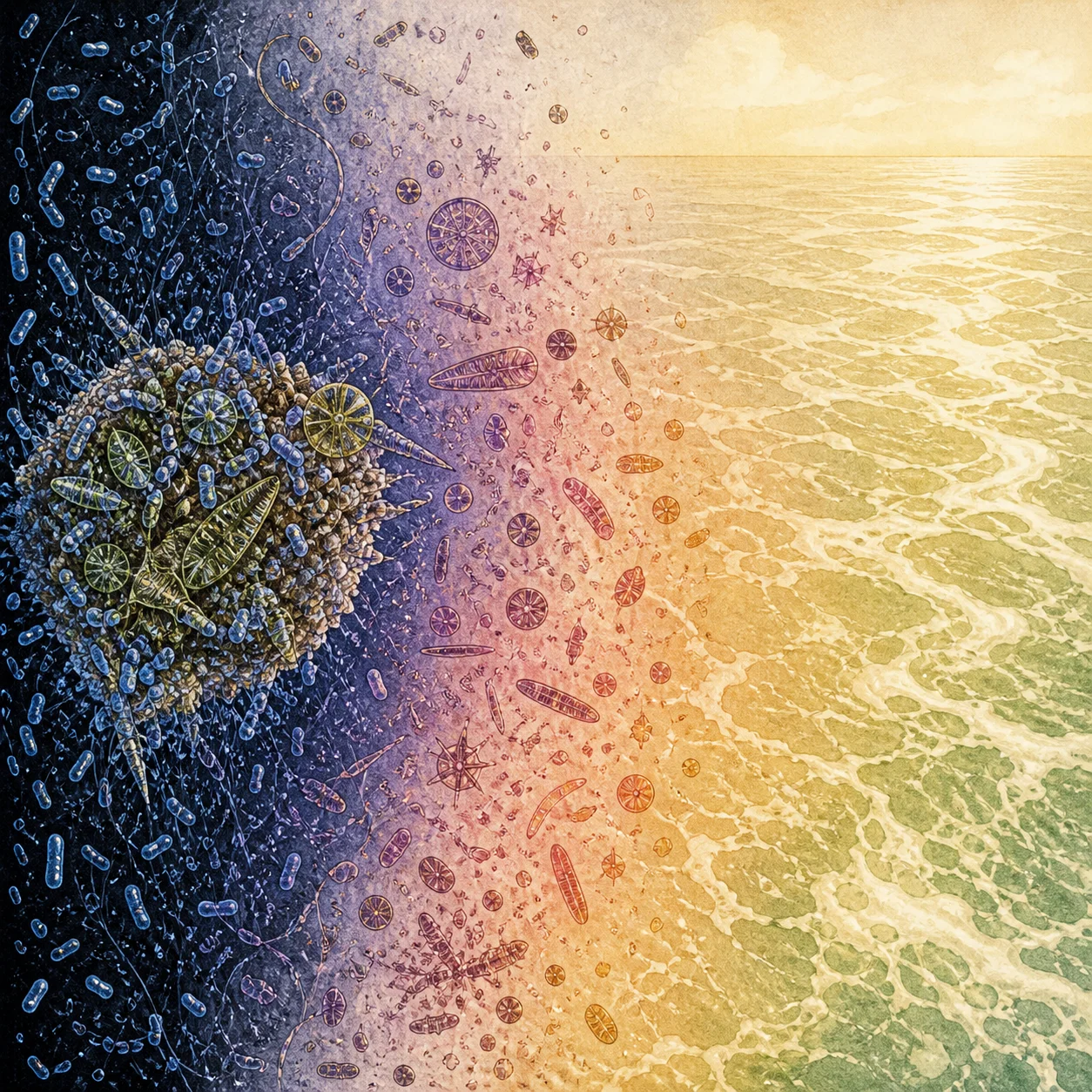
Scientists think luminous bacteria are central. Species such as Vibrio harveyi can emit light when populations become dense enough, a coordinated chemical behavior unlike a single plankton cell flashing after mechanical stimulation. The proposed milky-sea ecology links the bacteria with colonies of algae or phytoplankton, potentially providing a large organic surface and favorable conditions. Direct sampling has been extraordinarily rare, so the full relationship remains under investigation.
Persistence makes orbital detection possible. Bacterial light is faint, but an event that covers a huge area and stays luminous for days to weeks can add up to a signal. The Visible Infrared Imaging Radiometer Suite carries a day-night band sensitive to light levels millions of times fainter than daylight. It can detect cities, auroras, airglow, reflected moonlight, and, with careful filtering, certain glows from the ocean itself.
The sensitivity creates a second problem: many things shine at night. Boats cluster into points. Gas flares mark fixed platforms. Moonlight reflects from clouds and water. The upper atmosphere produces its own glow and wave patterns. Researchers look for a dim, spatially coherent patch over open sea that persists through multiple satellite passes and behaves differently from clouds or human lights. No single bright pixel is enough.
A crucial case connected a ship report with archived satellite data. The S.S. Lima encountered a glowing sea off Somalia in 1995. Researchers later examined measurements from a meteorological satellite and found a faint patch in the same region and period. The noisy signal was an early demonstration that something described from a deck could also leave a footprint visible from space.
The newer VIIRS instrument improved the search. Researchers compiled more than 200 historical mentions and found concentrations in the northwest Indian Ocean, Arabian Sea, and waters near Indonesia. Those patterns help narrow where to watch, while satellite candidates help narrow when. The goal is not merely a prettier map. It is directing a ship or autonomous sampler toward an active event before the light fades.
A real-time sample could test bacterial species, cell density, nutrients, plankton associations, water structure, and the depth of the luminous layer. It could also explain why some candidate events persist and what ends them. At present, the bacterial mechanism has strong support, but the scarcity of direct sampling means many details remain open. The honest story keeps that uncertainty beside the satellite triumph.
Historical consistency does not turn every account into a verified milky sea. Sailors can encounter reflected cloud light, ordinary plankton blooms, or other optical conditions. Researchers compare descriptions and modern signals rather than stamping all folklore as fact. The best accounts describe scale, steadiness, color, duration, and the behavior of the ship's wake—details that help distinguish the phenomenon from more common glow.
Milky seas sit at an unusual boundary between exploration eras. A mariner's log can identify a sensory pattern that no instrument was present to record. A satellite can later find the faint spatial signature but cannot reach into the water to identify every organism. The next advance requires both views at once: orbital eyes locating the glow, and instruments in the sea explaining what made it.
The phrase “thousands of square miles” describes scale, not a fixed event size. Candidate glows vary, and rare phenomena are especially vulnerable to the largest number becoming the whole story. What defines the milky sea is the combination of vast extent, steady pale emission, and persistence—not one universal outline drawn on the ocean.
Sources