Share
Share







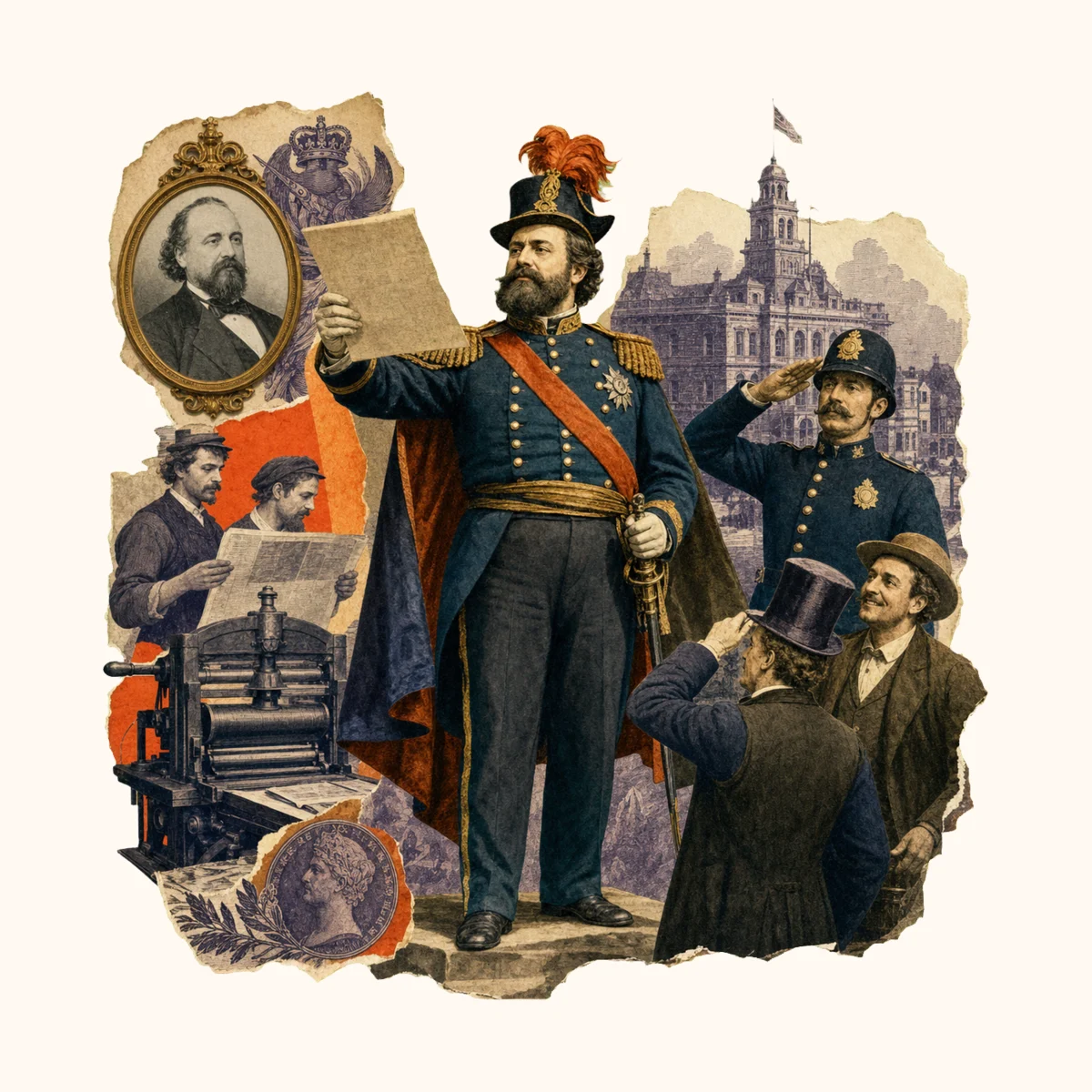
On September 17, 1859, San Francisco resident Joshua Norton declared himself Norton I, Emperor of the United States. He had no palace, army or legal authority. What he did have was a title, a uniform and a city willing to treat his private monarchy as part of public life.
Norton issued proclamations on civic and national affairs, and newspapers printed many of them. The surviving record requires caution: the Museum of the City of San Francisco notes that editors also invented decrees in his name. The authentic and apocryphal versions became tangled because Norton's reign depended on newspapers as much as it depended on him.
His odd authority became clearest in 1867, when an officer arrested him for involuntary treatment of a mental disorder. The arrest provoked a civic uproar. Police Chief Patrick Crowley apologized and ordered Norton released; afterward, officers saluted him in the street.
The episode turned the joke inside out. Norton possessed no official power, yet the official police department had to acknowledge that San Franciscans considered their emperor worthy of respect. His crown existed only by collective consent—but for a self-appointed monarch, collective consent was the one resource that mattered.