Share
Share







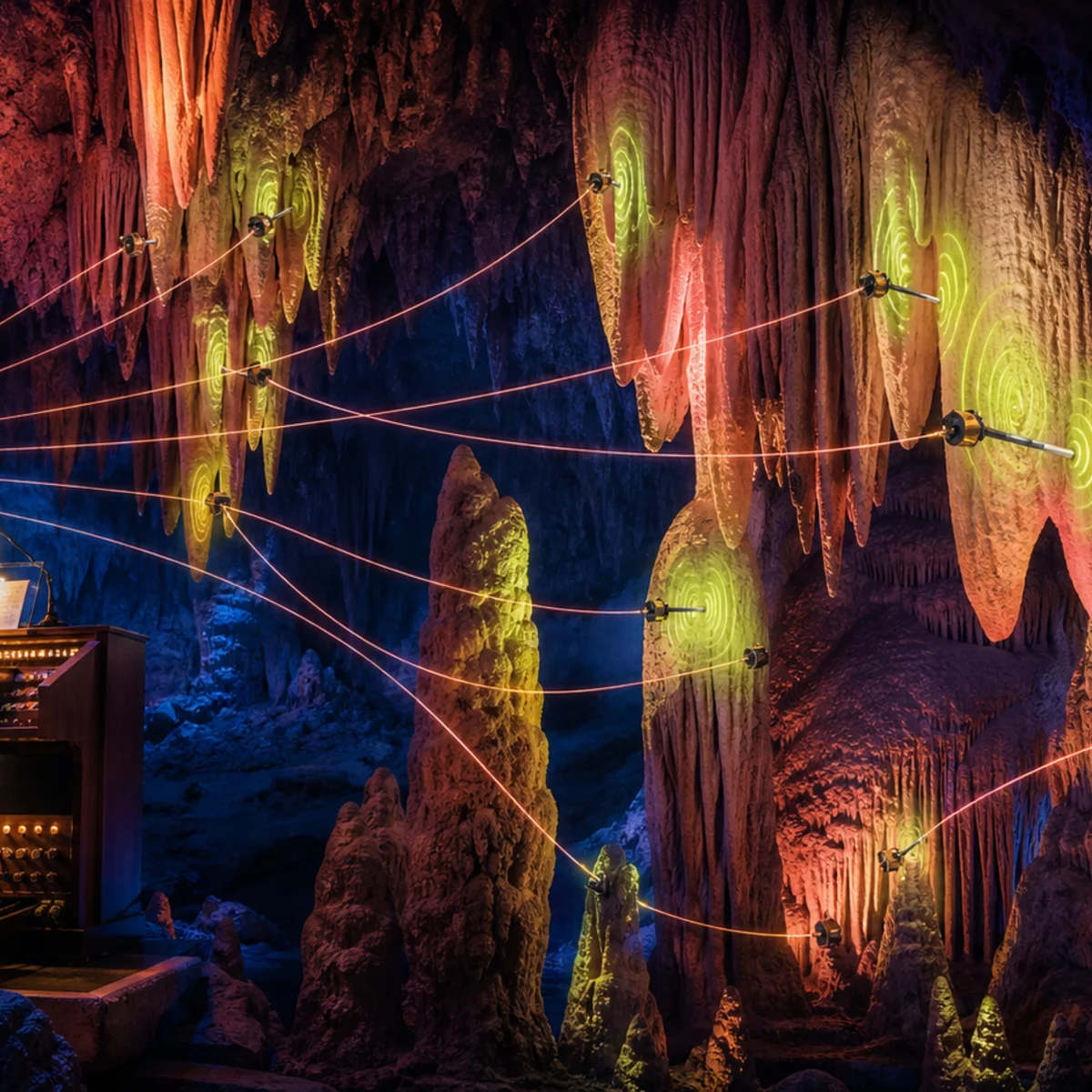
The console looks almost ordinary. It has ranks of keys, stops and the familiar architecture of an organ waiting for a player. What happens after a key is pressed is not ordinary at all. The signal leaves the console, travels through wires into Luray Caverns and ends at a rubber-tipped striker positioned beside a chosen formation. The striker taps stone. The cave answers with a note.
Virginia's Great Stalacpipe Organ does not imitate a cavern. It recruits the cavern itself. Selected stalactites spread across roughly three and a half acres serve as the sounding elements of the instrument. Instead of forcing air through metal or wooden pipes, the system activates pieces of mineral architecture that water and geology had already suspended from the ceiling.
Each playable formation had to produce a useful pitch when struck. A normal pipe organ organizes manufactured pipes into measured ranks, each made to sound a planned note. The Stalacpipe Organ reverses the process. The instrument's designer had to move through an existing landscape, listen for tones in stone and connect those scattered notes back to one keyboard.
That designer was Leland W. Sprinkle. His name sounds almost suspiciously appropriate for a machine built from formations created by dripping water, but the organ is real. Sprinkle conceived and constructed a system that turned individual cave formations into something a performer could address from a central console.
The rubber tips matter. A metal hammer would make the mechanism feel industrial and could threaten the surface it was meant to play. The softer strikers deliver a controlled tap. Solenoids trigger them remotely, allowing one musician's fingers to set off small impacts at different points around the cavern. The audience hears the resulting tones arrive from the architecture rather than from a neat cabinet of pipes.
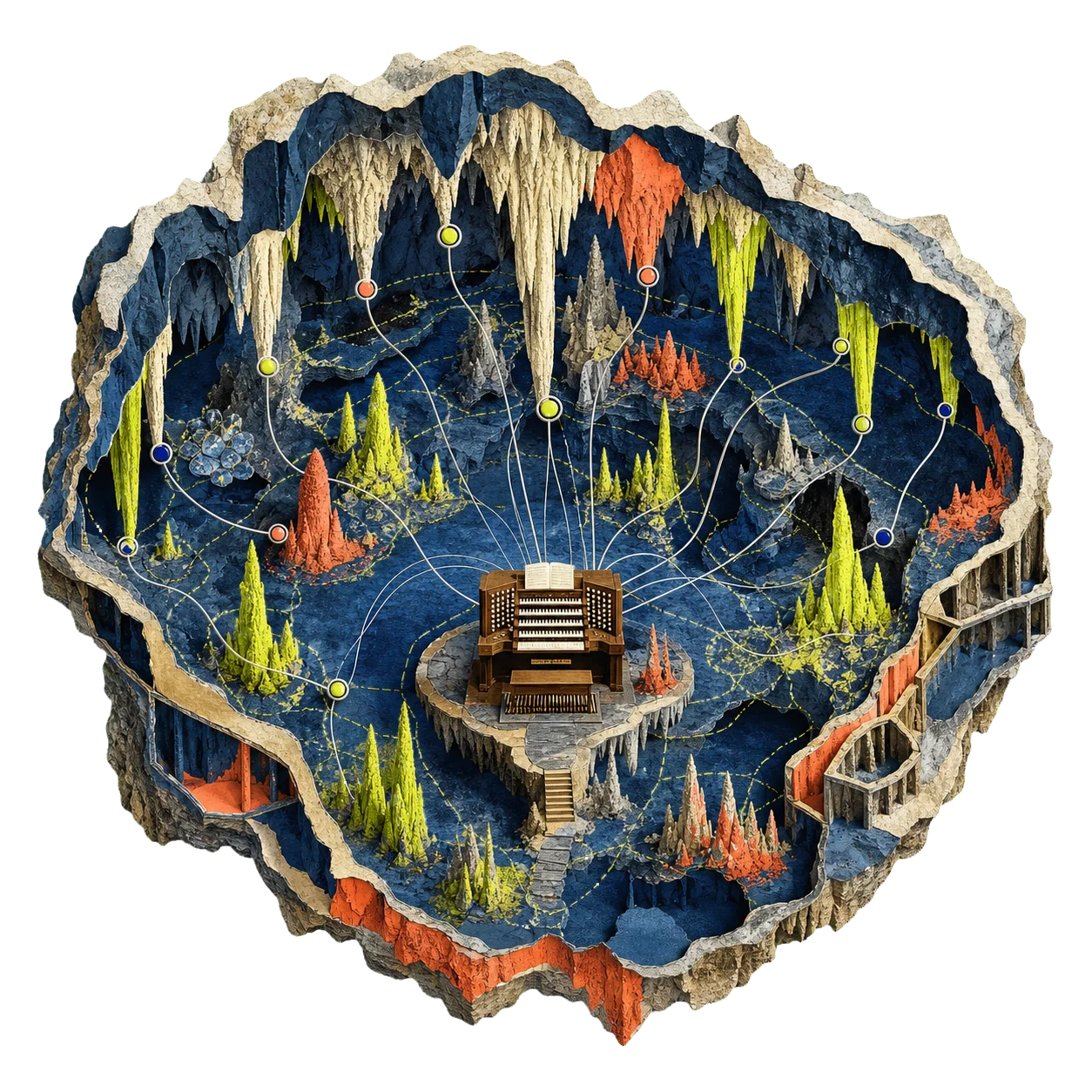
That distribution changes the sense of scale. A piano remains in front of its player. Even a large pipe organ usually presents a visible façade or speaks from a defined loft. The Great Stalacpipe Organ is spread through the room. Its notes belong to formations that may be separated by large stretches of cave, so the instrument is both a musical system and a map of selected stone.
The name is a deliberate hybrid. A stalactite hangs from a cave ceiling; a pipe organ produces tones through pipes. The Stalacpipe Organ has a keyboard and organ-like controls, but many of its “pipes” are not pipes at all. They are resonant formations wired into a network. The pun describes the engineering with surprising accuracy.
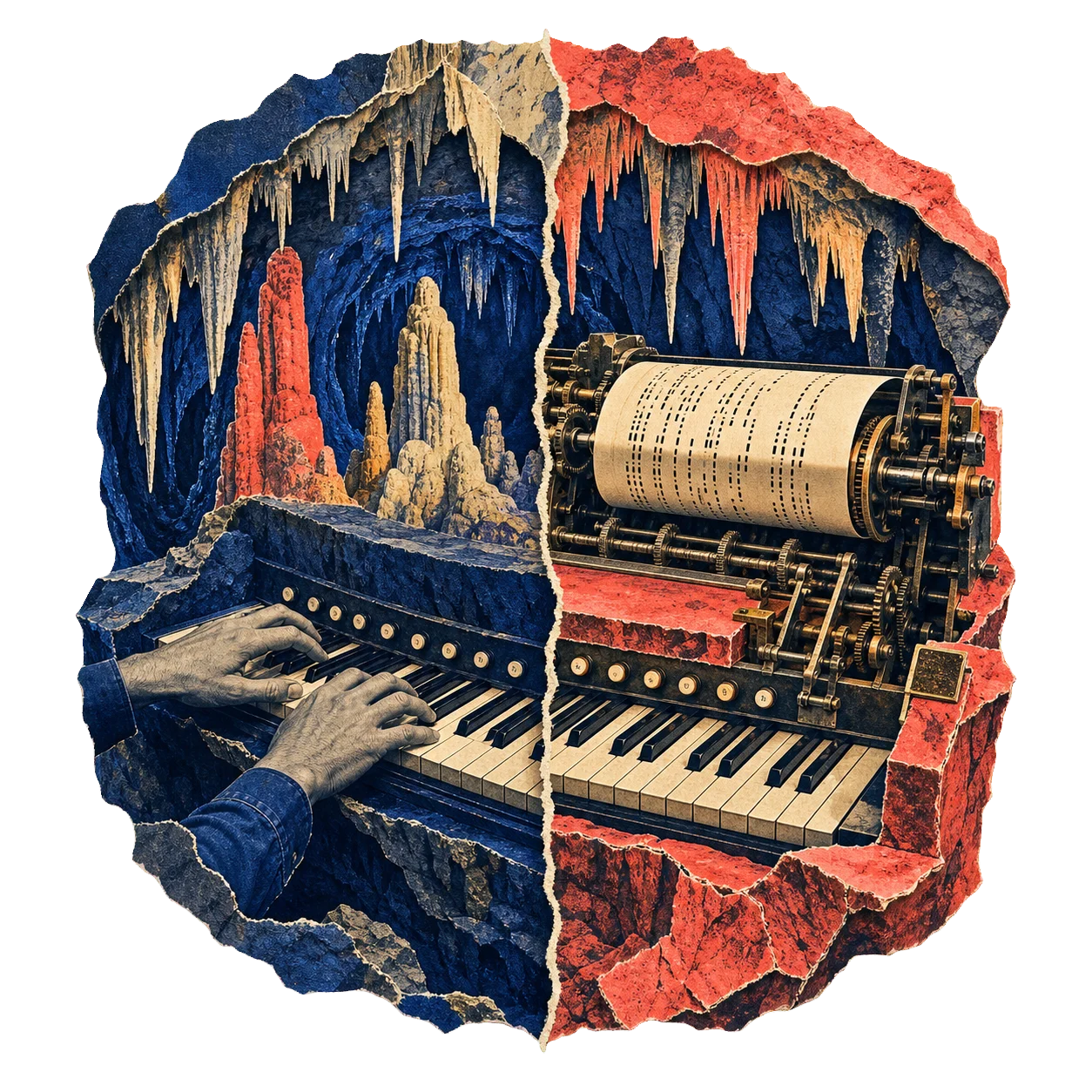
The console can be played manually, letting a musician perform the cavern in real time. It can also run through an automated system, closer in spirit to a player mechanism or music box. In either mode, the essential sequence stays the same: a musical instruction travels away from the keyboard, a rubber mallet meets mineral, and the cave returns the sound.
Guinness World Records has recognized the installation as the world's largest musical instrument. The claim follows not from the size of the console but from the territory occupied by the playable system. Roughly three and a half acres of cavern become part of one instrument because the selected formations, wiring, strikers and keyboard operate together.
Calling it the largest can still undersell the stranger achievement. Size is easy to picture as one enormous object: a drum wider than a room or a horn longer than a bus. The Stalacpipe Organ is large because it is dispersed. It does not fill a cave as much as it reveals that parts of the cave can already ring.
There is also a productive mismatch between what the eye and ear expect. A stalactite appears fixed, silent and architectural. The organ assigns it a role normally held by a purpose-built component. Press a key and a formation that looked like scenery becomes an instrument part. Release the key and it returns to looking like the ceiling.
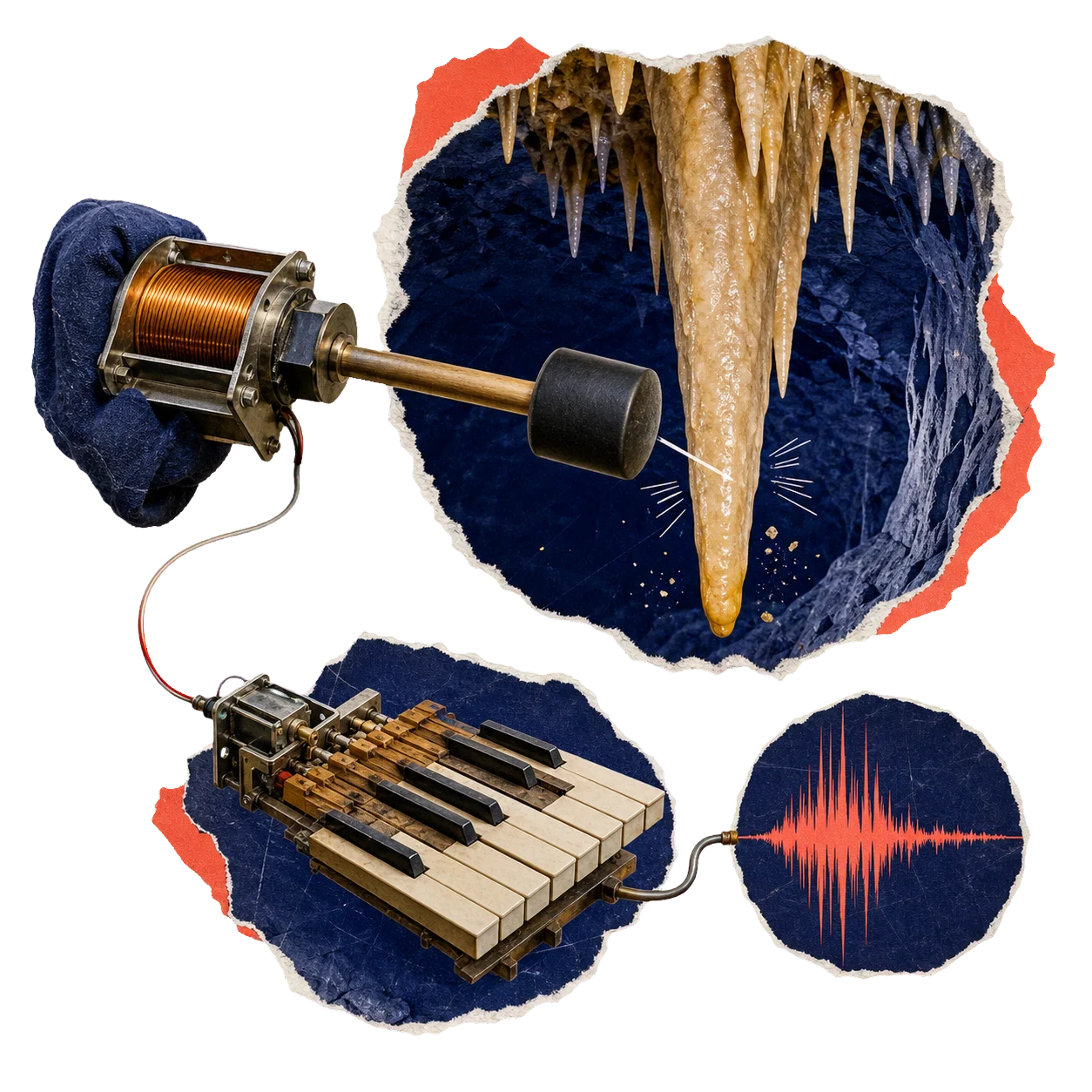
The result occupies an unusual line between natural object and human machine. The formations existed before the console, but they were not arranged as a keyboard. The electronics did not create their material voices, but they made those voices repeatable and playable. Sprinkle's invention is therefore less a machine that makes cave sounds than a machine that lets a person address them.
That distinction keeps the organ from being only a novelty. The joke would be enough—a cave organ made from cave—but the mechanism is a serious interface problem solved at architectural scale. How do scattered objects become one instrument? Give each a striker, connect the strikers to a common control system and teach a keyboard where the notes live.
When the automated music stops or the player lifts both hands, the cavern does not look switched off. No curtain closes over the instrument. The keyboard waits in one place while its stone note-makers remain suspended throughout the chamber, indistinguishable again from the geology around them.
Then another key descends. Somewhere across the cave, a small rubber tip moves forward. One stalactite rings, and for a moment the entire cavern seems less like a room containing an organ than an organ large enough to contain its audience.