




 Share








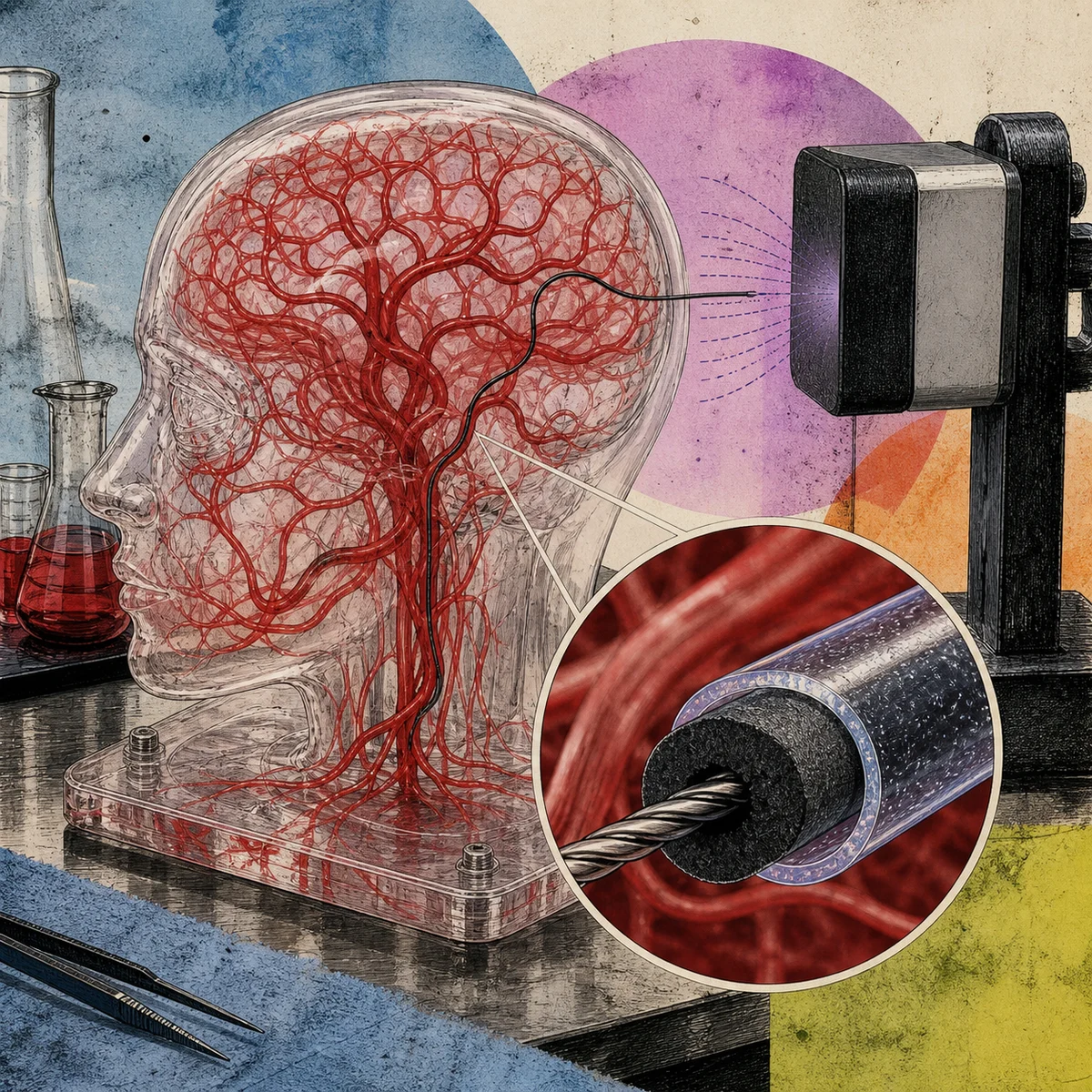
MIT engineers built a steerable thread around a springy nickel-titanium core that returns to shape after bending. They coated that nitinol wire with a rubbery material containing magnetic particles, then bonded a thin hydrogel layer over the outside. The hydrogel supplied a smooth, water-rich surface without blocking the magnetic response beneath it.
Researchers first guided the thread through rings with a large hand-moved magnet. They then steered it through a life-size silicone replica of major brain blood vessels built from a patient’s CT scan, including narrow, winding paths around modeled clots and aneurysms. The channels contained a liquid with blood-like viscosity. Hydrogel-coated threads traveled through tighter spaces with less sticking than uncoated versions.
One demonstration replaced the wire core with optical fiber so the same platform could deliver laser light to a target. Drug delivery, clot treatment, remote magnetic control, and reducing a surgeon’s fluoroscopy exposure were proposed future directions. None was tested in a patient; the publication reports obstacle courses and vessel models. Living vessels add tissue response, blood flow, safety, sterilization, imaging, and control problems. The prototype answers a mechanical question first: can a soft thread be pulled around branching turns from outside the vessel rather than pushed through every bend from its far end?
Sources