Share
Share







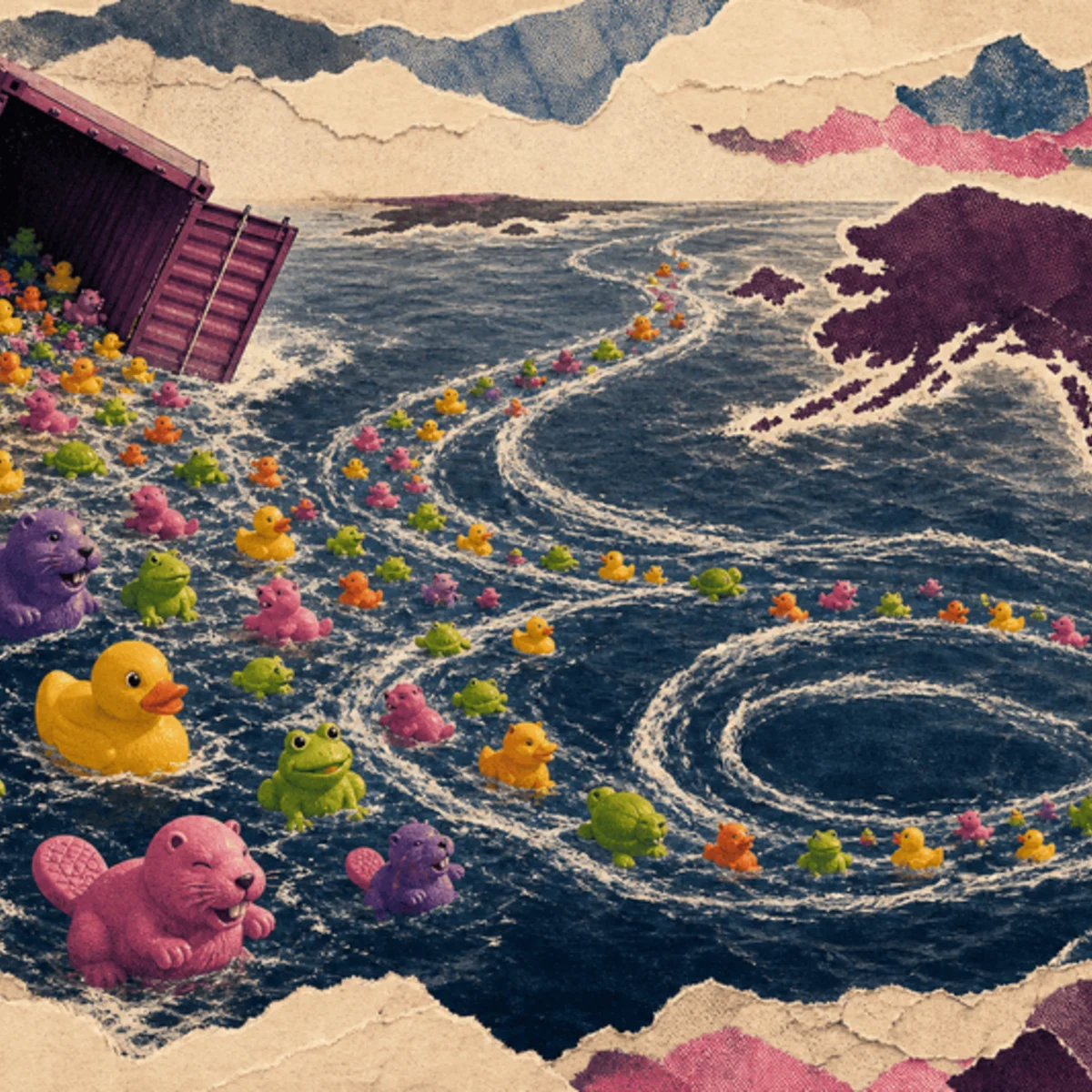
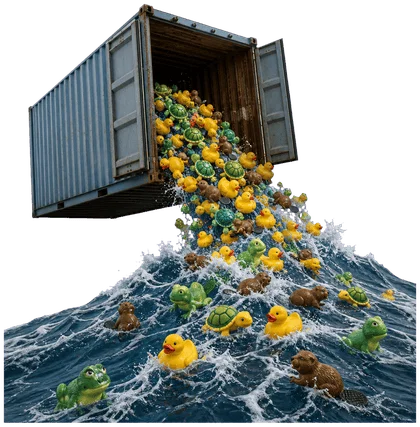
At first, the ocean received the shipment as one more accident. On January 10, 1992, a cargo container carrying nearly 29,000 floating plastic bath toys fell into the North Pacific. Inside were four small species of nursery-floor wildlife: yellow ducks, blue turtles, green frogs, and red beavers. The container opened far from land. The toys escaped together, then began one of the slowest dispersal experiments nobody had planned.
They entered the water near the International Date Line, where the map looks like an edge but the ocean does not. There were no tracking chips, no radios, and no research vessel following behind. The toys had only three qualities that mattered: they floated, they were durable, and they were easy to recognize if one reached a beach. That was enough to turn ordinary beachcombers into observers and distant coastlines into checkpoints.
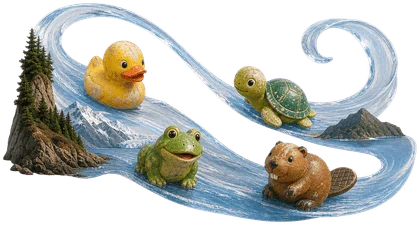
The first documented arrivals appeared near Sitka, Alaska, in November 1992, about ten months after the spill. More were reported on Chichagof Island in February 1993 and near Cordova that May. By June 1995, the trail had reached the Olympic Peninsula in Washington. Other documented locations in NOAA teaching materials include Kure Island in the Northwestern Hawaiian Islands in 1996 and Lanai in 1997. The dots did not form a straight line because the North Pacific does not behave like a conveyor belt. Winds, waves, and circulating water moved the floating cargo through a system of loops, branches, delays, and exits.
That wandering is the useful part of the story. Surface currents are normally invisible from shore. A map can draw arrows over blue paper, but an arrow does not show how long an object waits in one circulation or how weather nudges it toward another. A toy found at a known place and approximate time makes the abstraction physical. Students can mark the spill and recovery locations, compare them with prevailing winds and currents, and ask why one object moved north while another traveled south or remained at sea. The toys do not provide a perfect scientific data set, but they make the questions unusually easy to see.
Oceanographers have long learned from accidental drifters. Floating cargo, fishing gear, pumice, seeds, and other debris can all reveal something about circulation when their origin is known. The bath toys became famous because the objects looked as if they had volunteered. A yellow duck already resembles a tiny passenger. Give it ten months and an Alaskan beach, and a cargo-loss report turns into a character with an itinerary. The nickname Friendly Floatees completed the transformation.
The friendly framing needs a brake. These were plastic objects loose in the sea. Their ability to survive the journey was scientifically interesting for the same reason marine debris is environmentally difficult: plastic can remain afloat, travel between ecosystems, and persist after the event that released it has been forgotten. The ocean did not know the difference between a charming duck and any other durable fragment. Currents carried what they were given.
Reports eventually pushed the story beyond the North Pacific. NOAA educational material lists later finds on the Maine coast and in the United Kingdom. Individual late discoveries can be difficult to authenticate, especially once the toys became famous and copies were common. A weathered bath duck is not automatically one of the 1992 travelers. The safest evidence comes from documented dates and places assembled close enough to the spill to support the route. The legend can travel farther than the cargo.
That uncertainty does not ruin the story. It sharpens it. The Friendly Floatees were never precise oceanographic instruments, and nobody should pretend they produced a controlled experiment. They were recognizable debris with a known starting point, followed imperfectly by people who happened to find them. Their value was partly scientific and partly educational: they made a planetary system legible without making it simple.
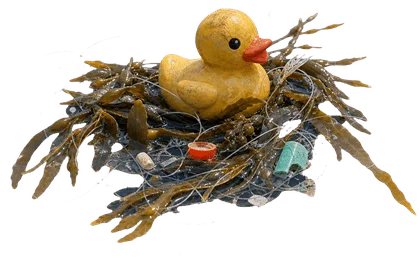
A recovery date is not a speedometer. A toy could circle offshore, pause on an unreported beach, return to the water, or simply wait where nobody was looking. Coastlines with more visitors create more chances for discovery. The reports are therefore better at revealing broad pathways than calculating a neat daily pace. Even the gaps are part of the lesson: the ocean carries objects continuously, while human observations arrive only when someone happens to notice.
The routes also resist the idea that the sea is made of separate bowls. A spill in the North Pacific can send objects around Alaska, toward Hawaii, through northern passages, or eventually into other ocean basins. Coastlines divide our maps into named regions. Floating debris encounters connected water, changing weather, and time. One container can become thousands of small reminders that there is no reliable place called away.
The most memorable image remains a line of bright bath toys riding gray swells, absurdly cheerful against an ocean large enough to lose almost anything. But the better ending is the map they left behind. The current drew the route. Beach reports supplied the dots. And nearly 29,000 pieces of plastic showed, in the friendliest possible shapes, how far an accident can go after it falls out of sight.
Sources