




 Share








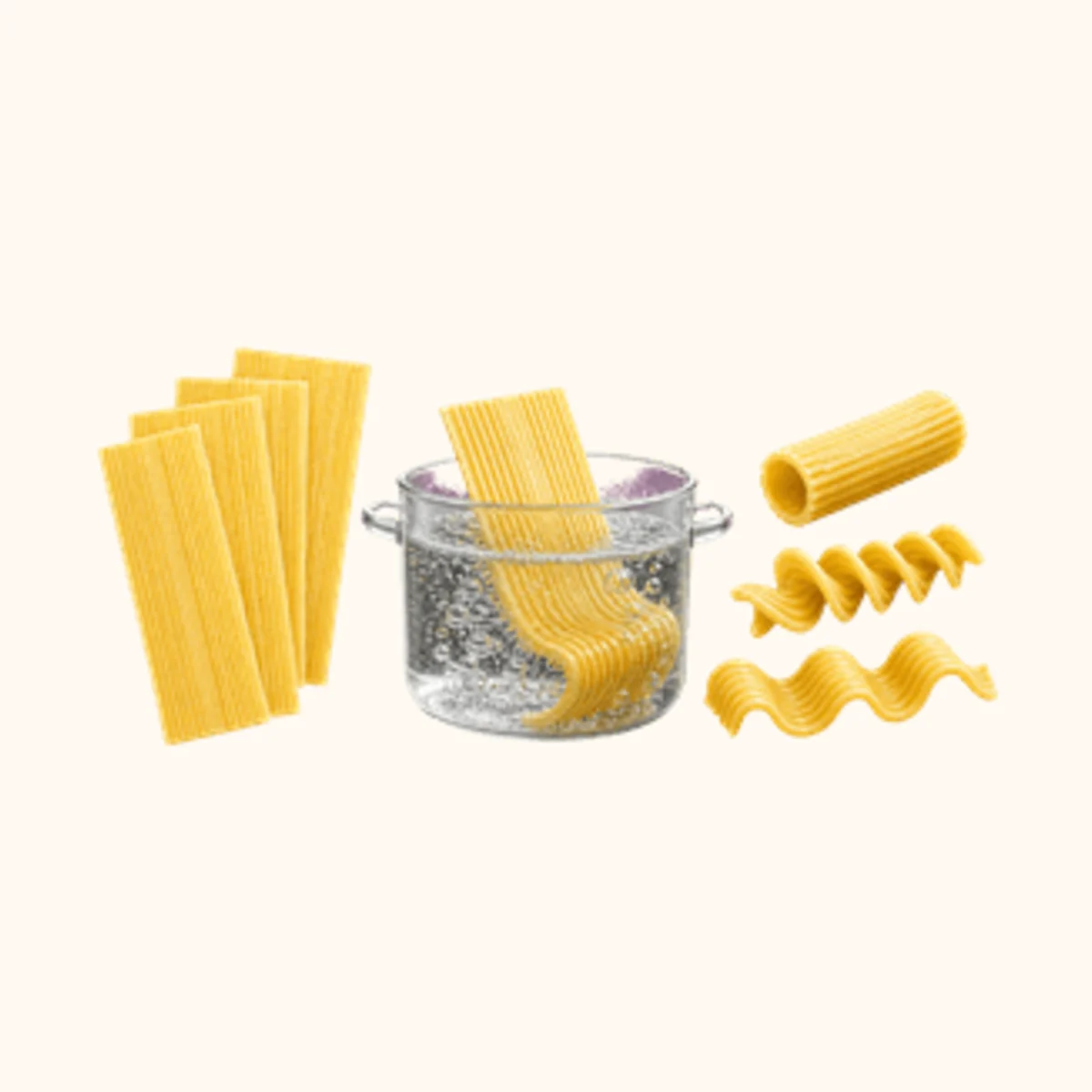
Carnegie Mellon researchers made flat pasta from ordinary semolina flour and water, then pressed carefully designed grooves into it. During boiling, the grooved and smooth regions swell at different rates, bending the sheet into tubes, spirals, and waves. The shapes can cook and taste like conventional pasta while packing flat beforehand. The work was a research prototype, not proof that every pasta aisle is about to collapse into an envelope—but it showed that dinner can be programmed with texture alone.
Sources