Share
Share







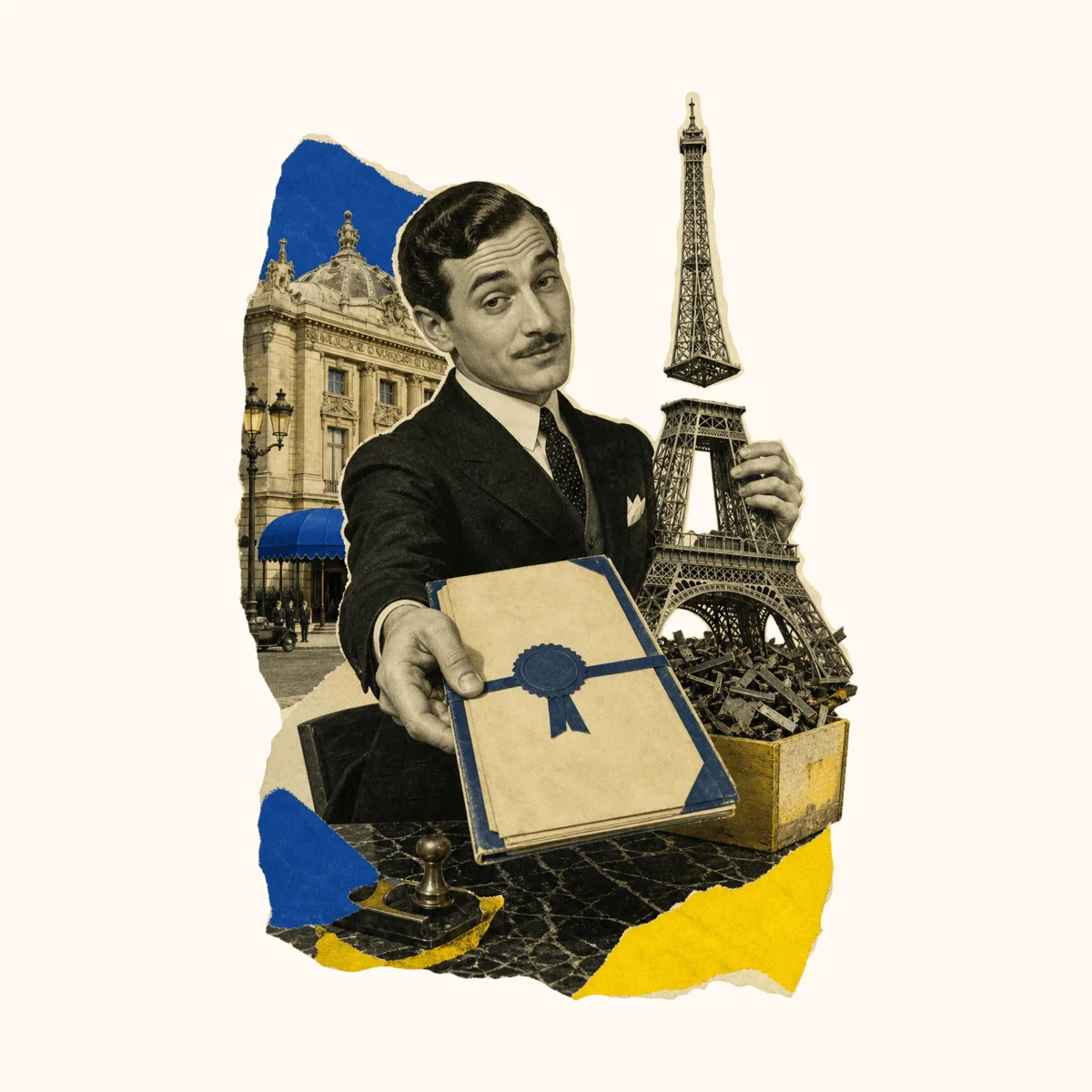
In 1925, Victor Lustig found a sales pitch hidden inside the Eiffel Tower’s maintenance bills. News reports described costly upkeep and revived an old idea that the once-temporary monument might be dismantled. Lustig converted that public uncertainty into confidential government business. He did not need Paris to dislike the tower; he needed buyers to believe officials might privately decide it had become too expensive.
Using official-looking stationery, he posed as a French official and invited leading scrap dealers to the Hotel de Crillon. The supposed opportunity was enormous: the tower, quietly condemned, would be sold as metal. Secrecy made the absurd offer feel more credible. A buyer who asked too many outside questions might lose the deal—or expose a sensitive decision. The elegant hotel and selective guest list supplied the stage props of authority.
Lustig selected one dealer, accepted money for the imaginary sale, and left France. The victim’s embarrassment helped keep the fraud quiet. According to the Eiffel Tower’s official history and Smithsonian accounts, Lustig later tried the scheme again. The structure never moved; only the story around it did. His real product was not iron but a temporary version of reality in which a famous landmark had become inventory, official silence looked normal, and discretion appeared smarter than disbelief.