





 Share








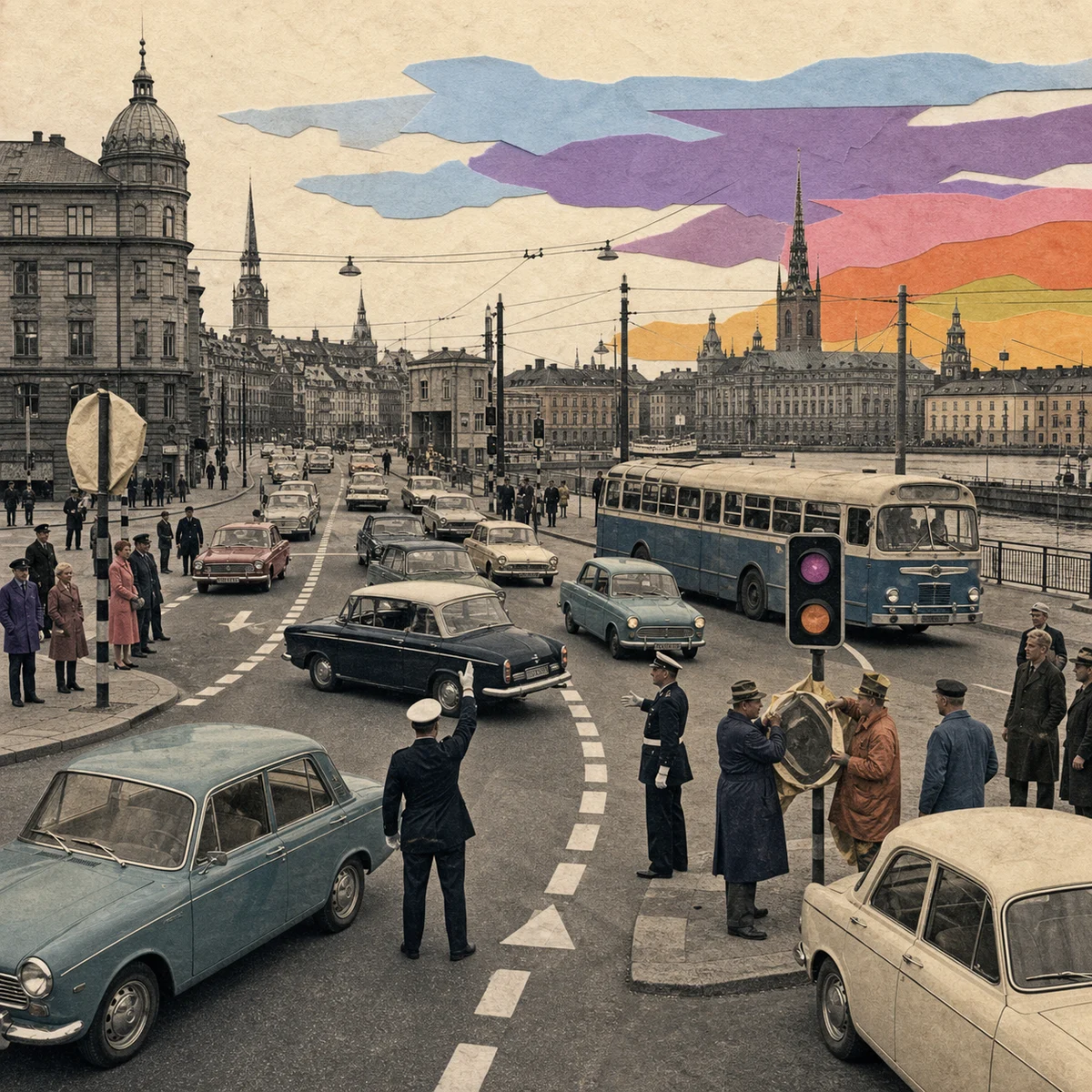
Sweden drove on the left even though its steering wheels were generally mounted on the left and neighboring countries kept to the right. Parliament decided in 1963 that the mismatch would end. The result was Dagen H—“H” for högertrafik, or right-hand traffic—but the famous morning was the endpoint of four years of planning, not a nationwide improvisation.
Road signs were covered until the change, intersections were rebuilt, bus doors and stops were adapted, and a large public-information campaign taught the new rules. In Stockholm, most private traffic was restricted while workers altered streets. Just before the change, vehicles stopped. At 5:00 a.m. on September 3, 1967, drivers carefully moved to the right and resumed under temporary low speed limits and heavy supervision.
Photographs make the switch look like a choreographed automotive dance, with rows of cars crossing an empty center line. The choreography mattered because habits do not reverse when a clock strikes. Pedestrians had to look the other way, drivers had to relearn turns, and road infrastructure had to agree with the new flow. Dagen H was completed in one morning only in the narrow sense that the legal direction changed at a specified hour. Legislation, construction, communication, and rehearsal had been moving Sweden across the road for years.