Share
Share







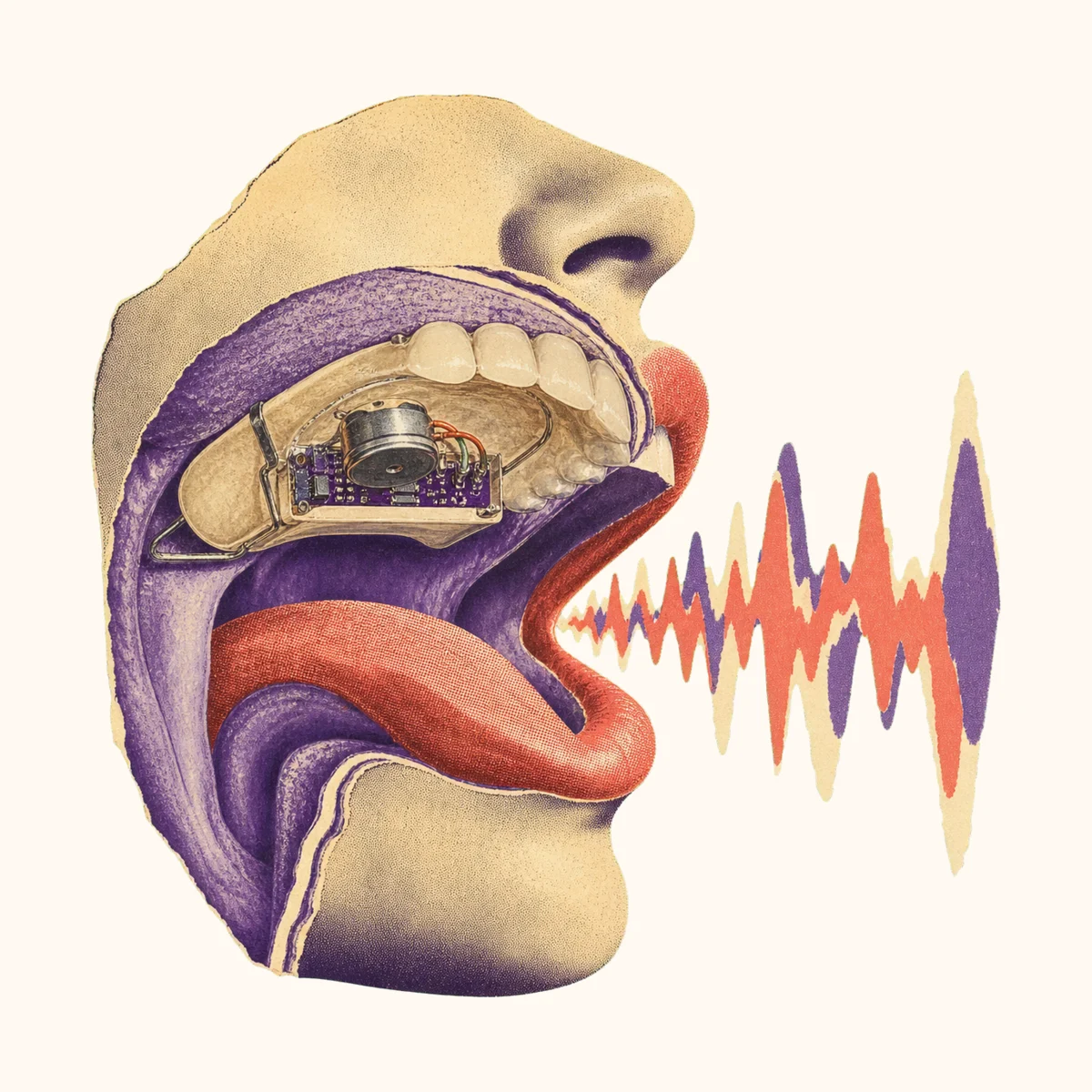
The Fortiphone placed the source of an artificial voice against the roof of the mouth. A false upper palate carried a transistor buzzer that took over the sound-producing duty normally performed by the larynx. The raw output was vibration, not finished speech.
The wearer’s lips and mouth then shaped that buzz into intelligible words. In other words, the electronics supplied a steady voice source while ordinary articulation supplied the differences between sounds. The device did not need to recognize language or assemble sentences. It relied on the user's existing movements to turn one electronic tone into speech.
A dental surgeon originally designed the apparatus, a fitting origin for a machine whose critical placement and fit belonged inside the mouth. The Science Museum Group preserves a Fortiphone device and mouthpiece among items from the BBC Radiophonic Workshop. That collection context does not mean the Workshop invented it; it records the device as part of a broader archive of unusual sound technology.
Most artificial voice boxes sit at the throat or are held externally. The Fortiphone moved the oscillator into a false palate, making the mouth both resonant chamber and control surface. Speech began as a small buzzer overhead and became words only on the way out.