Share
Share







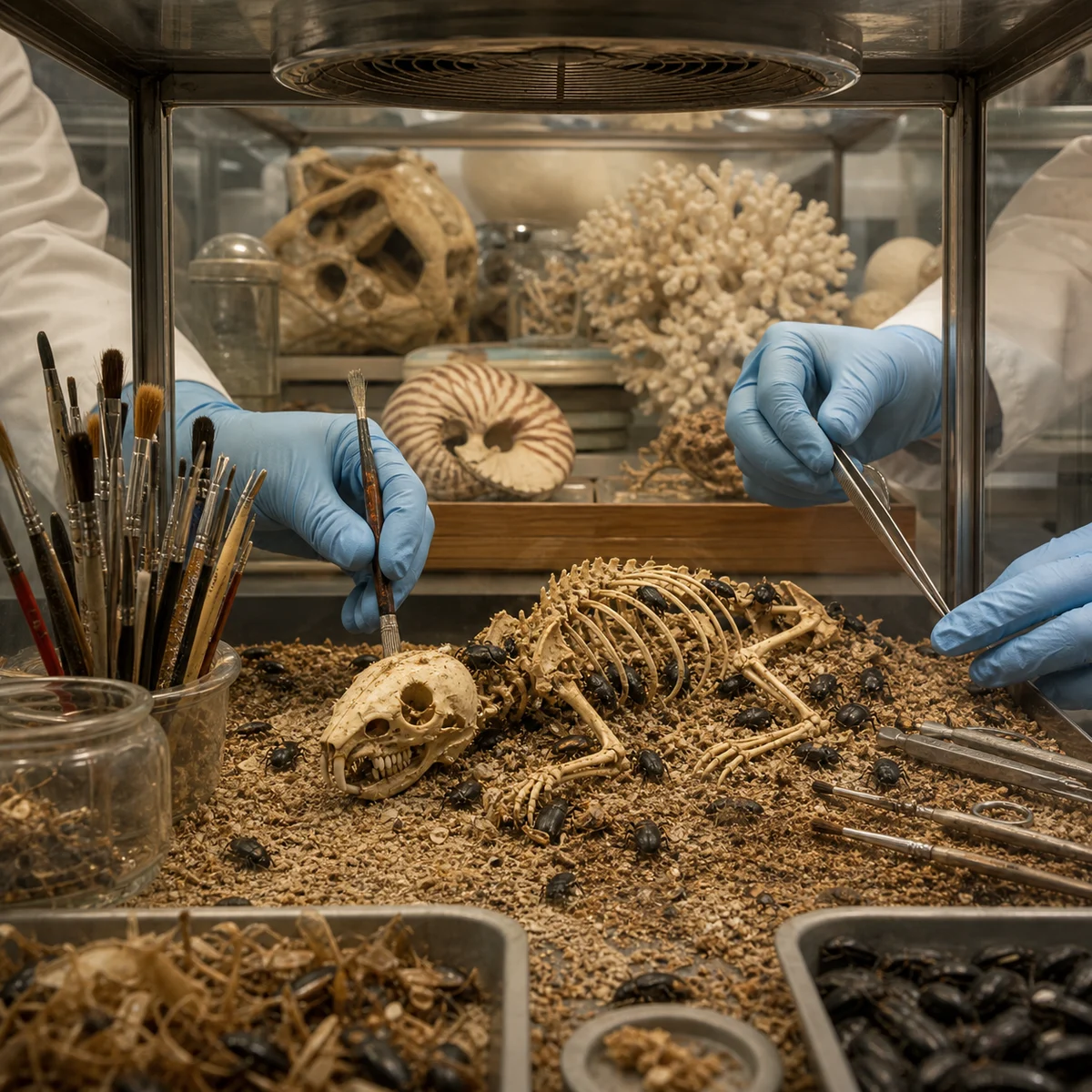
To clean a small skeleton without snapping its finest bones, Smithsonian technicians can hand the delicate work to dermestid beetles. Climate-controlled colonies consume dried soft tissue from prepared scientific specimens, reaching crevices that knives and forceps could easily damage. A small skeleton may be stripped in hours while joints, thin bones, and other hard structures remain available for study.
The colony is not a magic box that accepts an untouched animal and returns a finished museum object. Technicians first skin and prepare the specimen, control moisture, and decide when it is ready for the beetles. After feeding, staff inspect the bones, remove remaining material, degrease them, and complete whatever preparation the collection requires. The insects eat tissue, not bone, and their usefulness depends on careful human handling before and after their shift.
That division of labor is exactly what makes the method elegant. People manage sanitation, sequence, and scientific standards; the beetles perform thousands of tiny, irregular removals without scraping across fragile anatomy. A natural decomposer becomes a specialized museum tool, kept under controlled conditions because its appetite can reveal structures that rougher cleaning would erase.
Sources