Share
Share







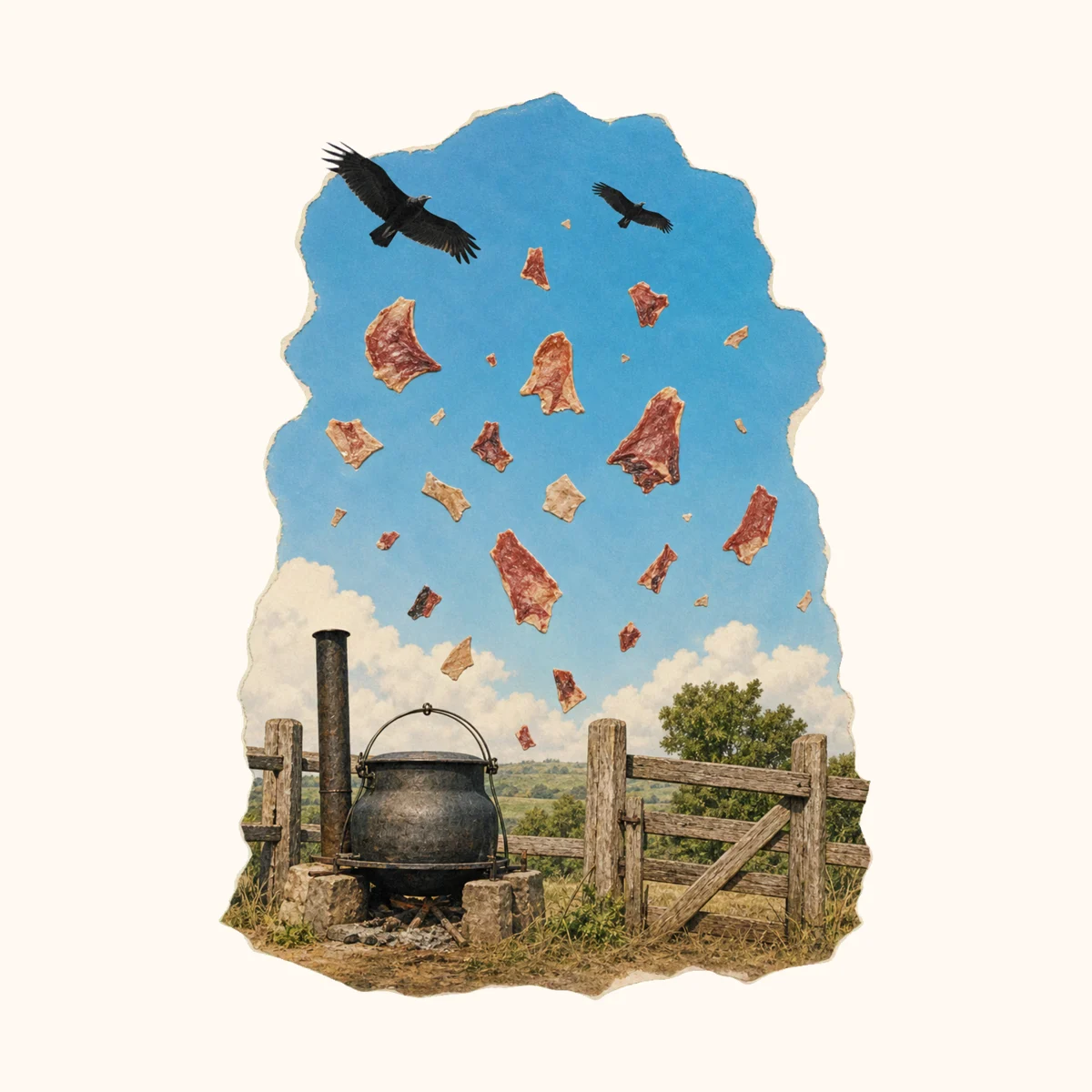
Just before noon on March 3, 1876, Mrs. Allen Crouch was outside making soap near Olympia Springs, Kentucky, when pieces of flesh began falling from a clear sky. The shower scattered material across the yard and fences. Most pieces were reported at about five centimetres square; at least one was roughly twice that size. Two visitors later tasted samples and proposed mutton or venison, because apparently the nineteenth-century response to airborne mystery meat was lunch.
Microscopists were less reckless but no less intrigued. Preserved pieces were examined as lung, muscle and cartilage—evidence that this was animal tissue, not the gelatinous cyanobacterium called Nostoc that one early explanation proposed. The variety of tissues helped Dr. L. D. Kastenbine advance the leading theory: a flock of vultures had disgorged a recent meal while flying overhead, and wind spread the falling pieces. Both turkey and black vultures can vomit to defend themselves or lighten their load, but no witness recorded the birds.
The exact animal and trigger remain unresolved. A surviving specimen associated with the shower was rediscovered at Transylvania University in 2004, too old and contaminated to settle the case conclusively. What remains is a remarkably durable mystery with an unglamorous best answer: Kentucky's meat rain was probably not weather at all, but a group digestive event at altitude.