Share
Share







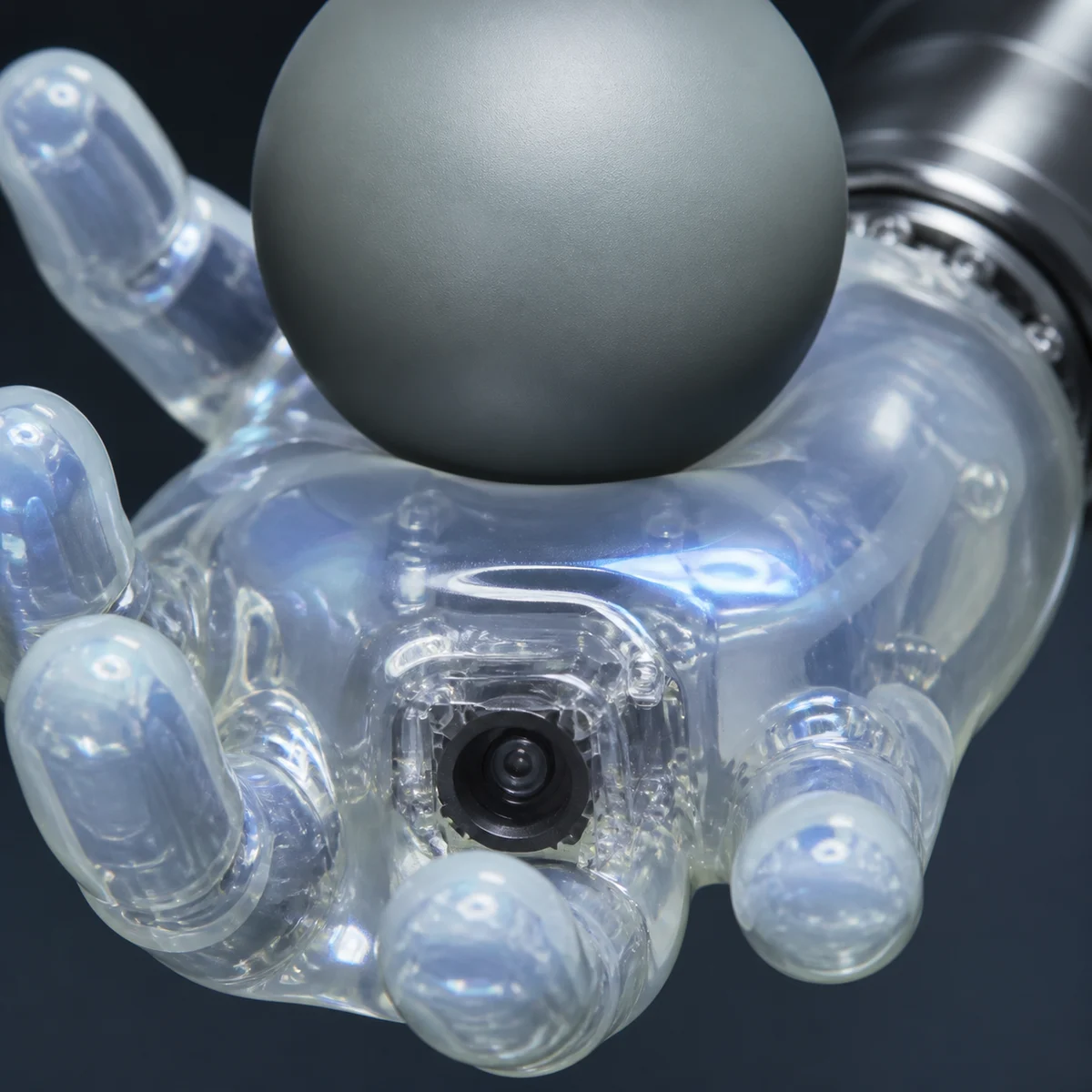
Many robotic hands place touch sensors at the fingertips, where grasping often begins. But a human hand also uses the palm to cradle objects, distribute pressure, and detect contact after something slips past the fingers. MIT's GelPalm adds a compliant camera-based tactile surface to that neglected area.
When an object presses into the soft transparent skin, the surface deforms. A camera inside observes the changed pattern and reconstructs information about contact shape and force. Paired with tactile fingers, the palm can provide a broader map of how an object sits in the hand instead of leaving a blind region at the center of the grasp.
The prototype still faces packaging tradeoffs. Cameras, lighting, soft material, and finger mechanisms all occupy limited space, and integrating their data into control is another task. GelPalm does not make a complete human-equivalent hand. It demonstrates that touch should cover where the object actually goes. Sometimes the missed signal is not at the fingertips. It is resting against the palm.
Sources