Share
Share







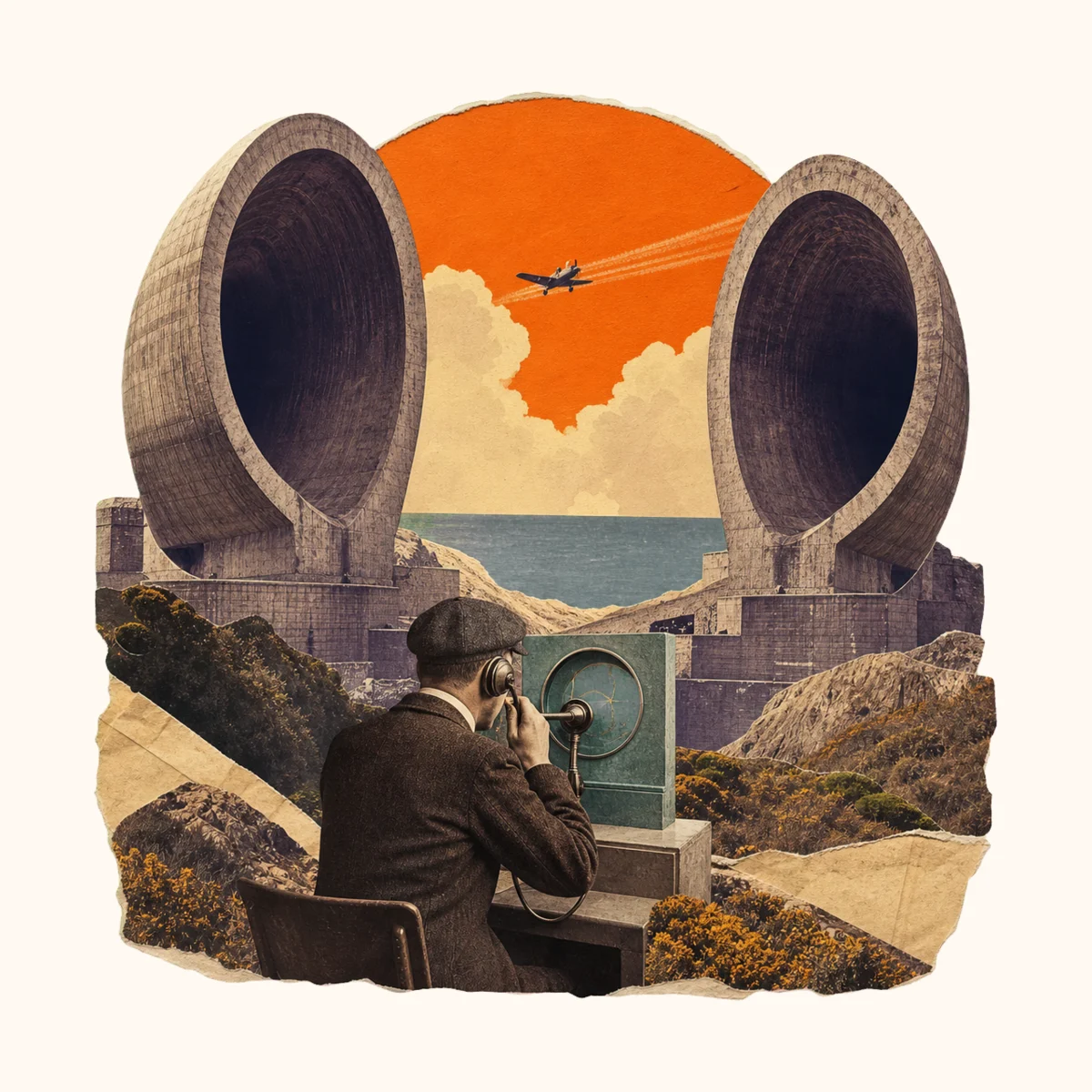
In the days before radar, Britain relied on giant concrete sound mirrors to listen for the distant hum of enemy aircraft engines. These colossal structures, known as the Denge Sound Mirrors, were built between 1927 and 1930 along the Kent coast. Each mirror, a marvel of acoustic engineering, focused sound waves onto a metal trumpet connected to a stethoscope worn by a listener. This allowed them to pinpoint the direction of approaching planes.
The Denge site boasted three distinct mirrors: a 20-foot slab, a 30-foot bowl, and a 200-foot long curved wall. Together, they formed an experimental early-warning system capable of detecting aircraft up to 24 miles away. By rotating the trumpet and noting the direction of the sound, listeners could determine the aircraft's bearing and communicate this information to fighter pilots via telephone.
Despite their ingenuity, these concrete ears were rendered obsolete by the advent of radar by 1935. Yet, they remain a testament to human creativity in the face of technological challenges. The sound mirrors stand today as silent witnesses to a bygone era, their concrete faces turned forever skyward, listening for echoes of the past.