Share
Share







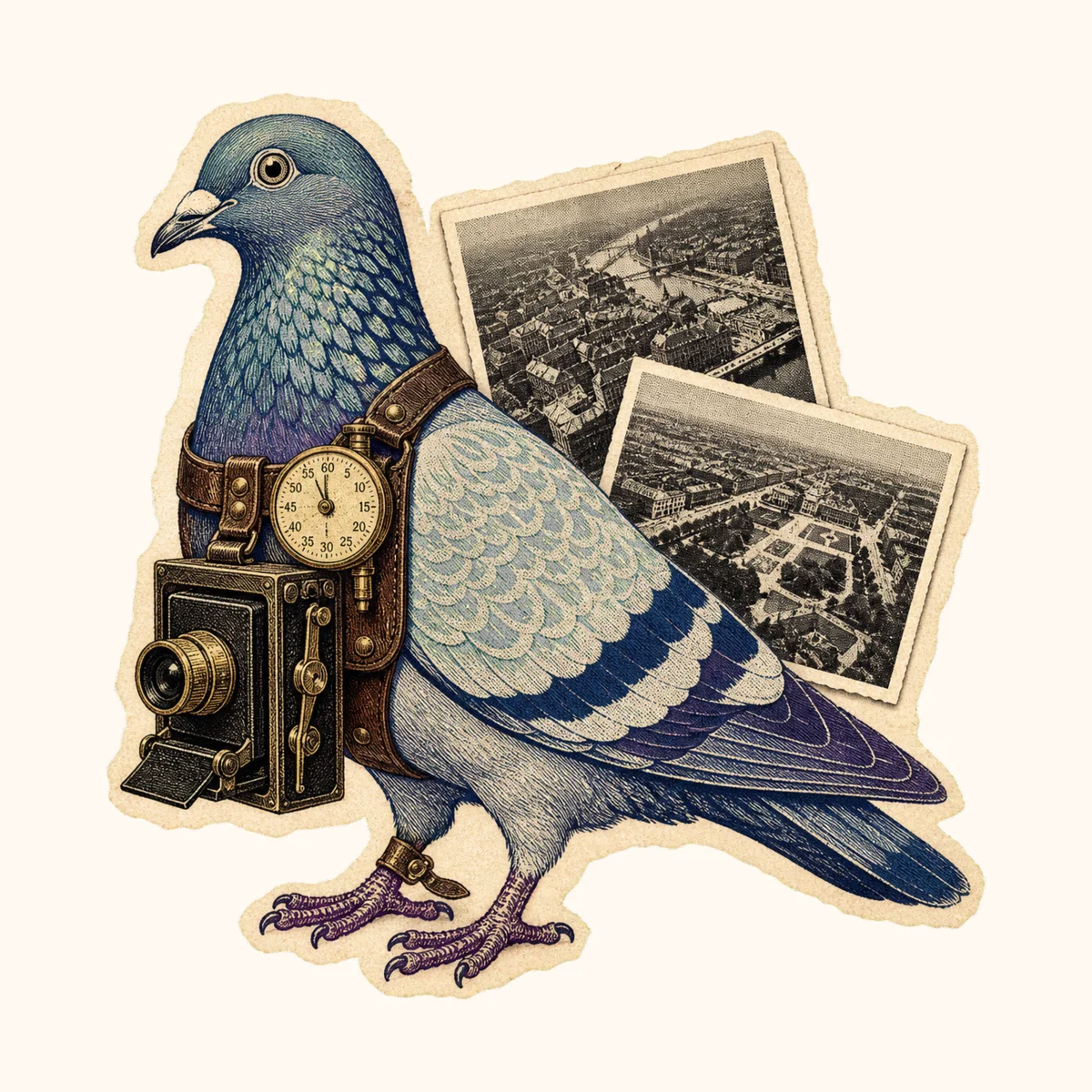
At the start of the twentieth century, German pharmacist Julius Neubronner gave homing pigeons a second job: aerial photographer. He built miniature cameras that strapped to a bird's breast and used a timing mechanism to expose photographs during the flight home. The patent office initially doubted that a pigeon could carry the equipment. Neubronner answered with pictures taken from the air, and received his German patent in December 1908.
The system made its public debut at the 1909 International Photographic Exhibition in Dresden. Visitors could watch pigeon photographs being developed and buy the results as postcards. The images were imperfect and oddly framed—the camera went wherever the bird went—but that was part of their power. Rooftops, roads, and Schloss Friedrichshof appeared from an altitude and angle few people had seen in a photograph.
Neubronner's rig never became the future of aerial reconnaissance. Airplanes quickly became the more controllable camera platform. His feathered photographers nevertheless solved a real engineering problem with a wonderfully unpredictable operator: a homing instinct supplied the flight plan, a timer handled the shutter, and the pigeon brought the camera back. Today, surviving devices and photographs sit in museum collections. The birds never learned composition, but they did help give photography a new point of view.