Share
Share







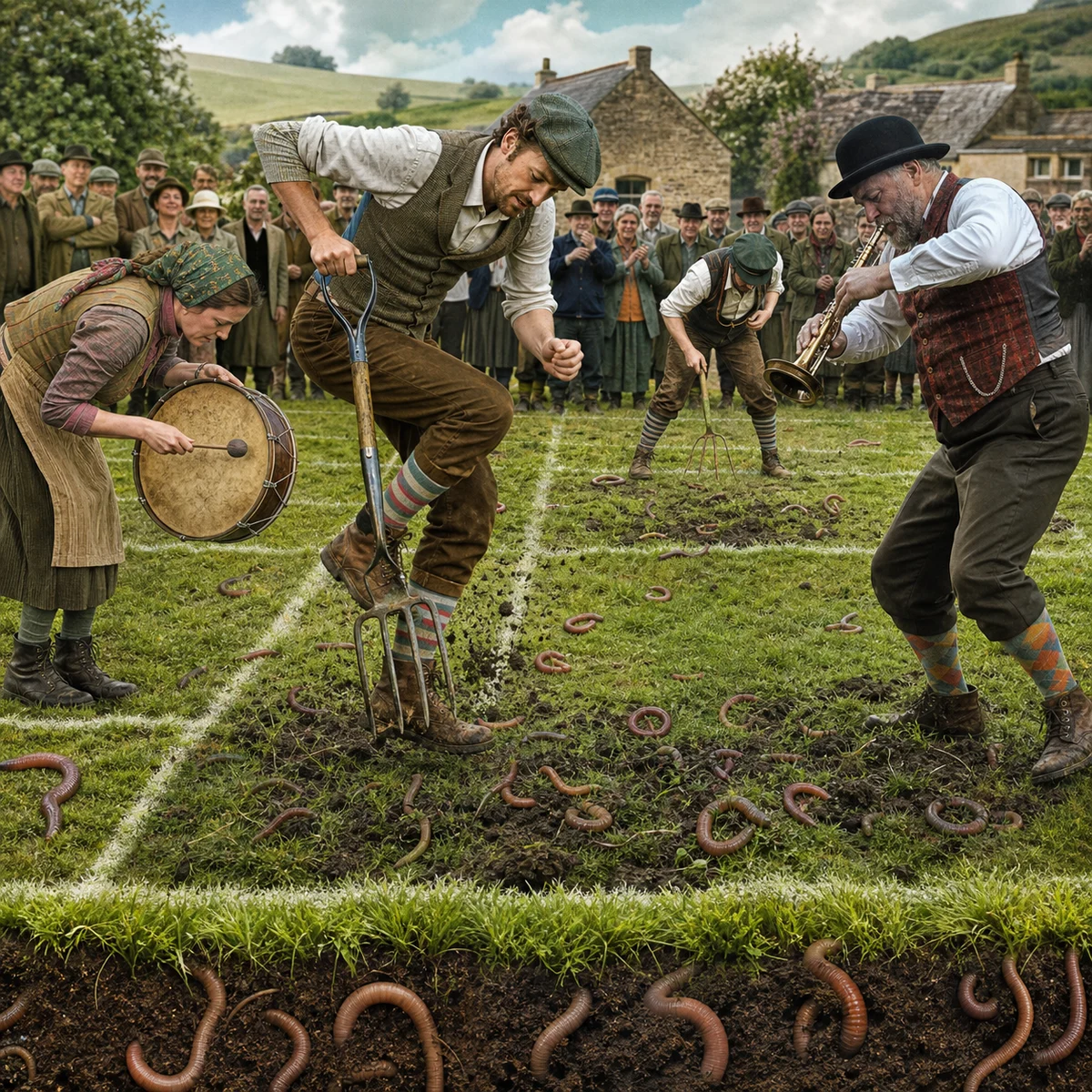
A championship field in Willaston is divided into marked plots, but nobody is planting or harvesting. Teams are trying to charm earthworms to the surface. Since 1980, competitors have experimented with rhythmic stamping, vibrating garden forks, music, and other forms of controlled commotion. The target is simple: coax out more worms than anyone else.
The rules protect both the contest and the soil-bound contestants. Teams may not dig for worms or pour liquid onto the ground. Instead, they must transmit vibration or otherwise make the surface inviting enough for earthworms to emerge on their own. The odd techniques echo a real behavior sometimes used by birds and people: vibrations in soil can bring worms upward. In championship form, that practical observation becomes an open design problem involving sound, rhythm, tools, and theatrical concentration.
The event's 567-worm record was set in 2009, so it belongs to that specific running rather than every future contest. Organizers publish each new schedule and the rules in force for it. The enduring fact is the event itself: a village field, carefully bounded patches of earth, and teams competing not to catch the fastest animal, but to make the hidden ones decide that now is the moment to surface.