Share
Share







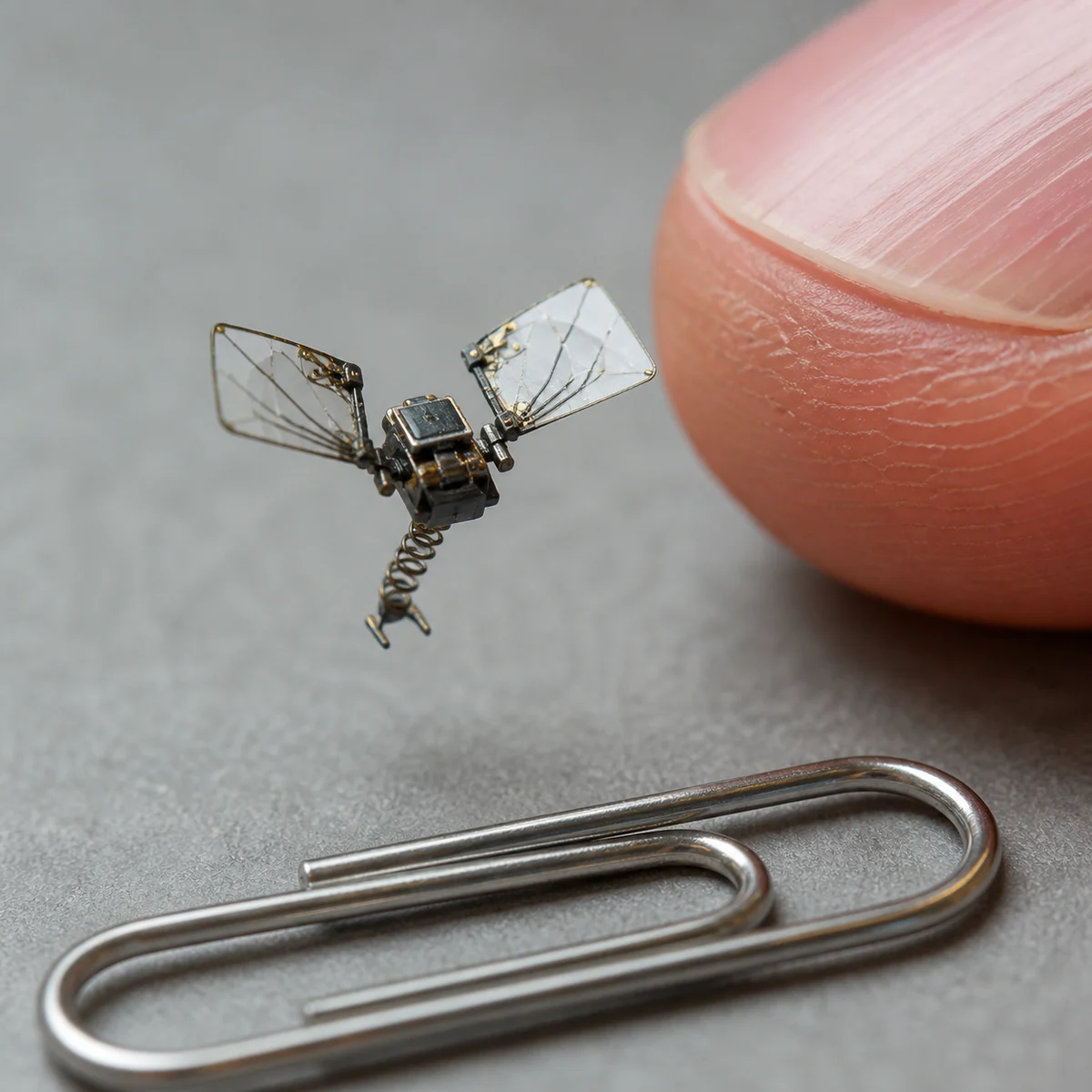
MIT researchers built a hopping robot smaller than a human thumb and lighter than a paperclip. Its leg flexes to store and release energy against the ground, while wing-like modules help control the body's orientation. Together they turn a simple jump into a steerable mode of movement.
At very small scales, wheels and conventional legs face obstacles that loom large relative to the machine. Hopping can clear gaps and rough patches without carrying the complexity of a full walking gait. The wing modules do not make this version a free-flying insect; they provide aerodynamic control that helps stabilize and direct the airborne phase before the next landing.
The device remains a research prototype, with laboratory performance rather than a finished field mission. Power, sensing, durability, and repeated landings will shape future uses. Its value lies in the combination: one elastic leg supplies the leap, and tiny wings make the ballistic moment less helpless. A paperclip's mass becomes enough robot to leave the ground on purpose.
Sources