Share
Share







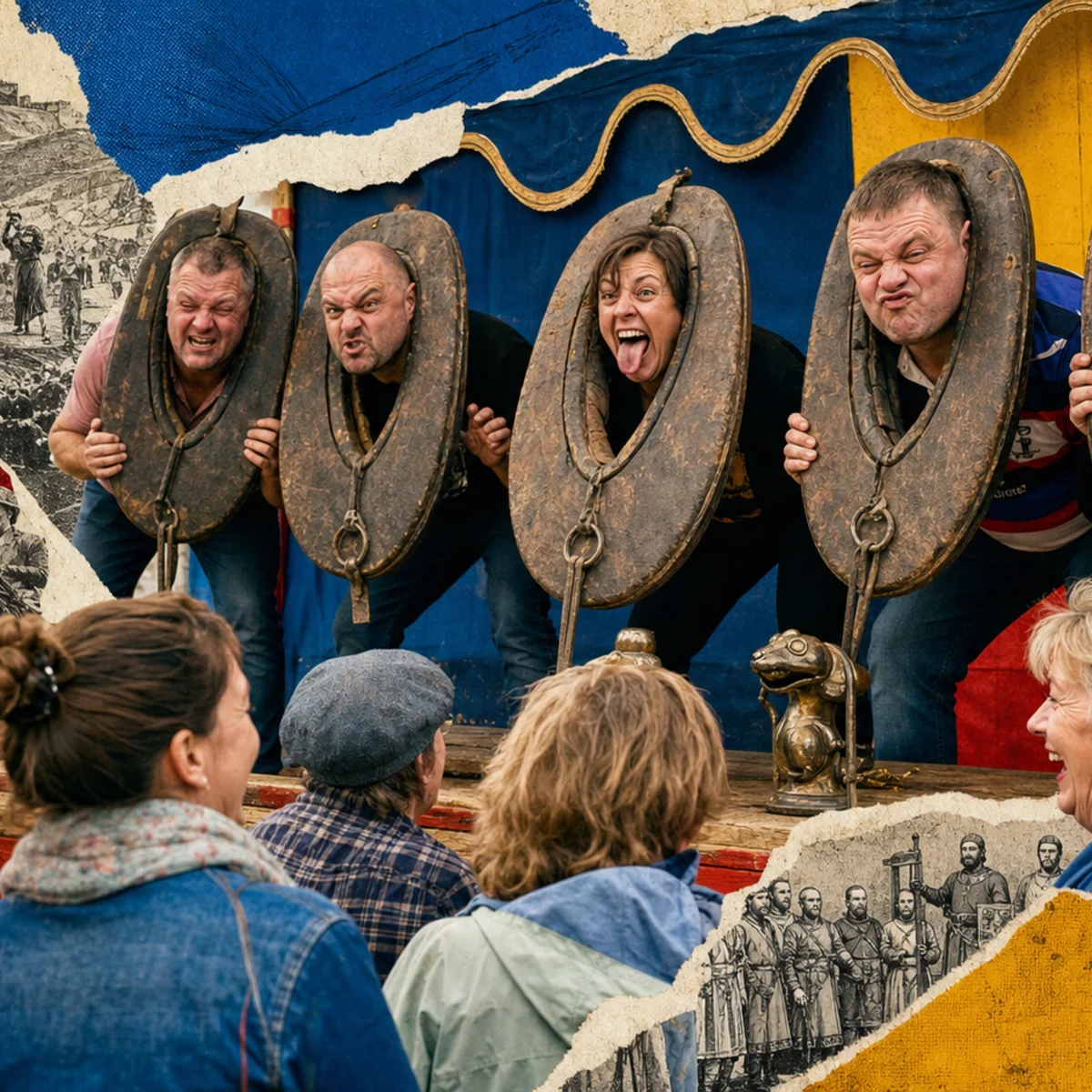
The equipment is a horse collar. The talent is having a face that can temporarily forget its usual job.
At the World Gurning Championships in Egremont, Cumbria, competitors place their heads through a braffin—the local name for a horse collar—and distort their features as dramatically as they can. Cheeks pull, lips fold, jaws shift and eyes search for positions that ordinary conversation has never required. The collar frames each performance like a portrait whose subject has rebelled against portraiture.
The contest belongs to the Egremont Crab Fair, an event with roots reaching back to 1267. That year supplies the fair's charter history, not a precise birth certificate for competitive face-pulling. Gurning's own documented trail appears much later. Guinness World Records notes that a local newspaper, the Cumberland Paquet, described it as an ancient tradition in 1852. Even then, people in the area believed it had already been happening for a long time.
That distinction makes the history more interesting. A very old fair can gather customs over centuries without recording the exact moment each one arrived. Markets, sports, processions, food and local jokes accumulate around an annual date. Gurning may sit inside that kind of layered tradition: younger than the charter, older than the surviving report and difficult to separate from the community that kept performing it.
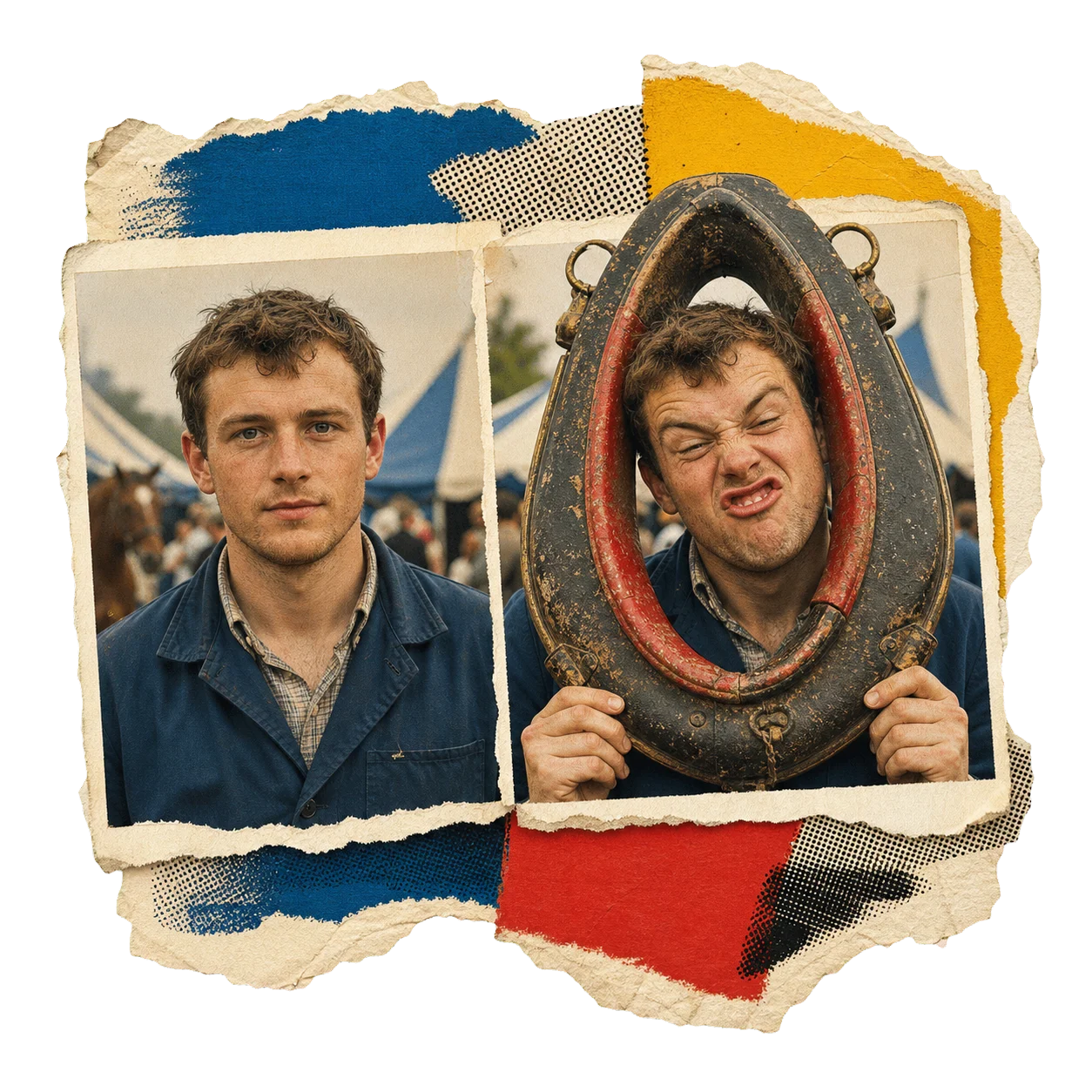
The word itself is unusually precise. The fair's history gives definitions that include snarling like a dog, looking savage and distorting the countenance. Gurning is not merely smiling strangely. It is deliberate rearrangement, an attempt to push familiar features into a configuration that looks briefly impossible.
The braffin changes the task. Without it, a person pulling a face is simply a person pulling a face. The horse collar creates a boundary, isolates the head and turns the expression into an exhibit. It also ties the performance to a rural object that once had an ordinary working purpose. Farm equipment becomes a stage, a frame and part of the costume all at once.
A portrait frame normally encourages dignity. The braffin produces the opposite response. It asks the competitor to abandon flattering angles and make the face less recognizable. In that sense, gurning reverses nearly every rule of posed photography. Symmetry is not the goal. Composure is not the goal. The winner is not the person who looks most like an idealized version of themselves, but the person who can travel furthest from it and still return when the collar comes off.
The modern championship has separate men's, women's and junior categories. That structure treats the practice as a skill that can be attempted across generations rather than a single novelty turn. Children can watch adults commit completely to looking ridiculous, then enter a category built for them. The result is a tradition that reproduces itself through participation instead of remaining behind glass.
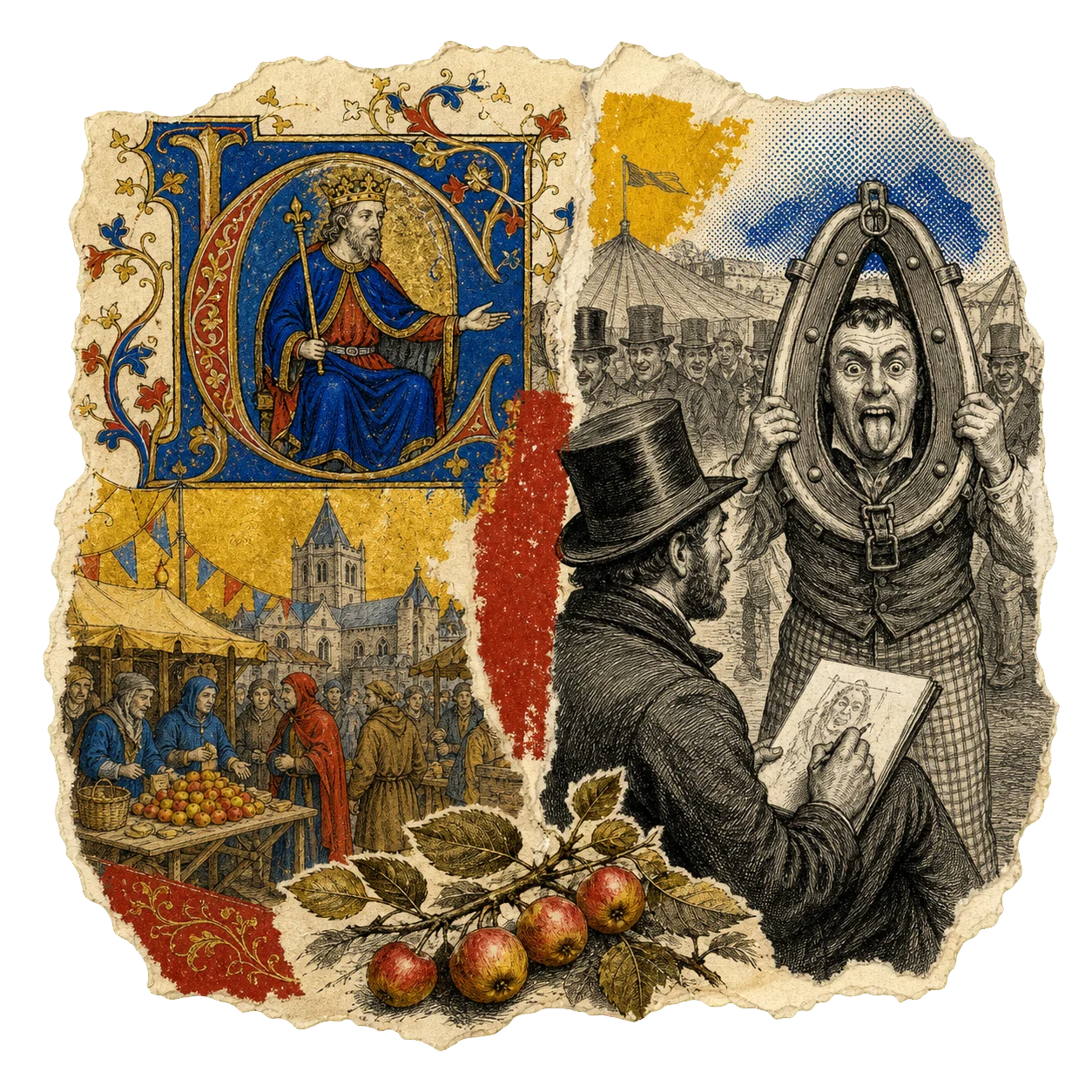
The fair's own account preserves several possible origin tales for the custom, but presents them as folklore rather than settled fact. That is the responsible way to handle a practice whose appeal invites a good story. A contest involving horse collars and contorted faces almost demands an eccentric founding scene. The historical record is firmer about what happened later: by 1852, it was already described as old.
Guinness recognizes Egremont's event as the longest-running gurning world championship. The record does not mean every detail has remained unchanged since medieval times. It recognizes continuity—the repeated decision to gather, frame faces in braffins and judge the transformations. A custom survives because enough people keep deciding that it is worth doing again.
There is something refreshingly direct about the performance. It needs no expensive machine, rare material or hidden technique. The raw material arrives attached to every entrant. Yet the collar reveals how flexible and strange that familiar material can become. A slight change in jaw, lip or eye can turn one person into a completely different creature for a few seconds.
That transformation also depends on commitment. A hesitant gurn looks like discomfort. A successful one requires the performer to ignore the instinct to remain attractive, polite or self-contained in public. The face is normally a social instrument, constantly adjusting to show attention, friendliness, concern or authority. Competitive gurning disconnects it from those duties and lets expression become sculpture.
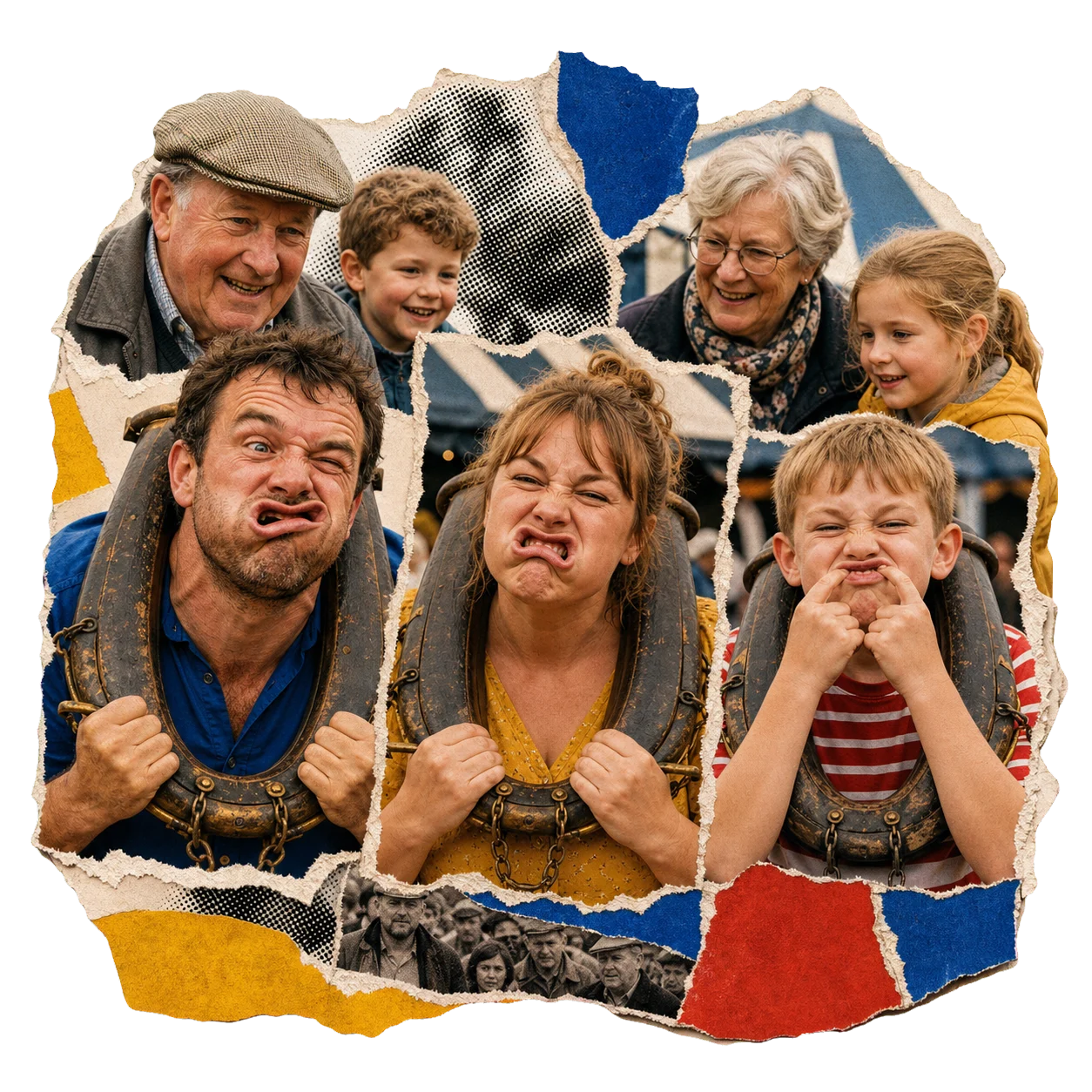
Spectators do not need an explanation of the judging premise. The visual language is immediate: here is a normal human head inside an old collar, and here is the astonishing arrangement it can make. The contest is local in setting but nearly universal in readability. Every viewer knows what faces usually do, so every distortion registers at once.
The fair's age adds another layer of contrast. A charter from the reign of Henry III sits at one end of the story; a contemporary world championship sits at the other. Between them lies a community practice that resists becoming solemn simply because it is old. Longevity often makes traditions ceremonial. Gurning has survived while remaining cheerfully undignified.
That may be the real achievement of the championship. It preserves more than a contest. It preserves permission for an entire town to treat absurdity as cultural inheritance. The braffin does not elevate the face by making it beautiful. It elevates the act of making it gloriously, deliberately strange.
For the length of a turn, the competitor's face stops being an identity card and becomes a temporary construction. Then the collar lifts, the features settle and the person reappears. The portrait has behaved badly. The tradition continues.