Share
Share







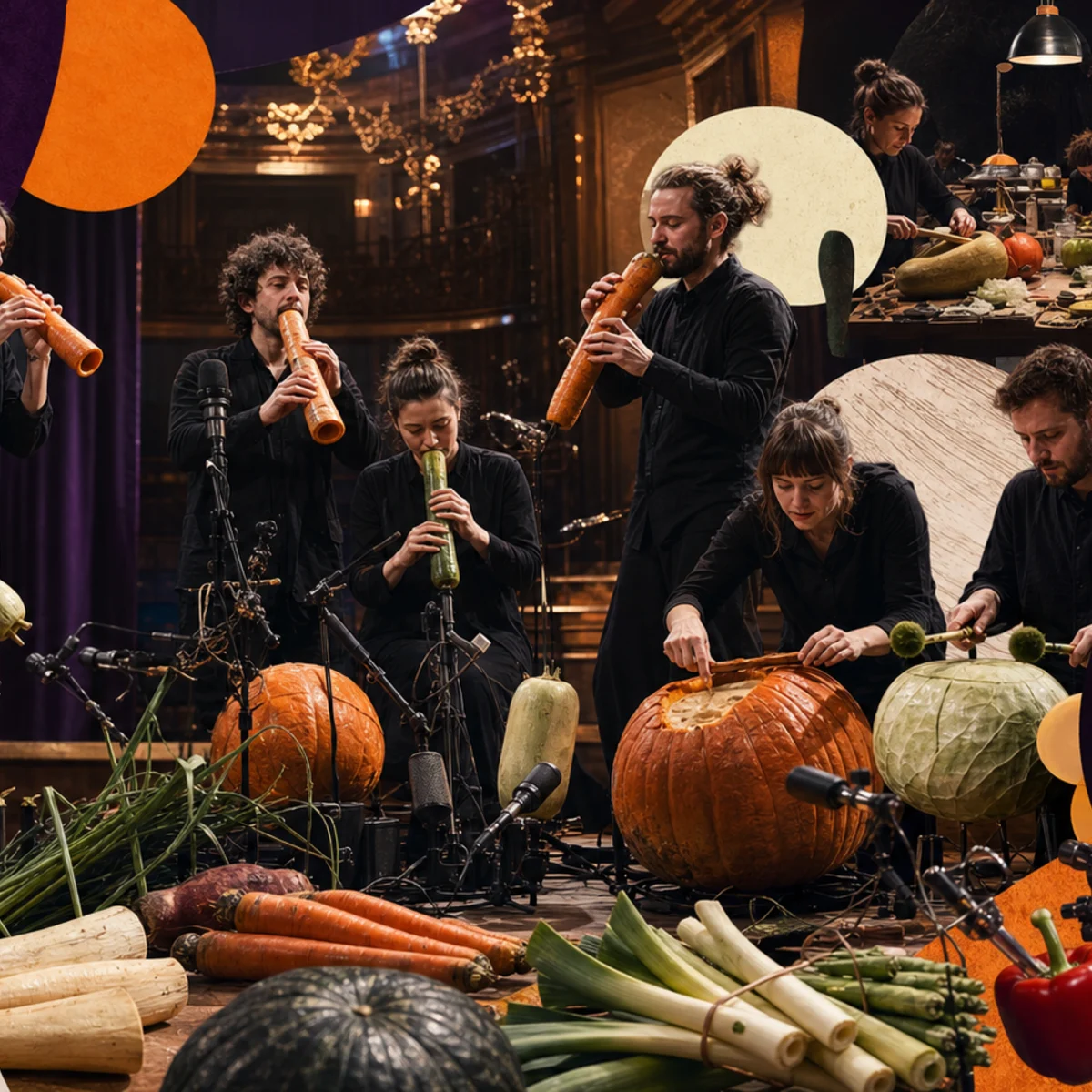
Before the concert can begin, the orchestra needs to go shopping.
The Vegetable Orchestra does not pull its instruments from velvet-lined cases. Its members select fresh produce, bring it to the performance site and construct a new collection of playable objects before each show. Vegetables that might have become a side dish are cut, pierced, joined, tapped, blown through and amplified. A few hours later, the produce is onstage making music.
The Vienna-based ensemble has worked this way since 1998. Its instruments are not decorative vegetables attached to conventional hardware. Fresh produce is the material of the instrument itself. A hollowed vegetable can become an air column. A firm surface can become percussion. Leaves, skins, seeds and internal cavities offer noises that an ordinary instrument maker would rarely consider part of a musical vocabulary.
That makes every performance begin with fabrication. A violin or trumpet can remain stable for decades if it is cared for. A vegetable instrument changes while the musicians are still preparing it. Freshness, water content, density, temperature, shape and natural variation all affect what the material can do. Two vegetables of the same kind are not interchangeable components. They have to be handled as individual pieces.
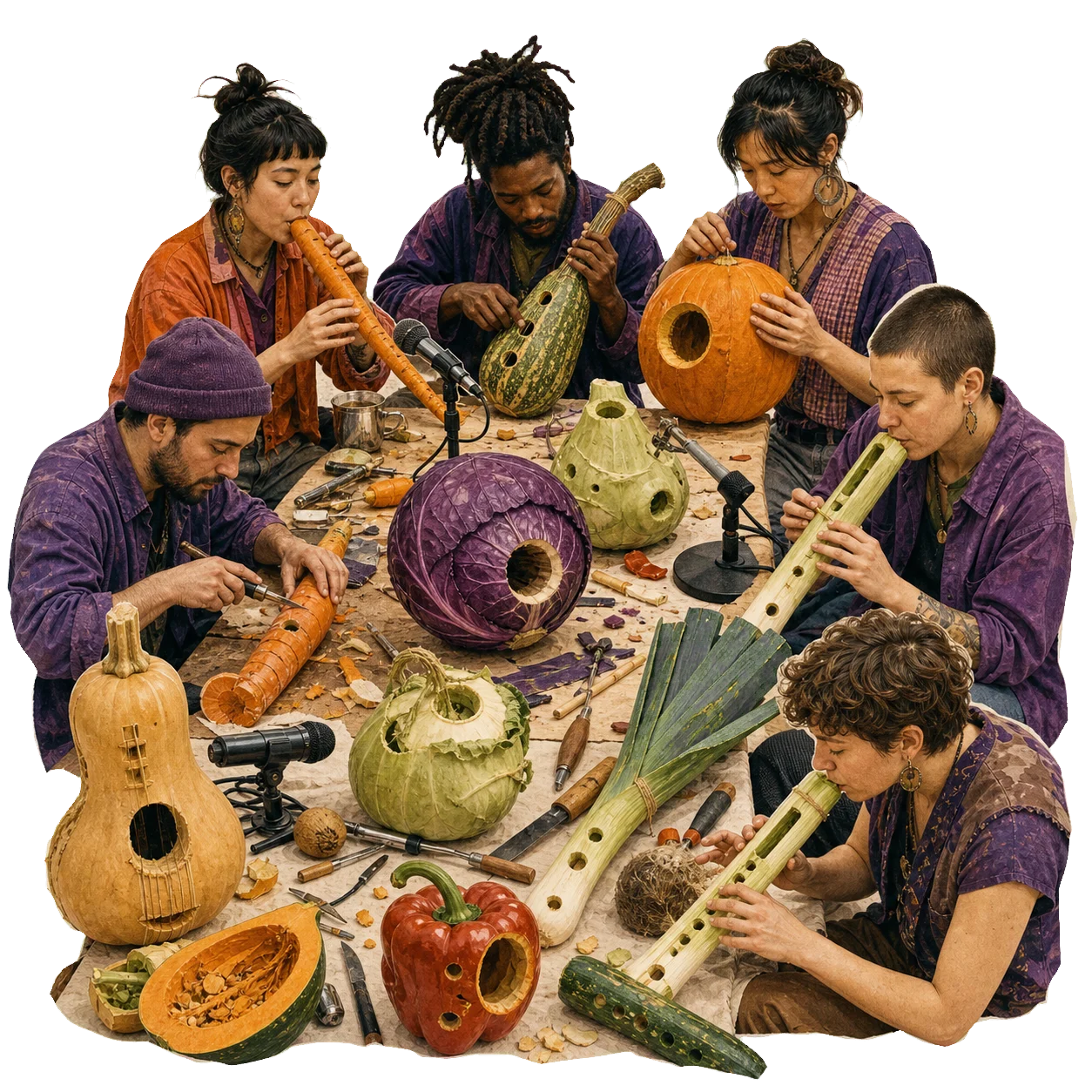
The ensemble therefore includes more than conventional instrumentalists. Its members come from music, visual art, design, media art, architecture and sound poetry. Those backgrounds make sense for a group whose work sits between concert, sculpture, workshop and kitchen. Someone has to hear the possible note, understand the material, design the object, make it visible onstage and decide how its unusual sound belongs inside a composition.
Fresh construction also means the instruments resist being standardized. The orchestra can develop methods and familiar forms, but the materials keep introducing variation. A wall can be built from identical bricks; a vegetable instrument is closer to a small negotiation with biology. The player tests, trims, listens and adjusts until the object produces a useful response.
The result is not a novelty version of a familiar orchestra. The point is not merely to reproduce a violin or flute while swapping wood and metal for groceries. Vegetable sounds can be breathy, wet, brittle, fibrous, hollow, percussive or unstable. Amplification lets tiny scratches, squeaks and impacts occupy the room. The compositions can use those qualities rather than apologizing for them.
That is why the workshop belongs to the performance. The instruments are temporary, but the process is repeatable: select fresh material, transform it, test it, play it and accept that it will not last. A traditional instrument often gains prestige from age. These instruments gain usefulness from being new.
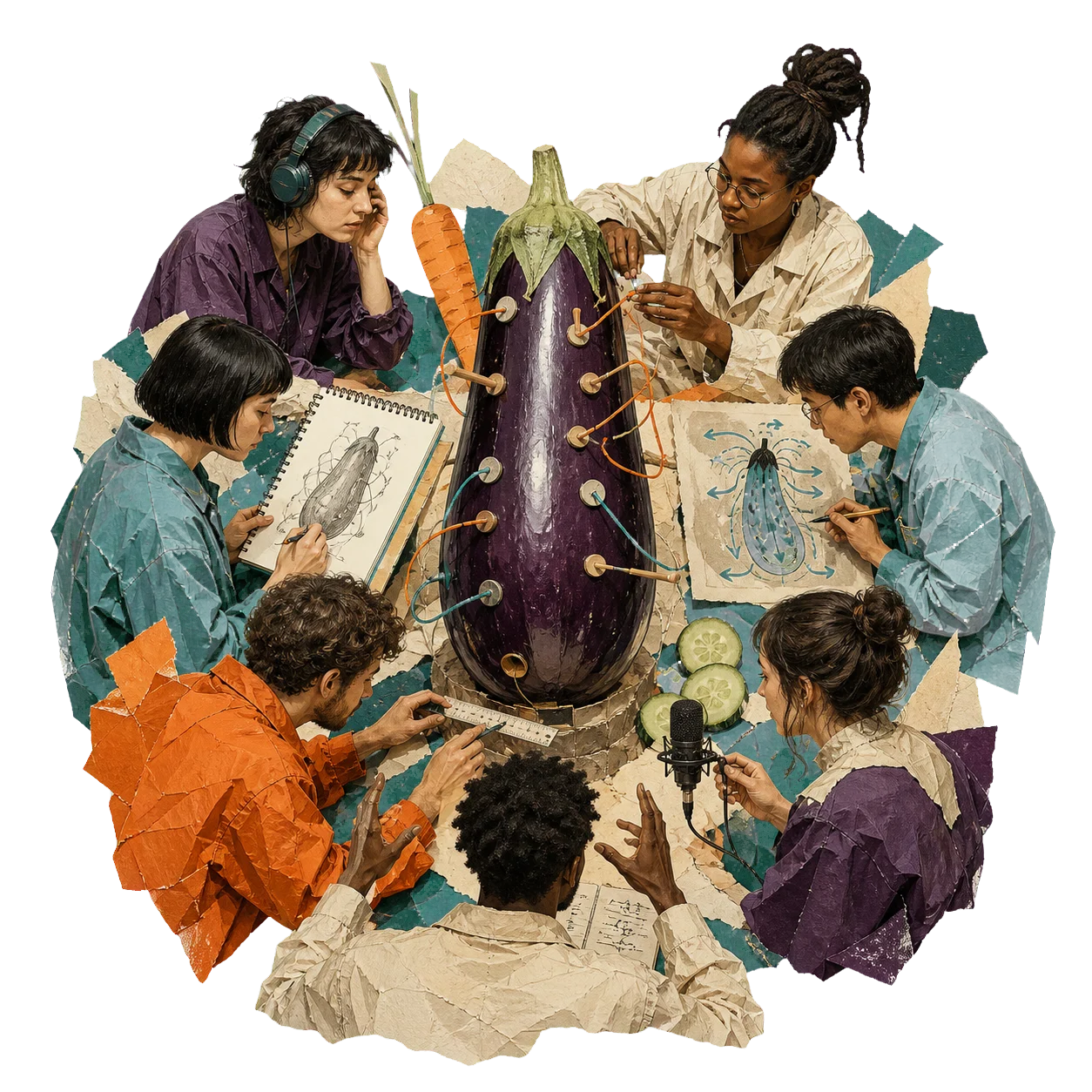
The visual experience carries the same reversal. Produce normally arrives onstage only as a prop, a joke or catering. Here it sits in the musicians' hands with the seriousness of concert equipment. The audience watches familiar food become unfamiliar through posture and attention. A vegetable held like an instrument invites a different kind of listening before it makes a sound.
The group can prepare an instrument knowing that the object will begin drying, softening or changing as soon as it is made. That built-in expiration creates a performance with no permanent artifact at its center. Recordings, photographs and memories can remain, but the actual instrument belongs to one short period between market and compost.
Then comes the orchestra's best final movement. Produce left from the construction process is turned into soup and shared with the audience after the performance. The material travels through several identities in one evening: raw ingredient, construction stock, sound-making device and meal.
The soup is not merely a cute encore. It completes the logic of an ensemble that refuses to separate music from material. Instrument makers normally hide sawdust and offcuts backstage. The Vegetable Orchestra takes its leftovers seriously enough to serve them. What could have been waste becomes another communal part of the event.
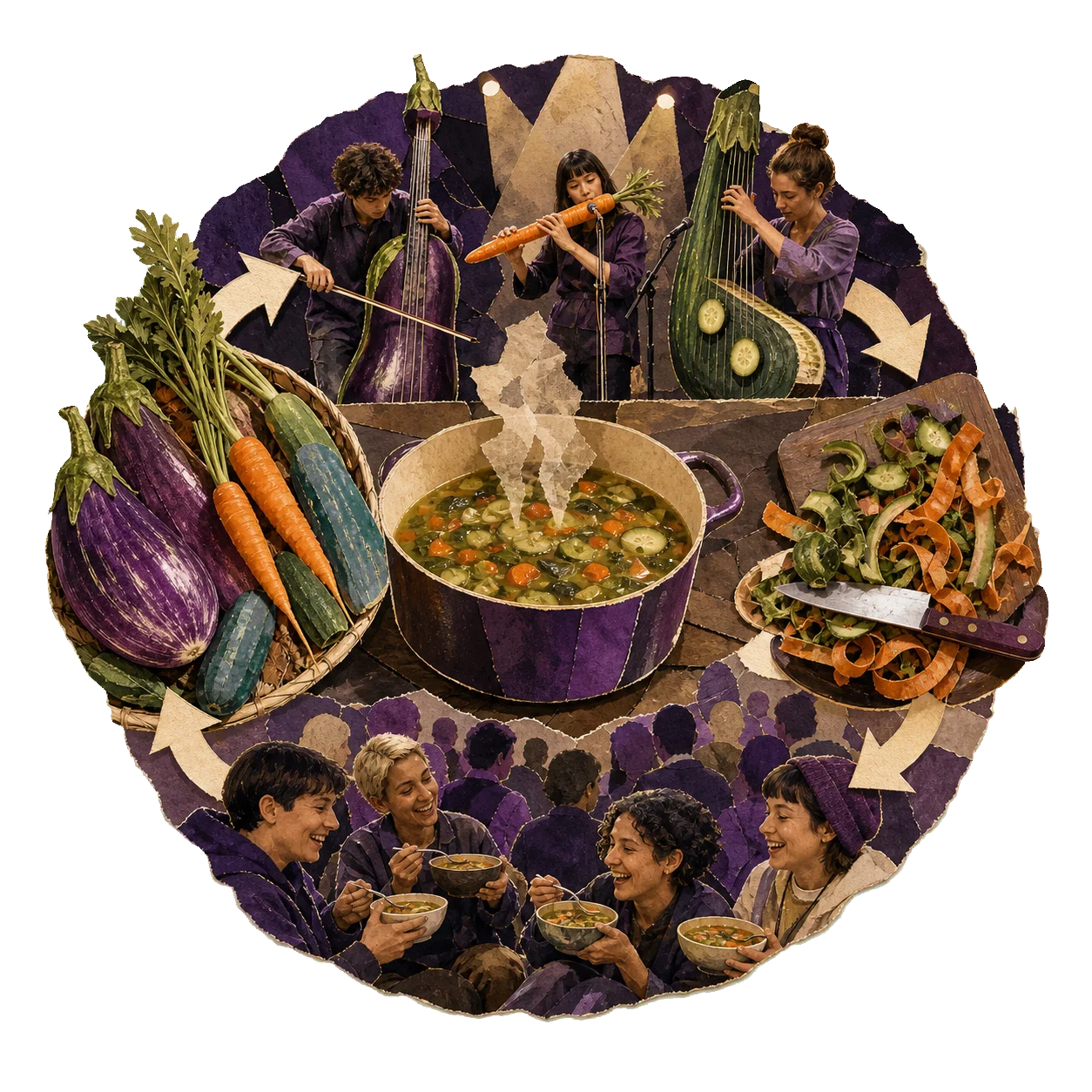
There is a useful contrast between the durability of the organization and the fragility of its tools. The Vienna ensemble has existed since 1998, while any one batch of instruments may survive only long enough for rehearsal and performance. Continuity lives in the knowledge of the members—their methods of selecting, shaping, amplifying and composing—not in a museum shelf of preserved equipment.
That knowledge also changes the meaning of virtuosity. The musicians have to play, but they must first understand how to make something playable. A performer cannot assume the interface will be waiting in a standardized form. Construction and interpretation are linked. Listening begins before the first note, while choosing material and testing whether it responds.
Audiences often encounter experimental music through unfamiliar electronics or abstract systems. The Vegetable Orchestra reaches a similar territory with objects everyone recognizes. The strangeness comes from reclassification. Dinner is no longer dinner. A shopping trip becomes instrument acquisition. Chopping becomes luthiery. Soup becomes the final proof that the same matter can move through sound without ceasing to be food.
At the end of the night, there are no priceless instruments to lock away. The stage can be cleared, the usable leftovers can be cooked and tomorrow's performance will require another round of fresh construction. The repertoire may return, but its physical voice has to be rebuilt.
That is the orchestra's quiet radicalism: it treats an instrument not as a permanent object but as a temporary arrangement of material, technique and attention. For one evening, a vegetable is asked to become sound. Afterward, it is allowed to become dinner again.