Share
Share







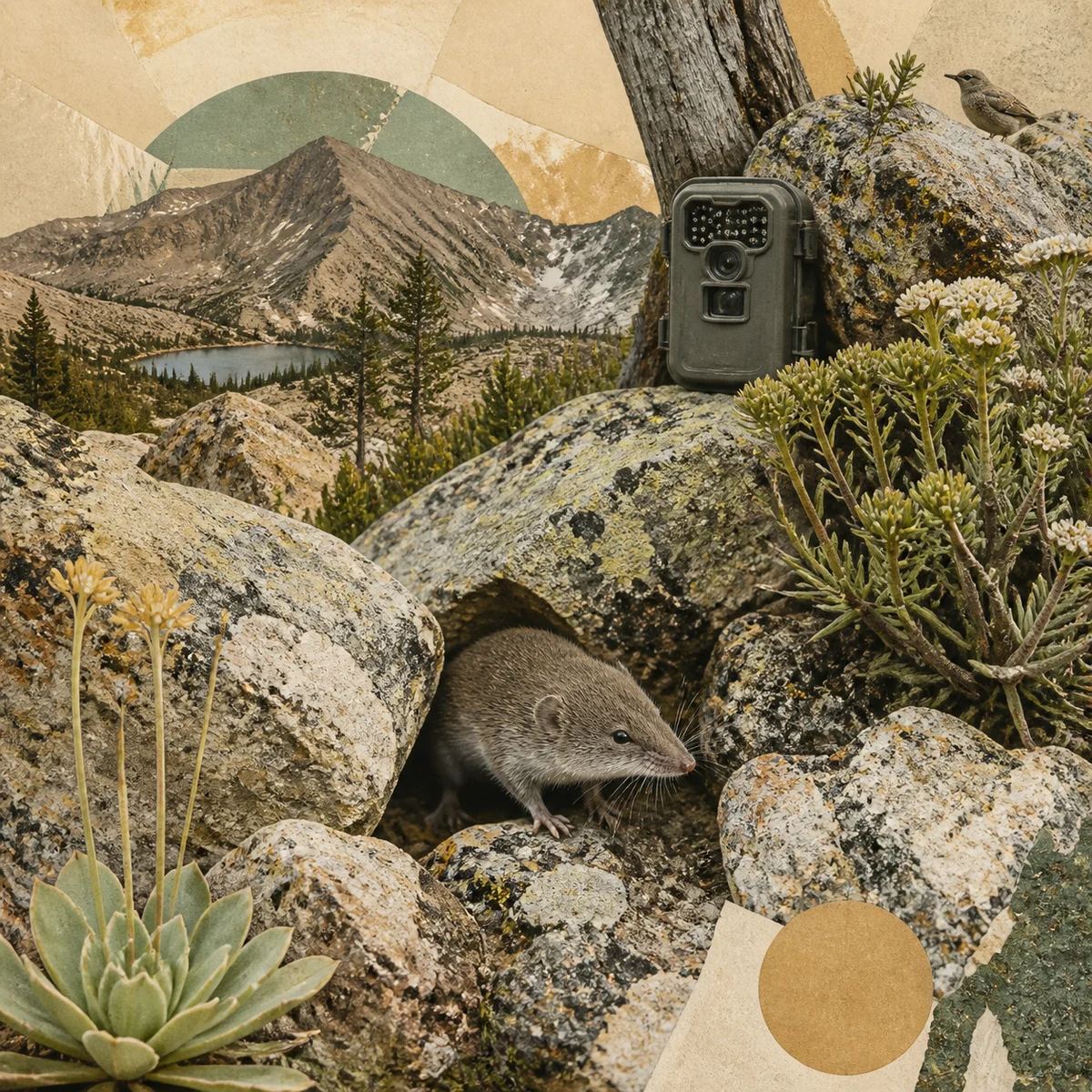
The Mount Lyell shrew was scientifically described in 1902, but for more than a century its visual record remained unusually still. Researchers had museum specimens and a name, yet no known photograph or video of a living member of the species. That gap closed during a California wildlife survey in November 2024.
The tiny insect-eating mammal lives in rugged, high-elevation habitat and spends much of its time hidden beneath vegetation, rocks, and soil. Those habits make an animal difficult to encounter and even harder to photograph. Survey work finally produced both still images and video, showing the shrew alive rather than preserved in a collection.
The distinction matters: this was not the discovery of a new species. Scientists had recognized the Mount Lyell shrew for well over a hundred years. It was the first known living imagery—a reminder that documentation has several layers. An animal can be named, catalogued, and mapped while some of the most ordinary evidence of its life remains missing. The shrew had not evaded science. It had simply avoided the camera.
Sources