Share
Share







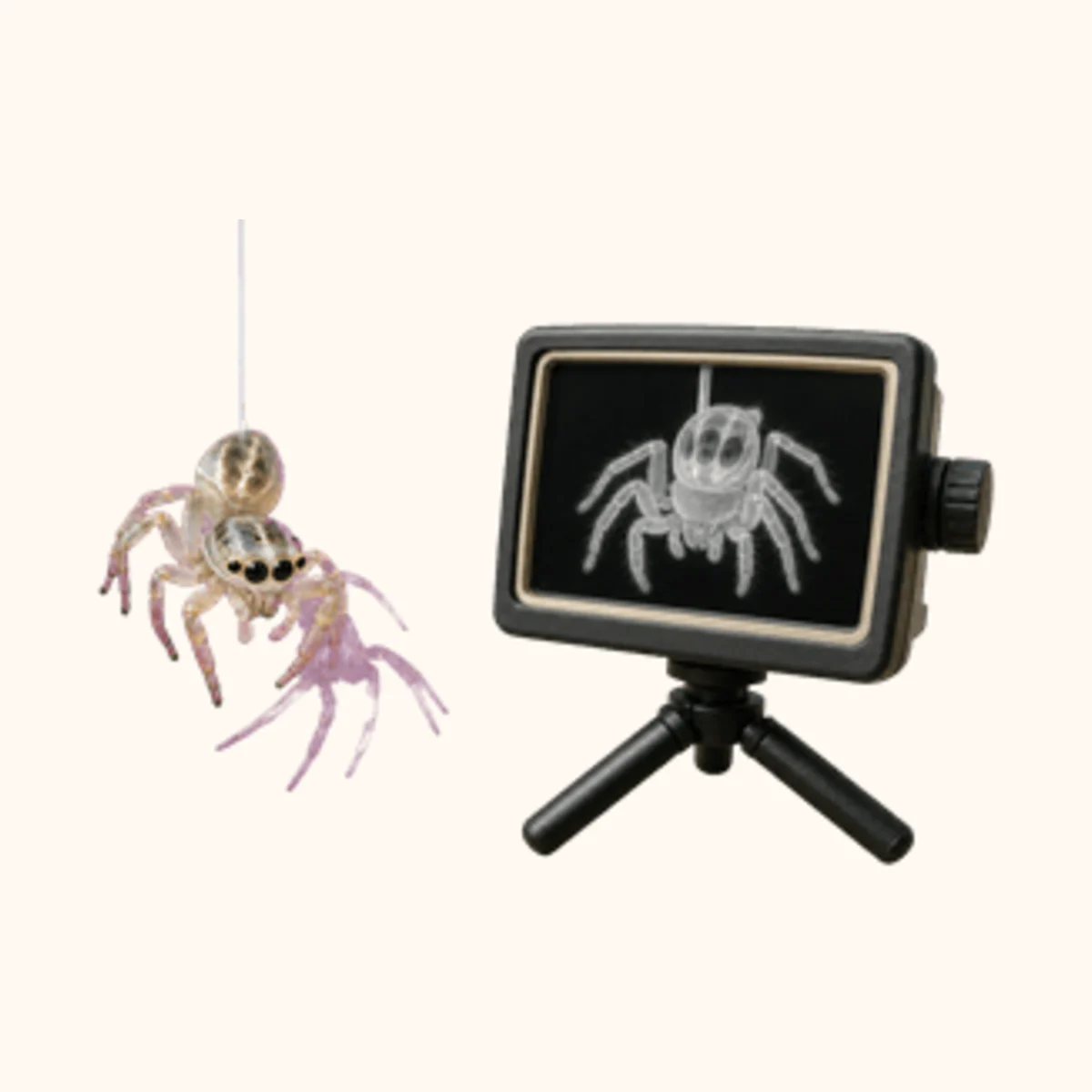
Infrared recordings of 34 juvenile jumping spiders captured regular bouts of retinal movement, leg twitching, and leg curling while the spiders hung from silk threads at night. The babies' translucent exoskeletons let researchers see their retinal tubes move at the same time as the body twitches. The pattern resembles rapid-eye-movement sleep in vertebrates. It does not prove that spiders dream, but it makes that once-ridiculous question scientifically reasonable.
Sources