




 Share








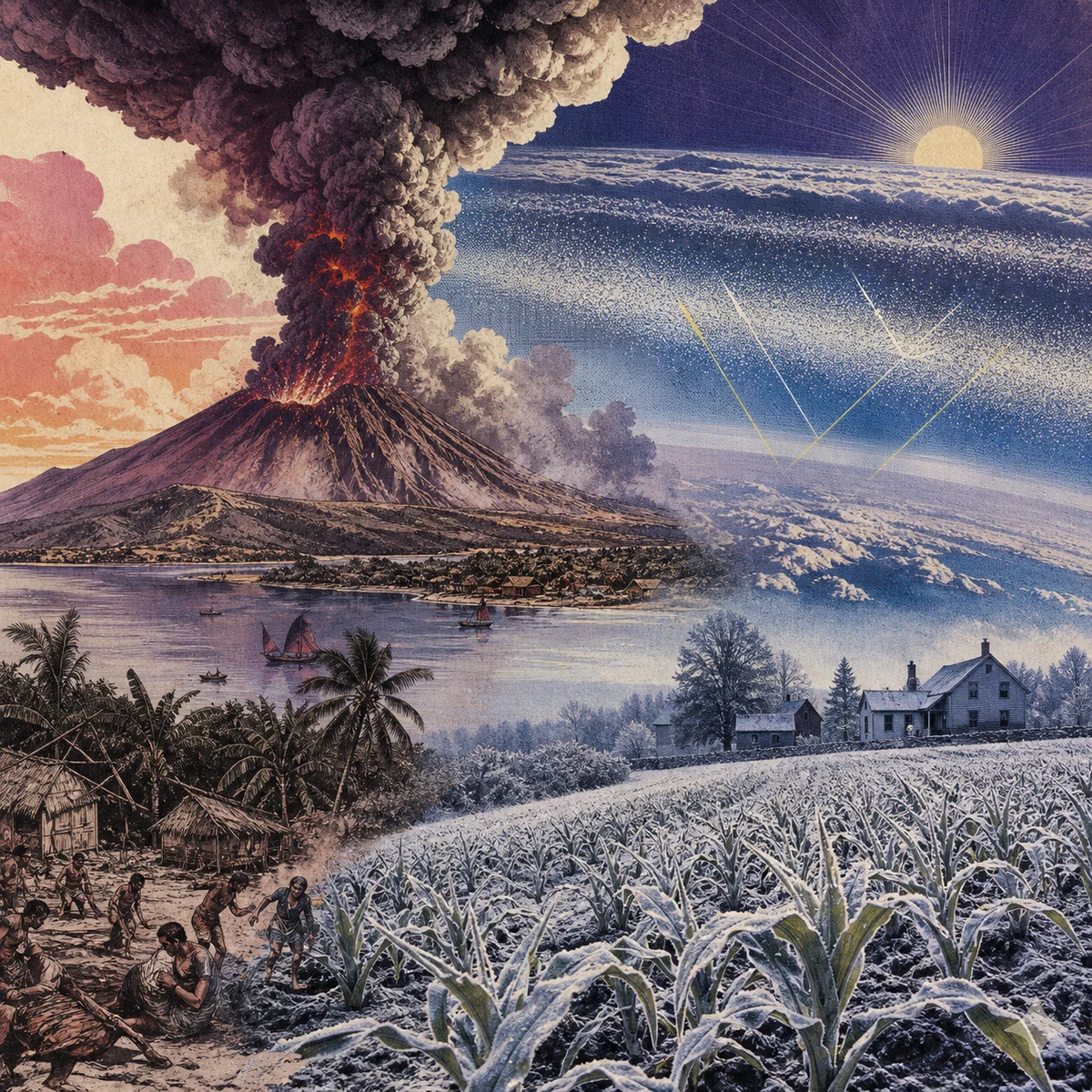
Mount Tambora’s great eruption peaked in April 1815 with towering ash columns, pyroclastic flows, and tsunamis that devastated communities around the Indonesian volcano. The blast excavated a caldera roughly six kilometers wide and killed tens of thousands nearby. Its second disaster traveled invisibly: a huge release of sulfur-rich gas rose high enough to alter the atmosphere far beyond the ashfall.
Sulfur dioxide mixed with water aloft and formed fine sulfate aerosols. Those droplets reflected part of the Sun’s energy back toward space, cooling broad regions. During 1816, repeated summer frosts struck New England and major crops nearly failed; Europe also suffered cold, harvest losses, rising food prices, and unrest. The mismatch between the calendar and the weather gave the year its enduring nickname: the Year Without a Summer.
The eruption was a major driver, not a master explanation for every illness, shortage, migration, or conflict that followed. Historical hardship also reflected local weather, existing poverty, war, markets, and social conditions. Even with that boundary, Tambora’s reach remains extraordinary. Rock broke loose on one island; sulfur chemistry changed sunlight around the world; farmers an ocean away looked up at summer and found frost. The atmospheric effect lasted long enough to connect a volcanic catastrophe with harvest seasons on the other side of the planet.
Sources