




 Share








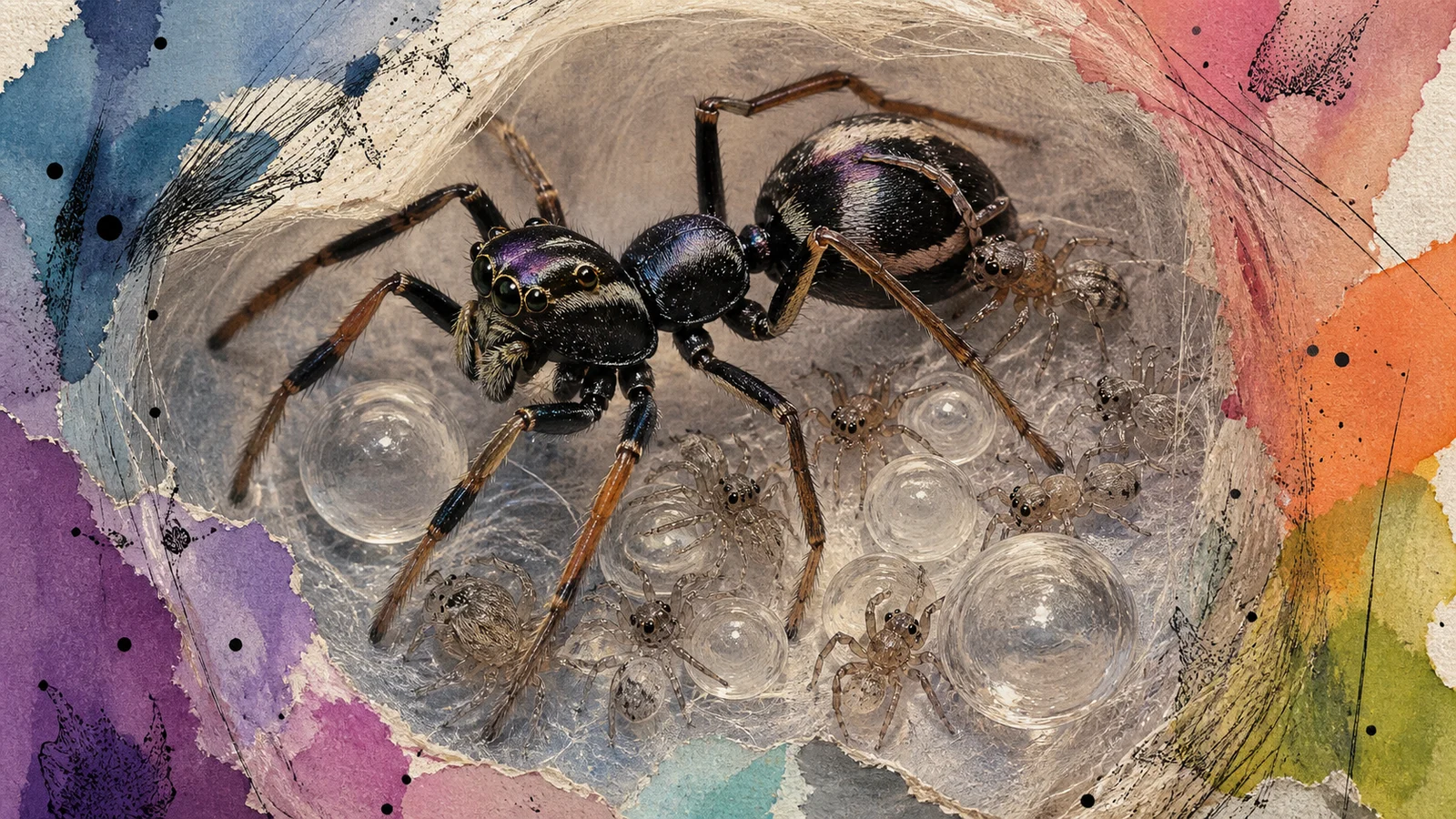
Toxeus magnus looks enough like an ant to fool a hurried observer, but its most surprising imitation is not visual. In laboratory nests, researchers found mothers depositing droplets of a nutrient-rich secretion for newly hatched spiderlings. The young first drank from the nest surface, then began taking the fluid directly from the mother's abdominal area.
The provisioning continued well beyond the helpless opening days. During roughly the first 20 days, the spiderlings depended on the secretion. From about day 20 to day 40, they could leave the nest and hunt, yet continued to drink from the mother. Experiments that separated older young from maternal care reduced survival, showing that the nest offered more than an early meal.
Calling the substance “milk-like” describes its nutritional and caregiving role; it is not mammalian milk and the study does not make spiders into tiny mammals. The finding belongs specifically to Toxeus magnus, a jumping spider from southeastern Asia studied in controlled nests. Its lesson is stranger and more useful than the comparison: prolonged provisioning and extended parental care can evolve in an invertebrate body with an entirely different anatomy.
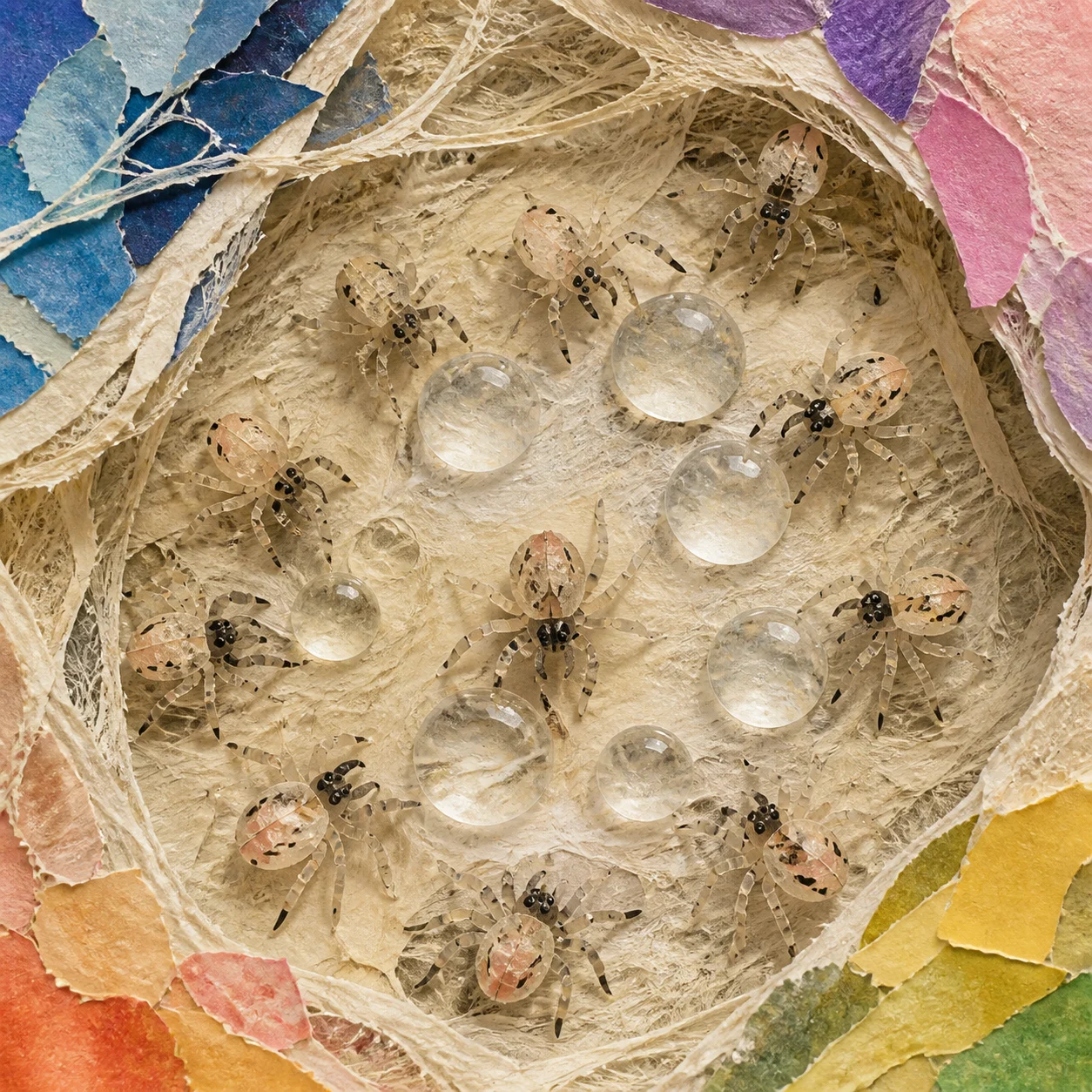
The discovery began with behavior small enough to overlook. Newly hatched spiderlings gathered around droplets placed near the entrance of their nest. As they grew, their feeding position changed: instead of taking only deposited fluid, they attached directly to the mother's abdominal region. That sequence let researchers follow provisioning as a real developmental system rather than a one-time observation of damp material in a web.
For the earliest stage, access was essential. The young relied on the secretion before they were capable hunters. Later, the arrangement did not simply switch off when they began leaving the nest for prey. Spiderlings roughly 20 to 40 days old could forage and still return to drink. This overlap between growing independence and continued provisioning is what made the behavior especially notable as parental care.
Chemical analysis strengthened the functional comparison. The secretion was rich in protein and, in the reported analysis, contained nearly four times the protein of cow's milk while containing less fat and sugar. That comparison is a way to convey nutritional composition, not evidence that the fluids share a mammalian origin. The spider secretion comes from a different animal lineage and should remain milk-like in careful copy.
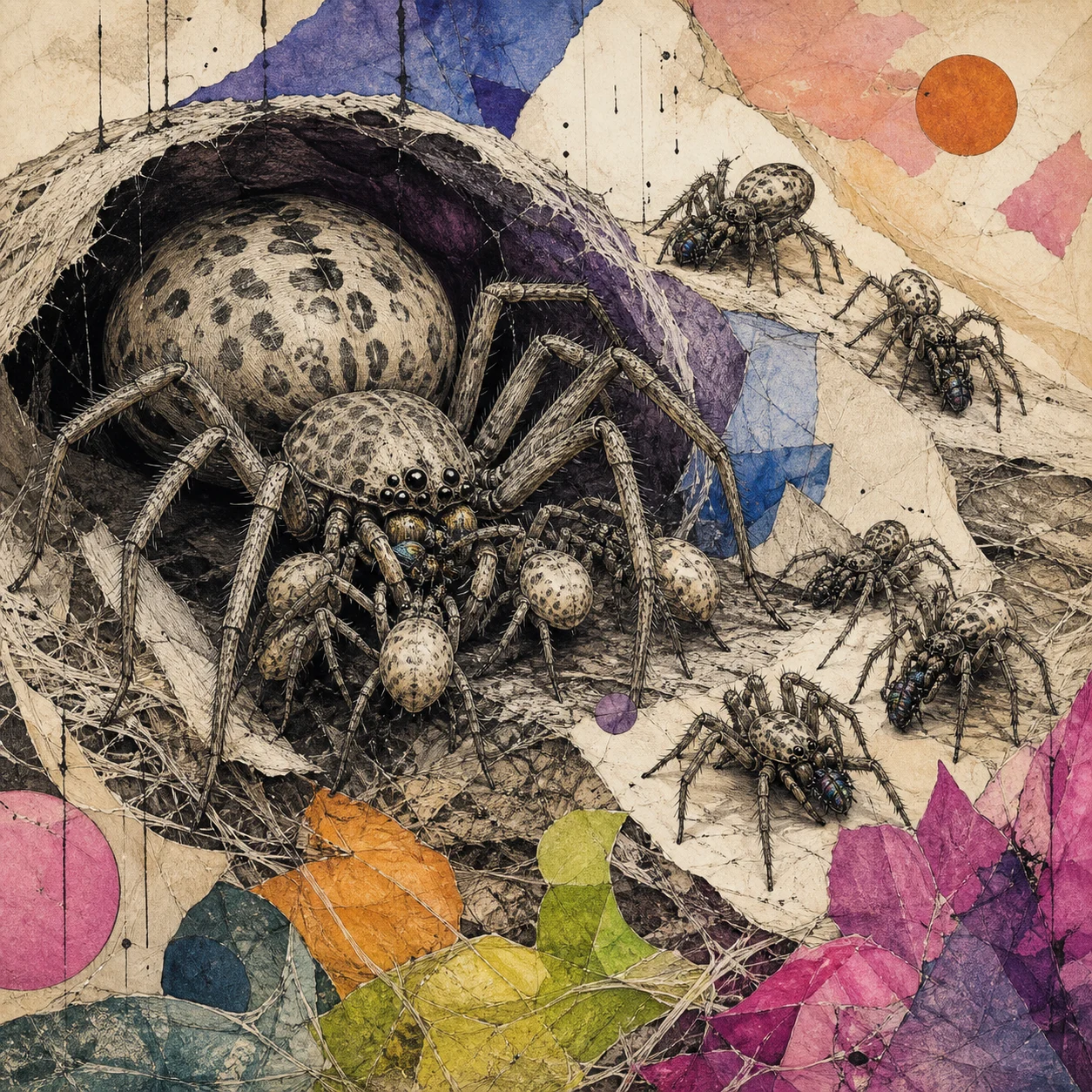
Researchers also changed access to the mother. Across the laboratory nests described by the source, young receiving both provisioning and maternal care survived better than spiderlings separated from the mother after the first stage. One comparison reported 76 percent survival with continued care and 50 percent after separation at day 20. The numbers belong to that experiment, not a survival promise for every wild nest.
Care continued into an unusually late phase. Around sexual maturity, daughters could remain with the mother, while sons were no longer accepted in the same way. The social pattern added another layer beyond fluid delivery: the mother influenced who stayed in the nest after the period of strict nutritional dependence. It is extended care expressed through spider behavior, without needing human family labels to make it compelling.
Toxeus magnus is an ant-mimicking jumping spider native to southeastern Asia. That identity matters because “spider milk” can easily escape its evidence and become a claim about all spiders. The research did not establish a general rule for the order, nor did it show mammary glands or mammalian lactation. It documented a secretion and a prolonged provisioning system in one species under controlled observation.
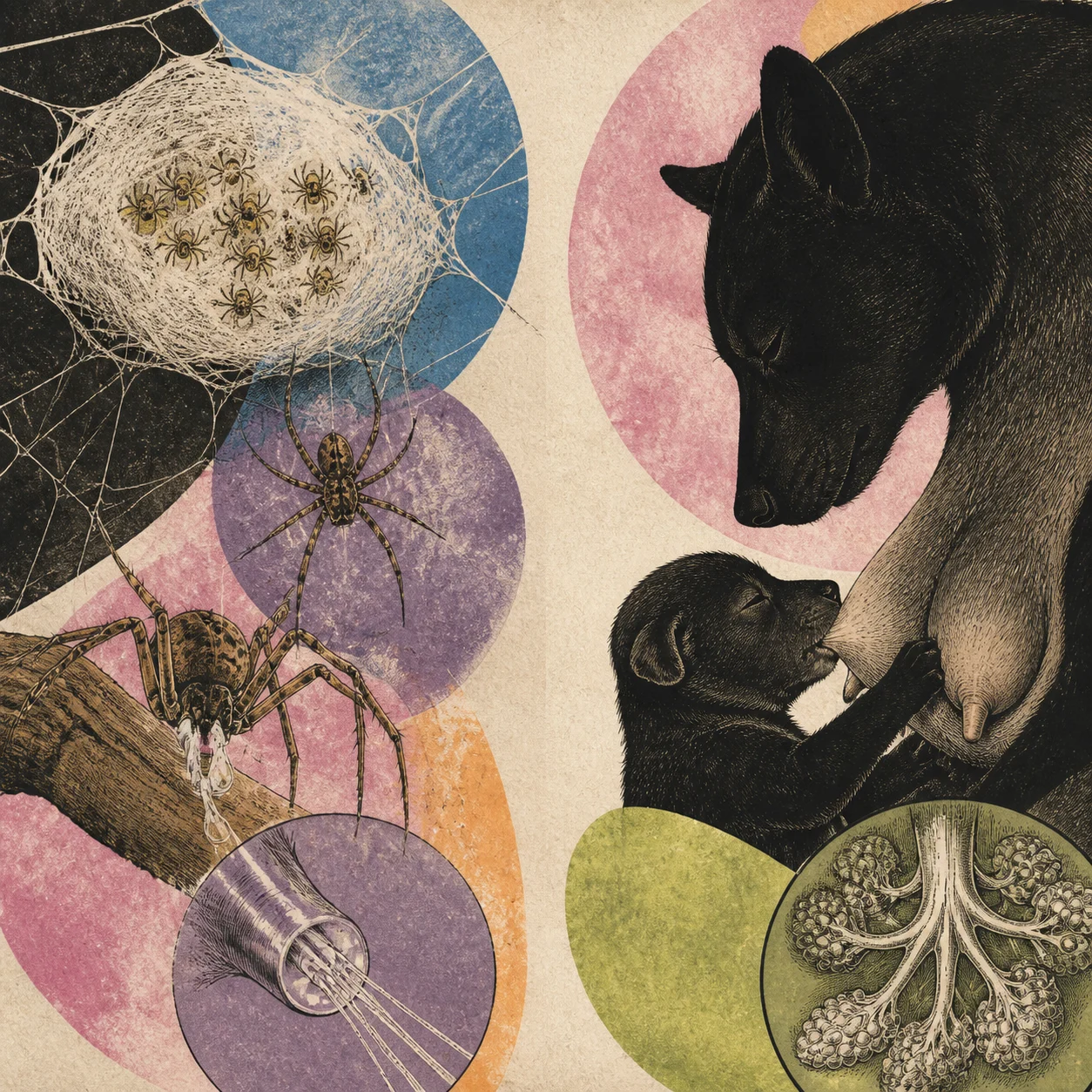
The terminology is a useful test of science writing. “Milk” is memorable because it describes a parent-produced food supporting offspring, but it also carries anatomical assumptions from mammals. Adding “-like” keeps the analogy and removes the false equivalence. The most precise version still contains the full surprise: young spiders drink a mother-produced nutrient fluid, change how they obtain it as they grow, and continue receiving care after they can hunt.
Invertebrate parenting is more varied than the familiar image of eggs left behind. Other species guard, carry, feed, or defend young in different ways. This study adds a particularly sustained form of provisioning to that landscape. It does not erase the profound differences between spiders and mammals; it shows that evolution can arrive at a similar caregiving function with unrelated structures and chemistry.
The wonder survives every boundary placed around it. The droplets were observed. Direct feeding followed. Older spiderlings returned after beginning to hunt, and separation changed survival in the experiment. None of those facts needs an invented emotion or a universal claim. Together they make one small jumping spider a vivid example of how much animal care remains easy to underestimate.
The strongest interpretation is functional rather than sentimental. The mother supplied food, permitted continued access, and affected survival within the experimental design. Researchers can compare that pattern with care in other animals while leaving motives and emotions unclaimed. Precision does not make the nursery colder; it lets the unexpected biology remain visible.
Sources