




 Share








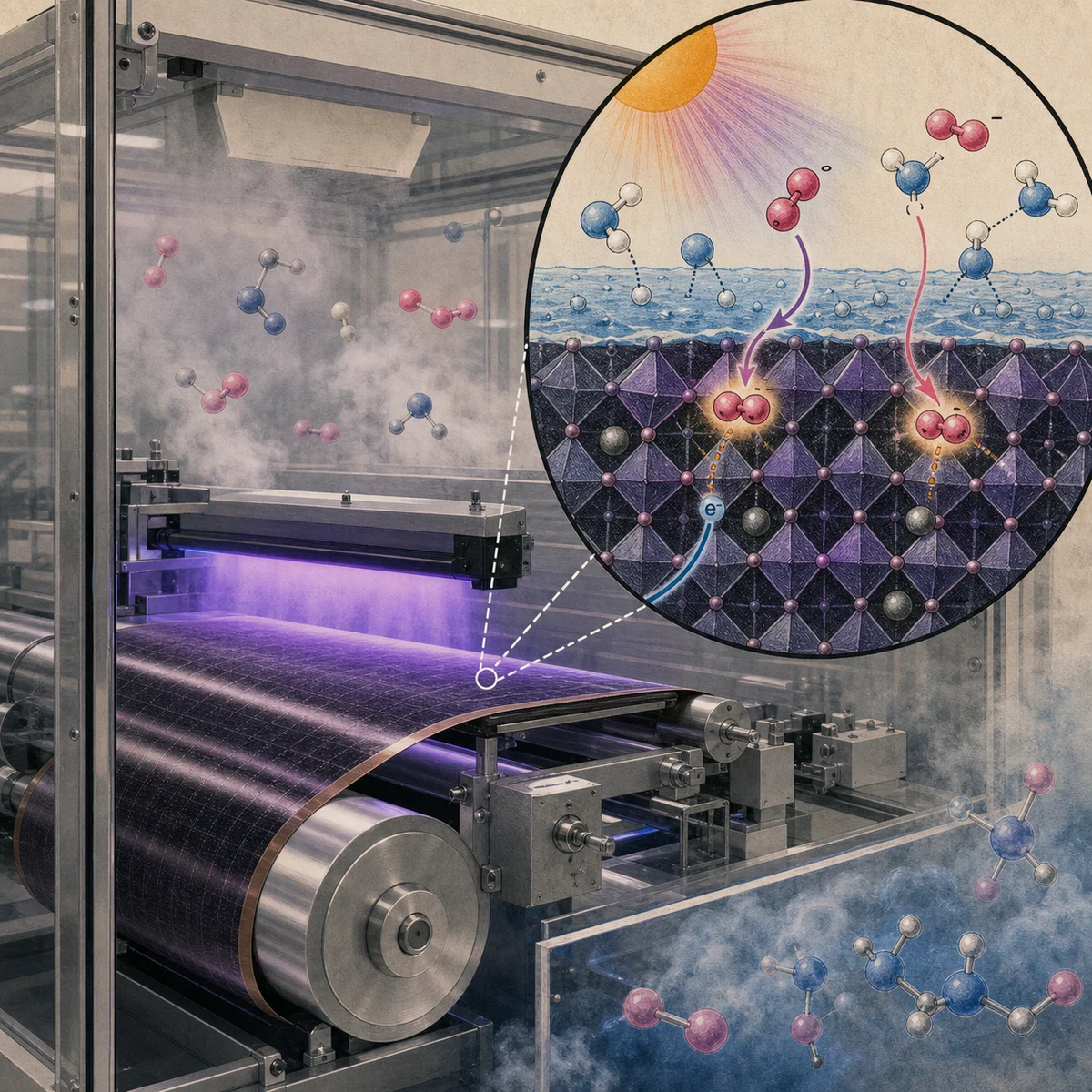
Metal-halide perovskites can convert light efficiently, but defects called traps interrupt the movement of electrons and waste voltage. Earlier work showed that illumination pushed charged iodide ions away from a lit region and swept defects with them. When the light stopped, the ions returned and the improvement faded.
An expanded team printed a perovskite device with a process compatible with roll-to-roll manufacturing, then paused before adding its final layers. The exposed material received light and oxygen for 30 minutes at 40 to 50 percent humidity. Electrons joined oxygen to form superoxide, which bound to electron traps. Water helped convert the surface into a protective shell that removed surface traps and locked the superoxide in place. Under those conditions, the improvement persisted.
The reported luminescence efficiency rose from about one percent to 89 percent, a measure closely tied to reducing voltage loss. The treatment is intentionally narrow: too much humidity can degrade perovskites, and the result concerns a particular laboratory material and fabrication stage. It does not mean sunlight and damp air heal cracked modules on a roof. The advance is understanding a reversible defect and using controlled chemistry to make its repair last before the device is sealed.
Sources