Share
Share







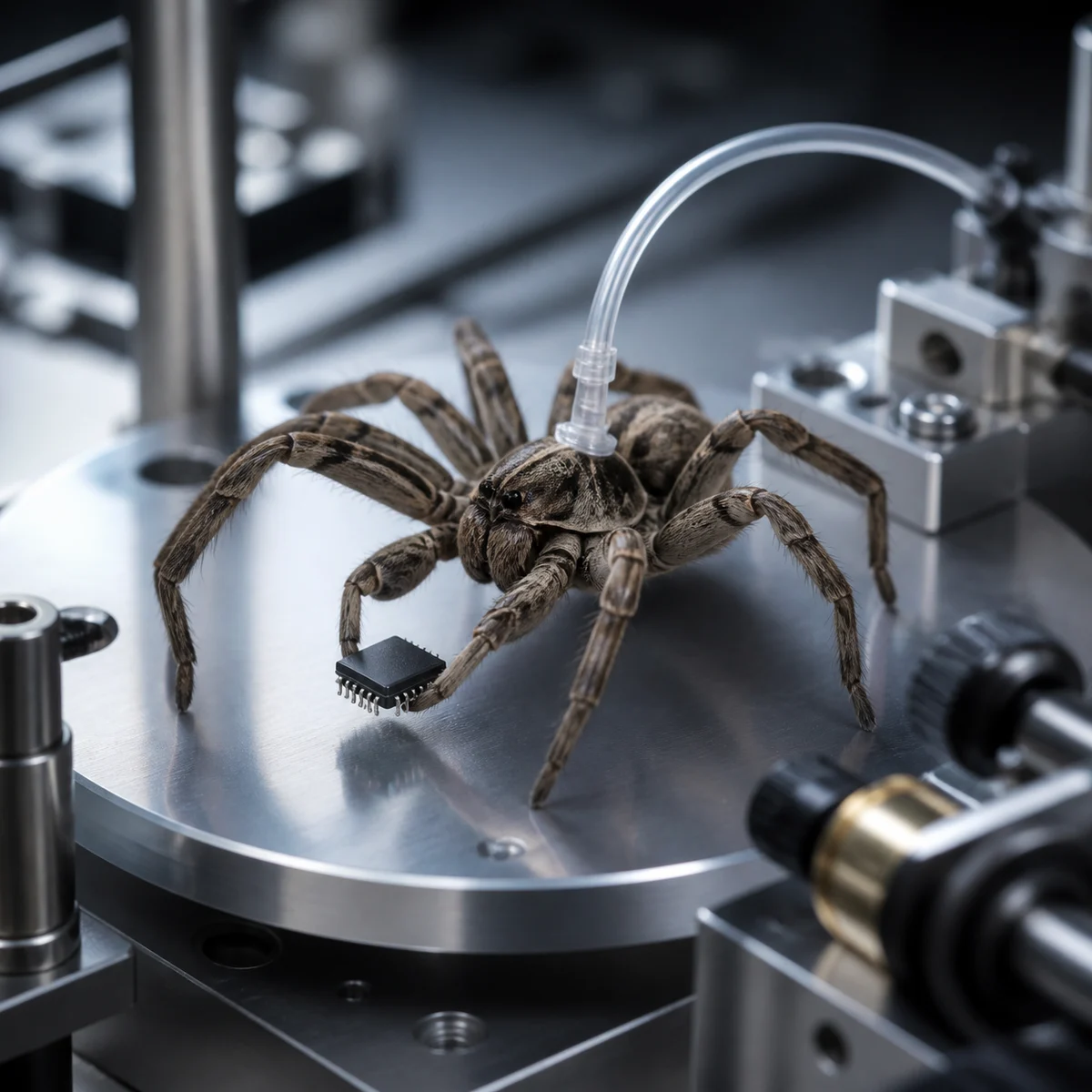
Spiders extend their legs partly by hydraulic pressure rather than by using opposing muscle pairs at every joint. Rice engineers realized that this mechanism could remain mechanically accessible after a wolf spider died. By inserting a small needle into the body and applying a controlled puff of air, they opened the legs; releasing pressure allowed them to close around an object.
The team called the approach “necrobotics”: using biological material that already contains an intricately assembled mechanical system. The deceased-spider gripper could pick up irregular objects, manipulate small components, and lift more than its own weight. Tests also examined repeated opening and closing, while surface coatings were explored as a way to slow dehydration and extend useful life.
This was an early laboratory experiment, not a proposal for general-purpose spider machinery. The animals were deceased, and the interesting part is mechanical rather than gory. Instead of manufacturing tiny articulated joints from scratch, the researchers asked what a natural structure could still do when connected to a simple pneumatic line. One breath of air reopened eight ready-made fingers.
Sources