Share
Share







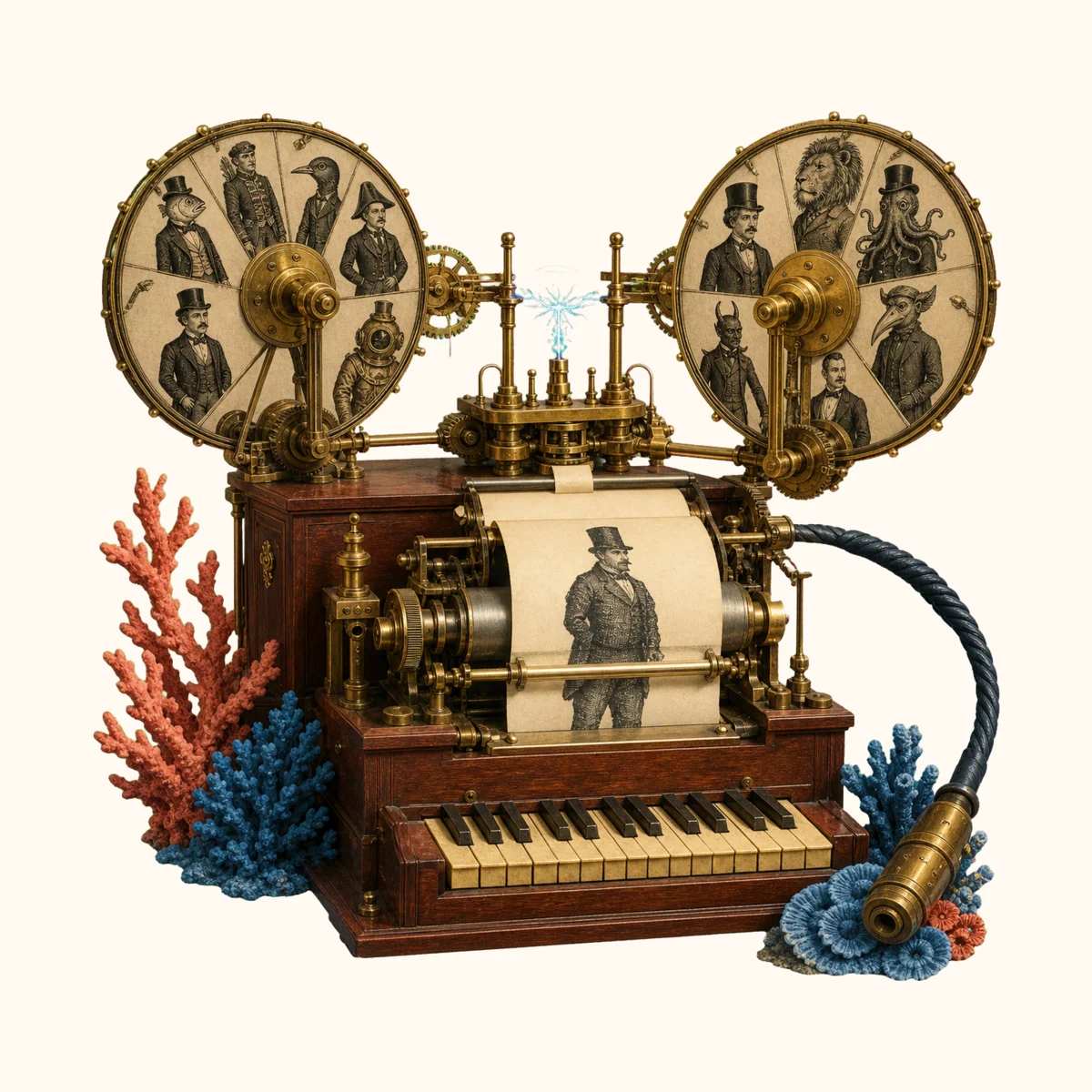
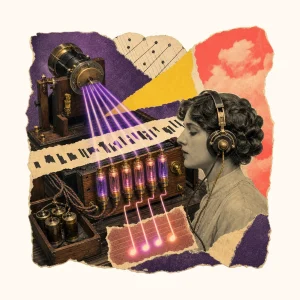
David Hughes's printing telegraph gave typing the physical demands of playing an instrument. Its keyboard resembled a small piano, with fourteen white and fourteen black keys. Twenty-six keys represented letters and some punctuation, but pressing one did not send a letter-shaped signal down the wire. It sent a single electrical pulse.
The trick was timing. Transmitting and receiving machines used clockwork to keep matching character wheels rotating together. A pulse arrived when one position on the distant printing wheel aligned with the paper, causing the intended character to print. The signal carried the moment; synchronized machinery supplied the meaning.
Hughes invented the system around 1855, and the Science Museum Group preserves an 1860 instrument. Because both ends had to keep time, operators needed more than spelling accuracy. The museum describes first-class operators as having a good touch and sense of rhythm, reaching about thirty words per minute.
The machines were used particularly on submarine cables to Europe. Every printed sentence therefore depended on a peculiar mechanical duet separated by distance: two clockwork wheels turning in step while an operator used a piano-shaped keyboard to release precisely timed pulses. The telegraph did not play music, but successful language required something remarkably close to musical timing.