Share
Share







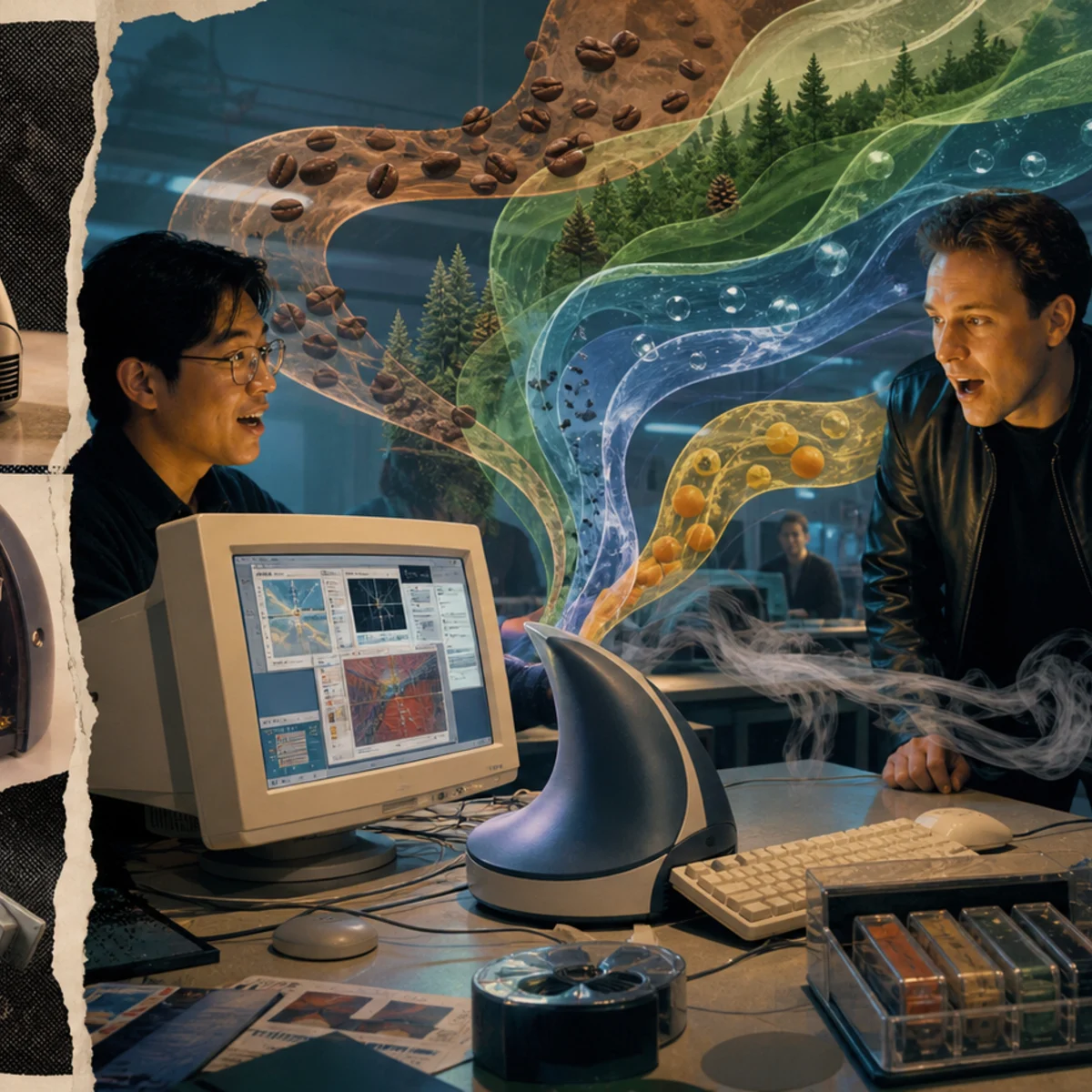
The internet nearly came with a smell cartridge.
Around the turn of the millennium, a California company called DigiScents was developing a computer peripheral named iSmell. The pitch was easy to understand and difficult to forget: digital media already carried pictures and sound, so why should it not carry odor as well? A website, game or other piece of software could include instructions for a scent, and a small machine beside the computer would release it into the room.
This was not merely a drawing of a futuristic appliance. Working iSmell prototypes existed. They traveled to trade shows and newsrooms, where visitors could experience a computer triggering a physical odor. The device was described as a personal scent synthesizer, an olfactory counterpart to the speakers already sitting beside a monitor.
The analogy to sound was central to the dream. A computer does not store an orchestra inside its case; it stores data that tells a speaker how to reproduce sound. DigiScents wanted odor to behave in a similarly programmable way. A scent-enabled file would contain a recipe. Software would interpret that recipe, and the connected hardware would dispense and combine aromatic material before a fan pushed the result toward the user.
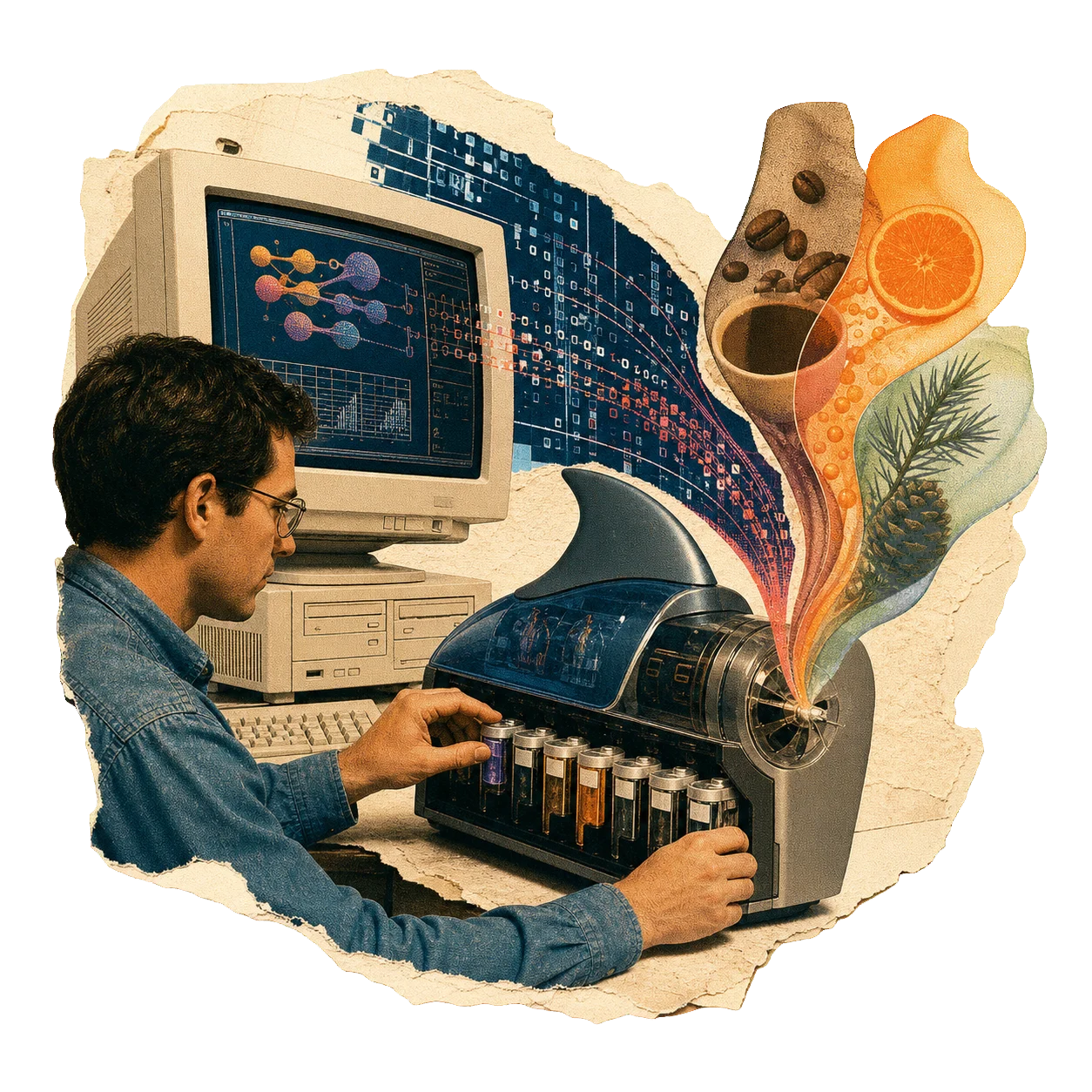
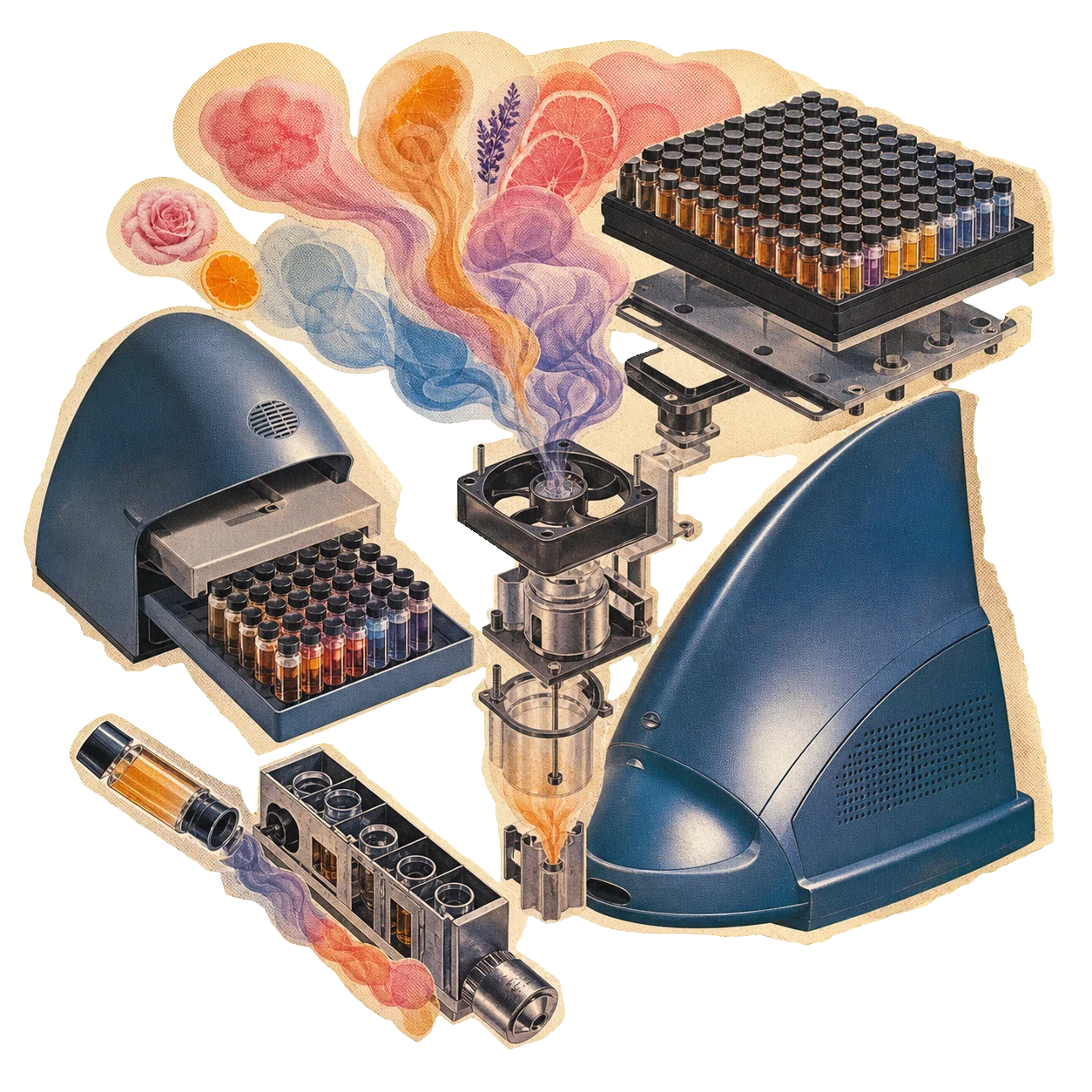
DigiScents showed two prototype configurations. One held 36 scents. A larger version used 128 essences that could be mixed into many more combinations. The company imagined the machine as a broadcaster rather than a box containing one finished fragrance. Its value would come from recombination: a limited palette producing a broad range of impressions.
That made the software at least as important as the cartridge. Someone had to decide which materials, in which proportions and at which moment, could suggest a damp cave, burning rubber or fresh bread. The machine needed instructions that could travel with the media and still produce a recognizable result when interpreted at the other end. DigiScents said it wanted to establish a standard for delivering smell through connected devices.
The possible uses multiplied quickly. Games could add environmental odors to places and actions. Online shops could try to bring products closer to shoppers who could not touch or smell them through a screen. Advertising could add one more sensory cue. Films and music could gain timed olfactory effects. Even an electronic greeting could arrive with an atmosphere instead of merely an animation.
The limitations were just as revealing. Smell does not behave like a picture that vanishes when a screen changes. Molecules remain in the air. One odor can linger into the next, turning an intended sequence into an accidental mixture. Reproducing a broad ambience is also different from reproducing a specific strawberry. A natural smell can contain many components, and the human nose notices when the recipe is wrong.
There was also the ordinary burden of asking people to buy another peripheral. A proposed web experience would work only if users had compatible hardware, a filled cartridge and software that understood the scent instructions. The content industry would have to create scent-enabled material while consumers adopted machines that had little purpose without that material. Each side needed the other to move first.
For a moment, the company looked as if it might push through that problem. DigiScents distributed developer kits and spoke publicly about scent-enabled media. Contemporaneous reporting described partnerships and thousands of developers connected to the platform. The company had received about $20 million in funding and said the iSmell was nearing the manufacturing stage.
Nearing manufacturing, however, is not the same as reaching a living room. The prototypes proved that a computer could trigger a manufactured odor. They did not become a consumer product that people could buy. The distinction matters because the iSmell is often remembered as if it briefly occupied store shelves and then failed. Its stranger fate was to work in demonstrations while remaining undelivered at scale.
In April 2001, DigiScents shut down after it could not secure additional funding. The Washington Post reported that the company laid off 70 employees. Its founders were still looking for another manufacturer to license the technology, but the promised scent peripheral had stopped short of mass production.
The following year, Wired placed iSmell on a list of vaporware: technology announced but never delivered. Yet the label hides part of what made this particular failure interesting. There were working devices. People had smelled their output. The machine was vaporware in the commercial sense, while producing very literal vapor in front of witnesses.
That tension gives the iSmell a durable place in technology history. It was neither a pure hoax nor a normal product failure. It occupied the narrow space between a successful demonstration and a sustainable system. The hardware could make odors. The larger network of cartridges, standards, developers, media, manufacturing and consumer demand never solidified around it.
The idea also exposed something unusual about the internet's physical boundaries. Screens and speakers translate data into light and pressure waves, then stop. A scent device would translate data into matter released into shared air. The output could drift, overlap and persist after the software moved on. The web would no longer end at the edge of the machine. It would linger in the room.
DigiScents did not put a smell synthesizer beside every beige desktop computer. It did, however, build a machine that made the proposal tangible enough to be tested, hyped and remembered. For a brief period, clicking a file could produce more than a sound or picture. It could make the room smell like the future—then leave that future hanging in the air after the company disappeared.