




 Share








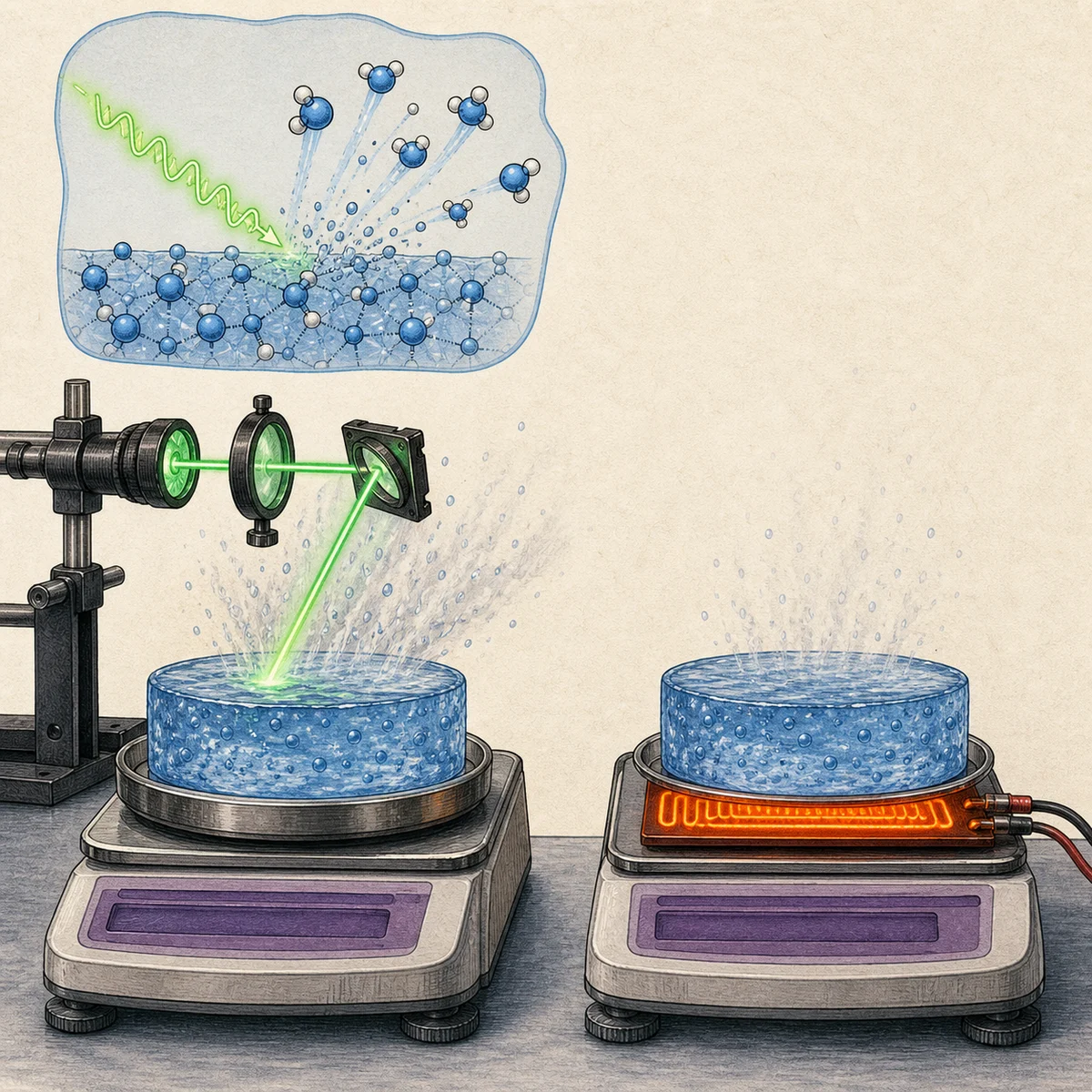
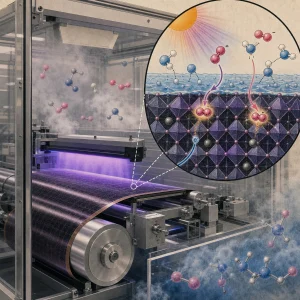
MIT researchers illuminated water held in a membrane-rich hydrogel and weighed the sample as it lost mass. The light source was shielded from adding heat, and sensors monitored temperature above the surface. Evaporation varied with wavelength and peaked under a particular green light—the color that water absorbs least—while an electrically heated comparison given the same thermal input did not match the light-driven rate.
Follow-up tests found that the effect also changed with beam angle and polarization. The strongest reported geometry used light at about 45 degrees with transverse-magnetic polarization. Air just above the surface cooled as evaporation began, another result inconsistent with extra heat doing all the work. The proposed “photomolecular effect” is that photons exert enough net force at the boundary to eject small clusters of water molecules.
Those clusters still require energy to leave; no conservation law has been suspended. Light is the supplied energy, and evaporation cools the remaining material. Researchers reported the pattern across hydrogels and later other water surfaces, but the mechanism—especially its unexpected color dependence—remains under investigation. Desalination and climate implications are research directions, not installed outcomes. The solid finding is a set of controlled measurements in which visible light changed evaporation in ways that temperature alone did not reproduce.
Sources