Share
Share







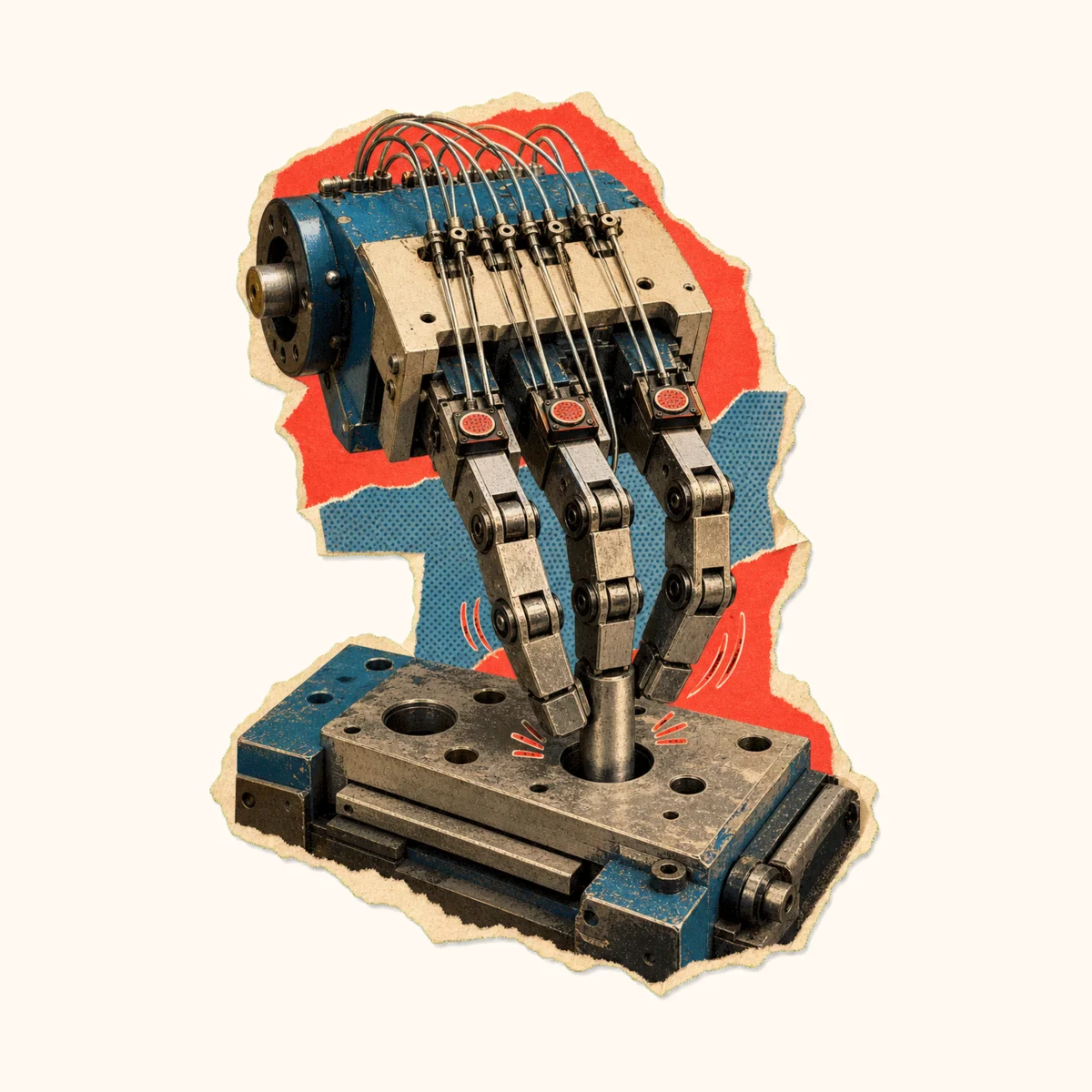
The Salisbury robot hand from the 1980s has three identical fingers, and each finger has three joints. Electric motors do not sit inside those joints. They pull on twelve tension cables, giving the mechanism something closer to artificial tendons than a row of tiny motors.
Sensors at the base of each finger measured tendon tension and finger force. That feedback let the hand grip objects of different sizes and move them within the grasp instead of merely closing until contact. The Smithsonian gives a particularly human example: the hand could hold a shaft, push it toward a hole, and wiggle until it detected that the shaft was fully inserted.
The motion is revealing because perfect alignment was not assumed in advance. The hand could use contact and resistance as information, adjusting the object after the first attempt. A rigid gripper needs the world to arrive in exactly the expected position. This mechanism could negotiate a small mismatch.
About twenty Salisbury hands were made by Salisbury Robotics in the 1980s. Their three-finger arrangement looks unlike a human hand, but the insertion strategy is familiar to anyone who has ever fitted a plug, peg, or key by feel: push, meet resistance, wiggle, and let the object announce when the path is finally correct.
Sources