Share
Share







Lake Maracaibo does not host one thunderstorm that has been raging forever. It does something stranger and more repeatable: the geography around this broad Venezuelan lake keeps rebuilding the conditions for new storms after dark.
A NASA-supported study used 16 years of observations from the Lightning Imaging Sensor aboard the Tropical Rainfall Measuring Mission to rank lightning hotspots in fine detail. Lake Maracaibo took the top position at about 233 flashes per square kilometer per year. Researchers also reported an average of 297 nocturnal thunderstorms each year, with activity peaking in September.
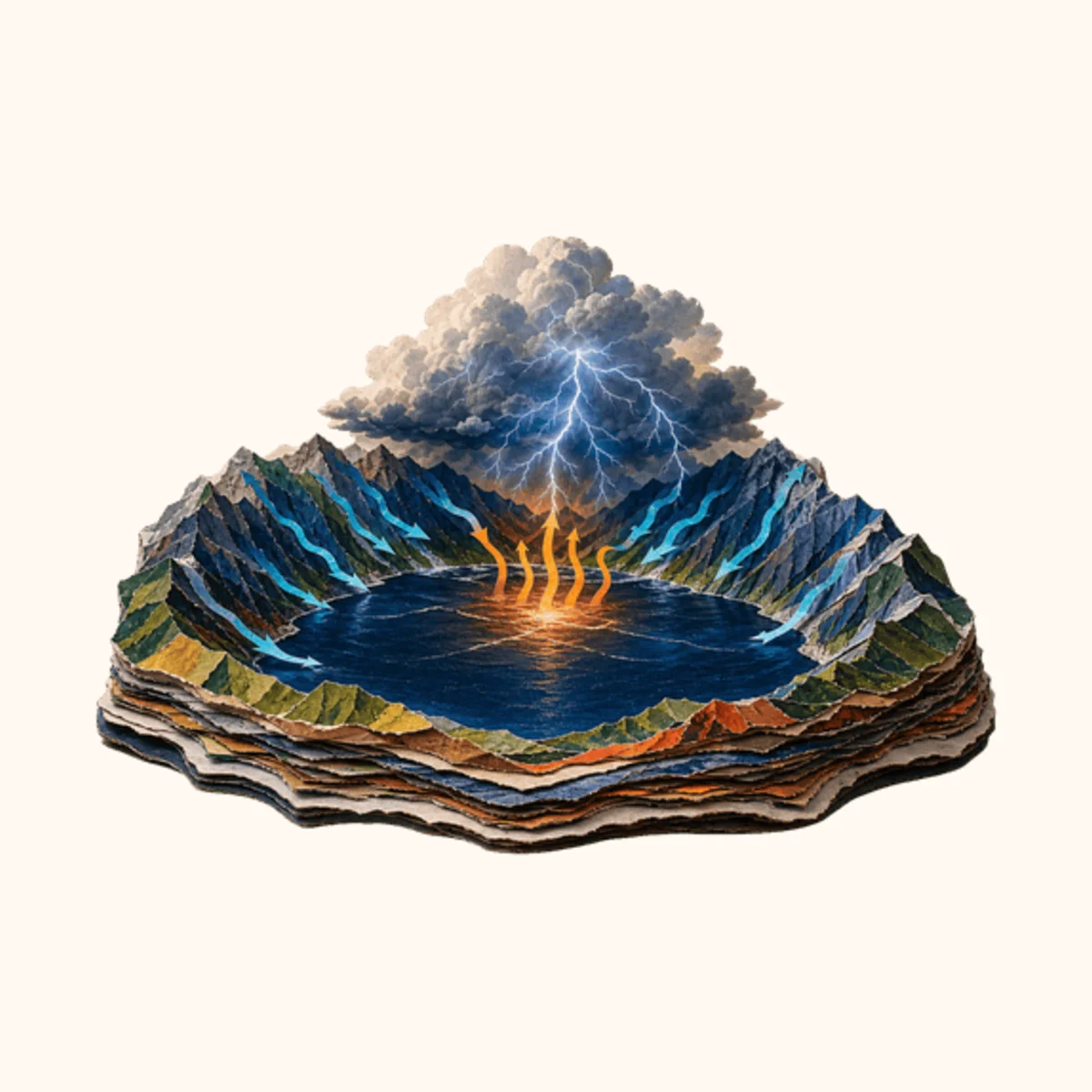
The night shift begins with the shape of the place. Lake Maracaibo sits in northwestern Venezuela alongside the Andes. After sunset, mountain breezes develop and move downslope. Those cooler flows converge over warm, moisture-rich air above the lake. Air is pushed upward, deep convection forms, and thunderstorms find a dependable place to assemble. The ingredients are atmospheric, but the basin arranges them like a stage.
A later NASA global map looked at lightning in a different way. Instead of assigning each flash to a single point, researchers included its horizontal reach—the area across which a bolt can spread. On that measure, Lake Maracaibo again led the world, with an average flash rate of 389 per day and the highest flash-extent density in the updated climatology.
Those numbers describe different measurements, so they should not be mashed into one record. The 233 figure is a yearly density per square kilometer from the earlier 16-year study. The 389 figure is an average daily flash rate in the later map. Together, they show that the lake remains exceptional even when scientists redraw the counting rules.
The result has sometimes been romanticized as an eternal beacon. The science is better. Storms commonly form at night, fade, and form again when the local circulation reloads. Lightning may flash within clouds, between clouds, or toward the ground; the satellite sensor detects changes in optical output near cloud tops and maps the total activity.
So the lake does not own one immortal bolt. It has a landscape that clocks in, cools the mountain air, lifts moisture, and starts another electrical shift. Night arrives. The basin sets the stage. The sky gets to work.
Sources