




 Share








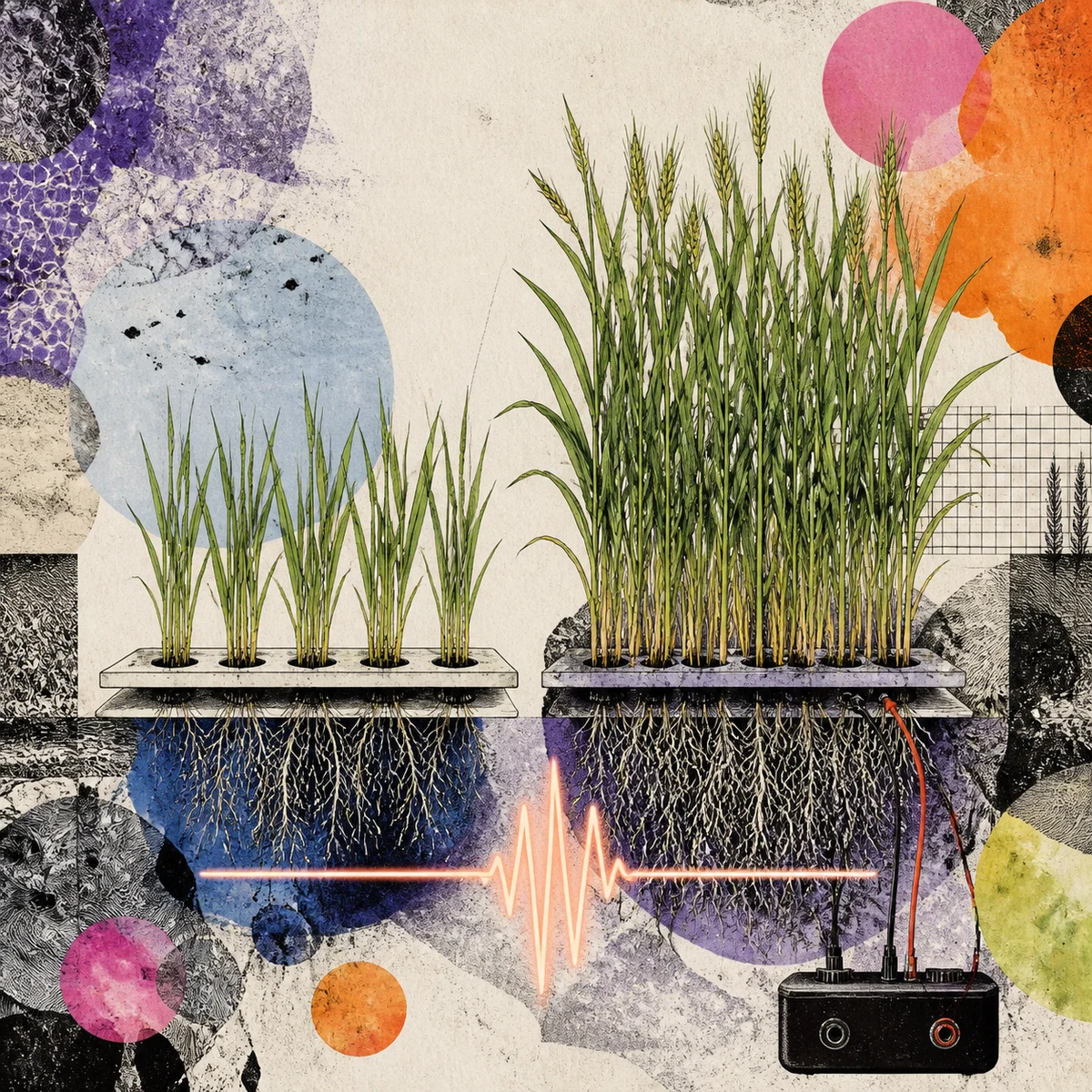
Hydroponic plants usually anchor in an inert substrate while nutrient solution supplies water and minerals. Linköping University researchers made the support electrically active. Their “eSoil” combines cellulose with the conductive polymer PEDOT, producing a porous rooting material that can deliver gentle electrical stimulation with little energy.
Barley seedlings grew in the substrate for fifteen days. After electrical treatment of their roots, the stimulated plants accumulated about 50 percent more biomass than unstimulated controls in the short experiment. The researchers did not establish the complete biological mechanism, but reported that the plants processed nitrogen more effectively even though their growth relied on the same nutrient supply. Unlike earlier high-voltage approaches, eSoil operated at low voltage and consumed little power.
The name “electronic soil” can mislead: this was a conductive hydroponic scaffold, not a field suddenly wired beneath a crop. The study tested young barley under controlled conditions, not mature yield, many species, outdoor soil, or repeated farm seasons. Its useful result is an early materials-and-plant demonstration. A soft electrode can share the root zone and alter growth without turning agriculture into a wall socket.
Sources