




 Share







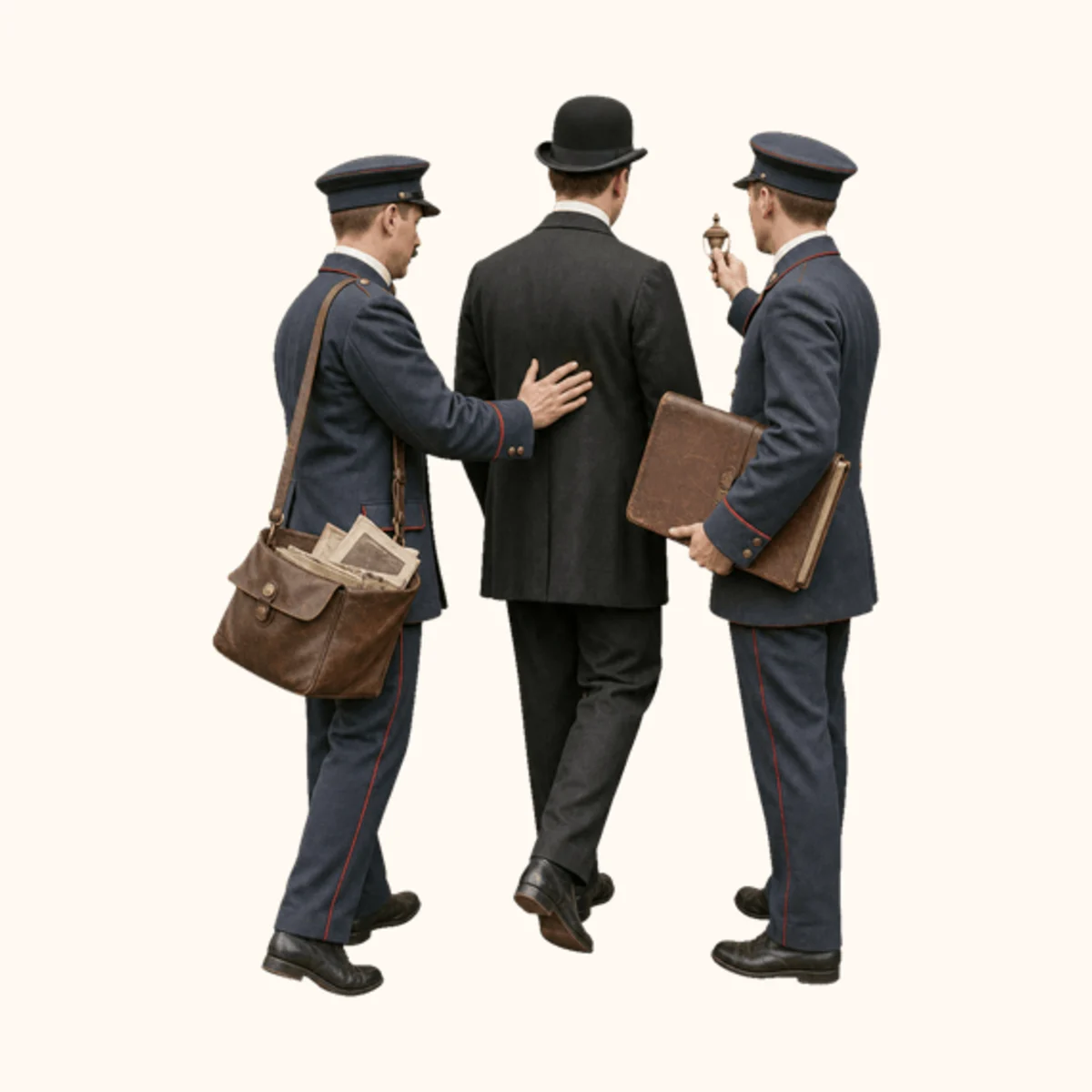
In 1898, a young accountant from Kent named W. Reginald Bray bought the official guide to British postal services. He wanted a list of post offices for his stamp and postmark collecting. Then he noticed something more interesting: the rules described what the Post Office would accept, but left generous room for a person willing to read every sentence as a challenge.
Bray began sending objects that were technically mailable and socially unreasonable. The Smithsonian's National Postal Museum lists a bowler hat, a slipper, a cigarette, a bicycle pump, a shirt collar, his dog, and a turnip with his name and address carved into it. Packaging was optional when the object itself could carry the destination. A stamp did not merely pay for delivery; it bought a small test of the system's patience.
He also treated addresses as puzzles. Bray substituted poems or little pictures for words, pasted unnamed portraits or scenes onto postcards, and attached railway tickets while asking postal workers to infer the relevant station masters. The point was not to make an item impossible to deliver. It was to give the Post Office just enough information that a determined employee might solve it.
The experiment reached its logical human conclusion in 1903. Bray had discovered a little-known messenger service through which a person could be delivered to an address. A surviving photograph shows him being delivered to his home in Forest Hill as the "human letter." The stunt sounds like a loophole from a comedy, but it followed the service described in the guide he had been testing for years.
Bray later redirected the same persistence toward autographs. He mailed roughly 30,000 requests and received about half back, assembling signatures from political leaders, athletes, actors, aviators, and military figures. He kept meticulous ledgers of his postal exploits and displayed the results.
The oddness of Bray's work came from precision, not chaos. He learned the rules carefully, supplied postage, recorded outcomes, and trusted postal workers to meet him inside the puzzle. The man who mailed himself was not escaping the system. He was demonstrating how much adventure was hiding in its fine print.
Sources