




 Share








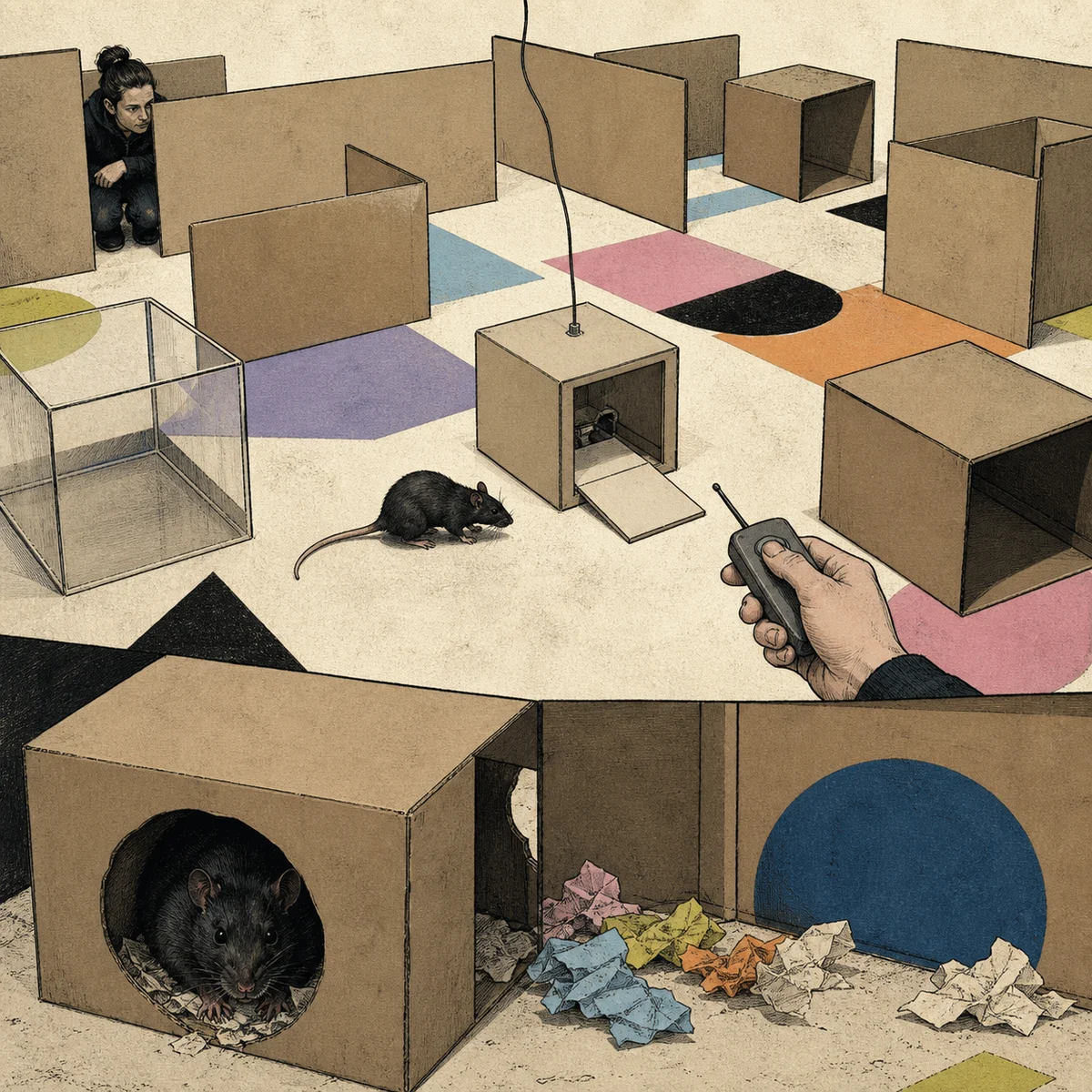
Researchers trained six adolescent male rats to play a one-on-one version of hide-and-seek with a human in a large room divided by cardboard barriers. A closed start box set the role. For a seeking turn, the human hid and remotely opened the box; for a hiding turn, the human waited beside it until the rat left to find cover. Petting, tickling, and playful handling followed a successful find instead of a food pellet.
All six animals learned to seek, and five learned to hide. Their behavior changed with the job: seekers searched likely locations, while hiders chose opaque shelters rather than transparent or previously used ones. The rats also produced abundant high-frequency ultrasonic calls associated with positive states, although they often became quiet while hiding. Some prolonged play by running away after being found instead of immediately accepting the social reward.
Recordings from the prefrontal cortex showed neural activity that differed with events and roles, giving researchers a way to study the decision-making structure of play. The setup does not prove rats invented human games in the wild or understood a rulebook in words. It shows that trained rats could switch between complementary roles, follow the contingencies of a complex social game, and keep participating without food as the prize.
Sources