Share
Share







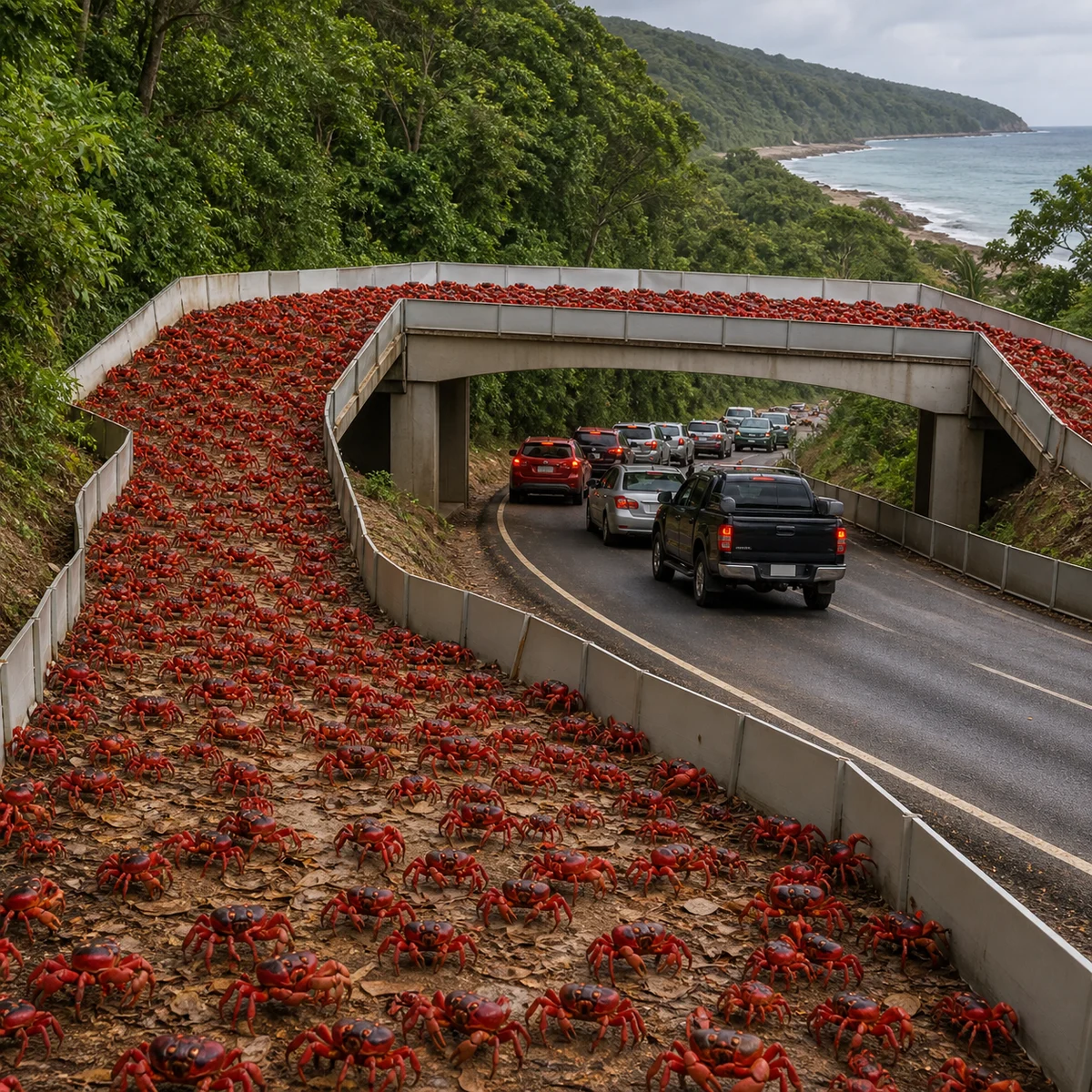
On Christmas Island, a seasonal commute can involve tens of millions of red crabs moving from forest to sea. The first substantial rain of the wet season helps start the march, while moon phase, tides, and weather shape when spawning can occur. That means the migration is predictable as a natural cycle but not fixed to one reusable calendar schedule.
Roads cut through the route, so the island temporarily redesigns traffic around the animals. Parks staff and the community divert vehicles, close roads when necessary, and install kilometers of roadside barriers. Those low walls funnel crabs toward safer crossings: underpasses beneath traffic and purpose-built overpasses or crab bridges above it. A road becomes less a hard boundary than a managed layer in the migration.
The infrastructure does not command the crabs or guarantee an identical crowd every season. Rainfall, tides, lunar timing, and population conditions all vary. Barriers and crossings simply work with the direction the animals are already traveling, reducing encounters with vehicles while people adjust their own routes. For a few remarkable weeks, transportation planning on Christmas Island asks an unusual question: how do you keep a highway open enough for humans while giving the island's most determined pedestrians the right of way?