Share
Share







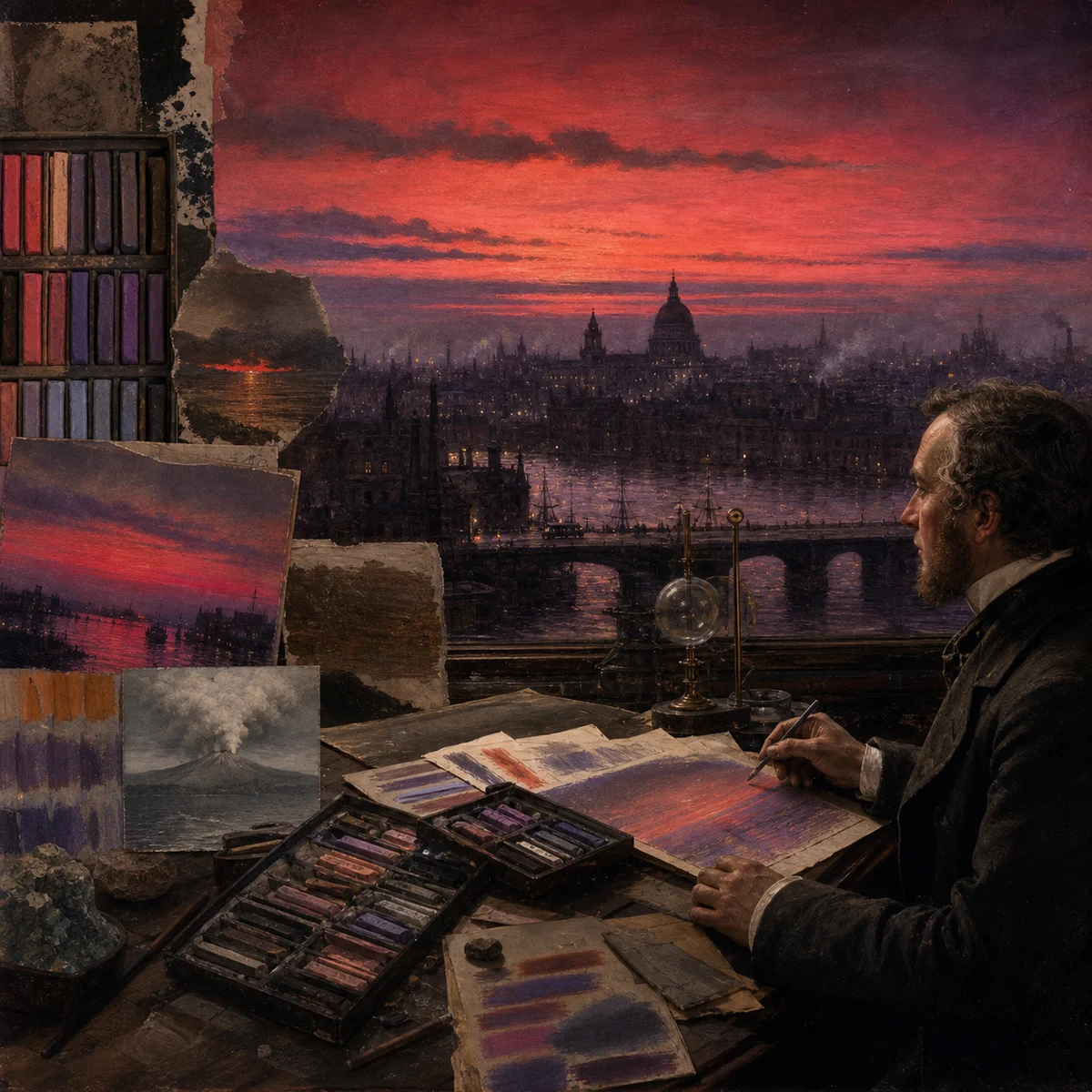
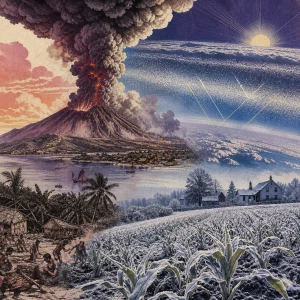
After Krakatau erupted in 1883, the atmosphere carried part of the event far beyond Indonesia. Sulfur dioxide and fine volcanic material reached high altitude, where chemical reactions and global circulation produced aerosols that scattered sunlight. Observers around the world reported unusually long, vivid red and purple twilights for months, sometimes with a second illumination after the Sun had dropped below the horizon.
The color came from optics, not ash clouds visibly hovering over every city. High-altitude particles changed which wavelengths and paths of sunlight reached an observer near dusk. Because those aerosols circled much of the globe, geographically distant skies shared a volcanic signature. Artist William Ascroft made a documented series of pastel observations in London, preserving specific atmospheric effects as seen rather than merely remembered.
Krakatau is often attached to any dramatic red painting from the period, but resemblance alone is not proof. A particular artwork needs its own documented connection before the eruption can be assigned as its cause. The securely sourced history is broad enough: aerosols from the eruption spread around the world and generated extraordinary sunsets that contemporary observers described and, in some cases, deliberately recorded. The volcano did not literally paint the canvas. It altered the light available to every attentive eye beneath the affected atmosphere.
Sources