





 Share








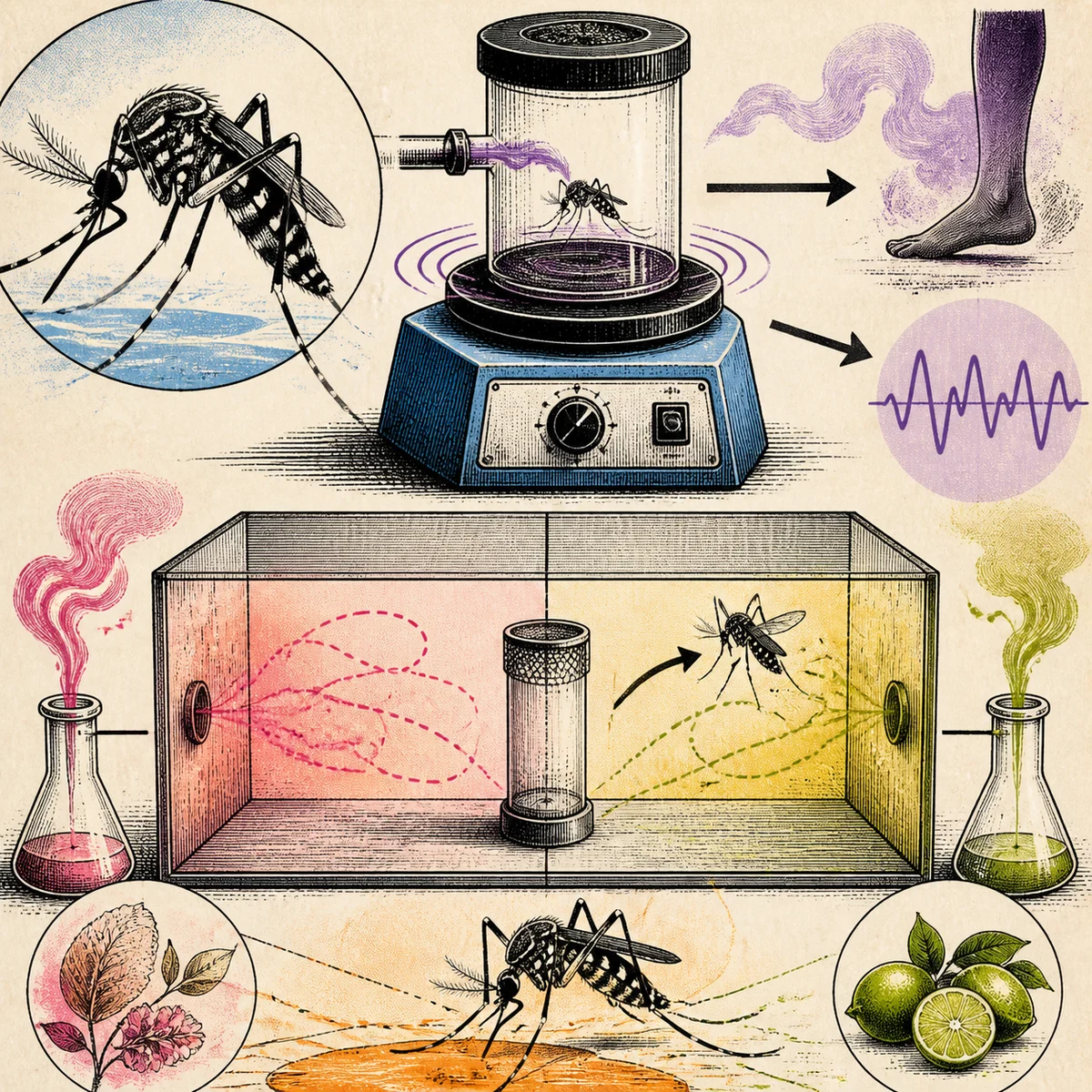
Aedes aegypti mosquitoes choose hosts partly through odor, and those preferences are not entirely fixed. University of Washington researchers paired a particular human or animal scent with mechanical shock from a vortex mixer. The vibration and acceleration mimicked the disturbance of a person trying—and failing—to swat the insect.
Later, trained mosquitoes flew away from the associated odor in a choice arena. Their avoidance could be as strong as the response to DEET in the experiment, and memory of trained scents lasted for days. The association had limits: the insects did not learn to avoid chicken odor under the same conditions. Genetically modified mosquitoes lacking functioning dopamine receptors also failed to learn, and recordings from the olfactory center helped connect dopamine to odor processing.
The study did not show a mosquito recognizing a human face, understanding hostile intent, or deciding to take revenge. It demonstrated aversive conditioning: a scent became a predictor of unpleasant mechanical shock. Individual human odor is complex, and a laboratory training session cannot promise that swatting will make every mosquito leave one person alone. Still, the next whine may carry a tiny history of previous near misses.
Sources