Share
Share







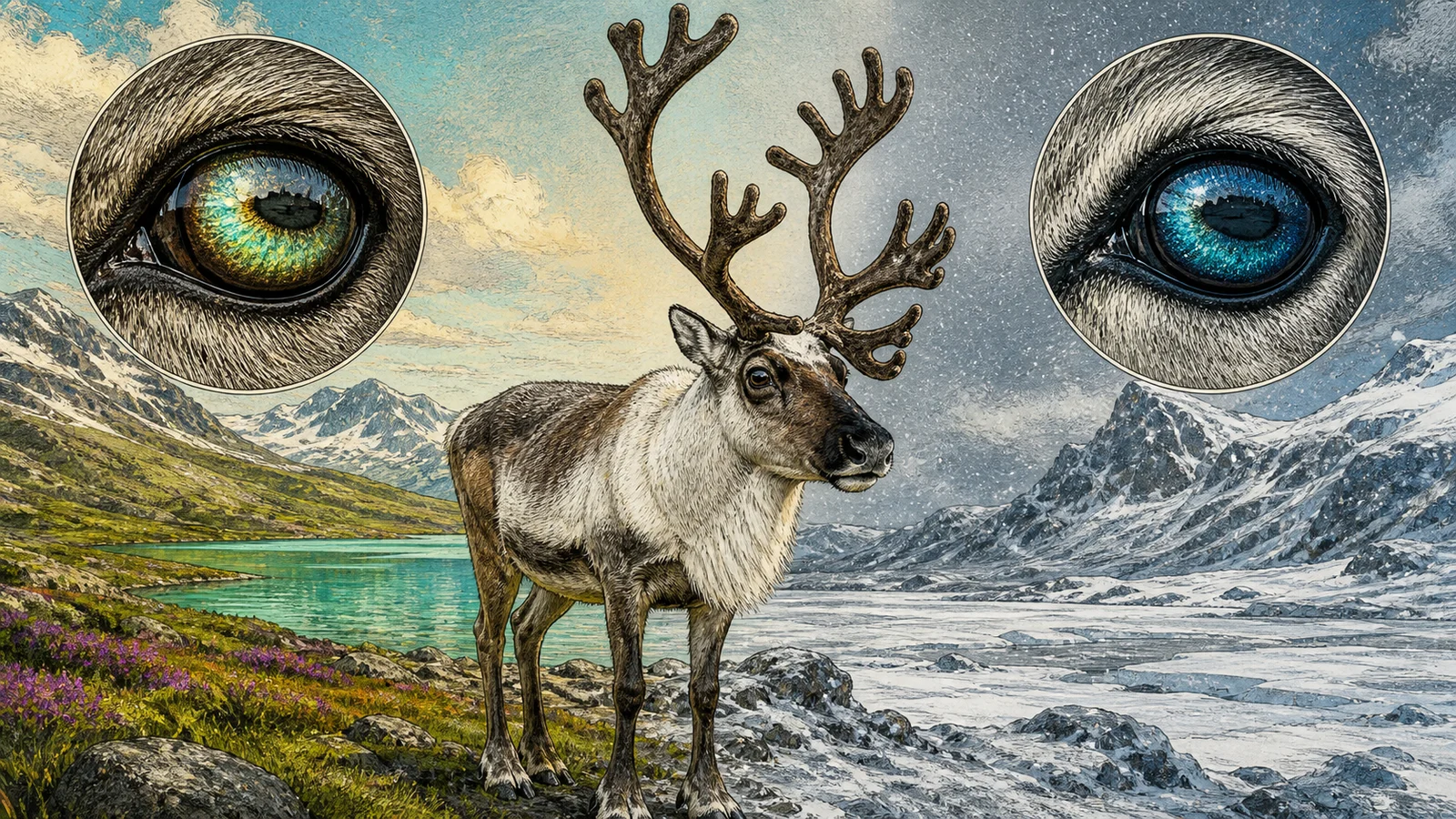
The Arctic changes the terms of seeing twice a year. Summer brings weeks when daylight barely leaves; winter brings long periods when the sun does not rise above the horizon. Reindeer live across that swing, and their eyes do something no ordinary pair of sunglasses can manage: the reflective tissue behind the retina changes color with the season.
In summer, the layer can appear gold or turquoise. In winter, it becomes deep blue. This is not a change in the colored iris at the front of the eye. It happens in the tapetum lucidum, the reflective tissue behind the retina that produces familiar eyeshine in many animals. Light that passes through the retina can hit the tapetum and be redirected back through the light-sensitive cells. The return journey gives photoreceptors another opportunity to capture photons that otherwise would have escaped.
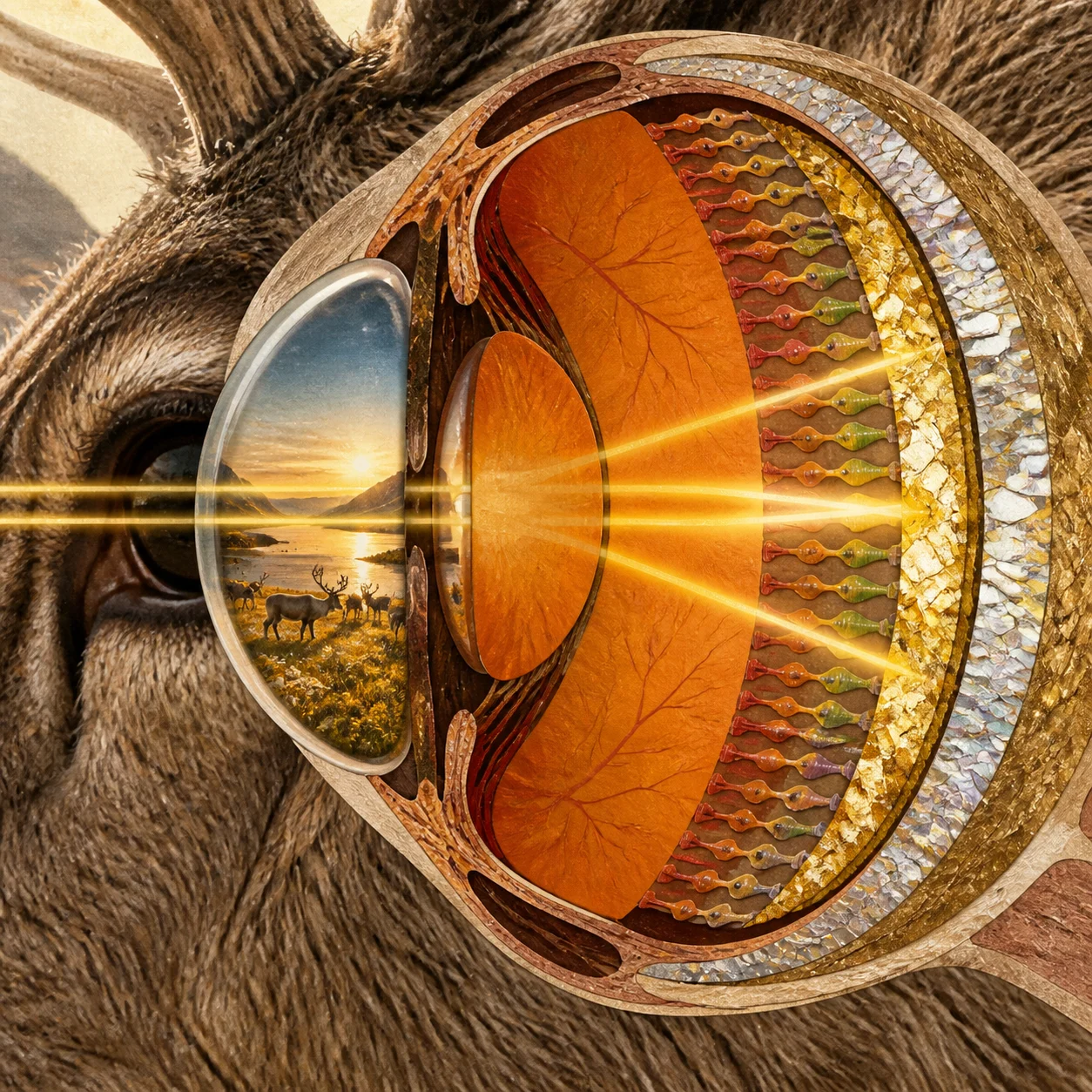
A reflector is especially useful when light is scarce, but its details matter. A neat mirror-like return can help preserve a sharper image. Light that is scattered along a longer path through the retina can increase the chance of absorption while reducing precision. Reindeer appear to move along that balance seasonally. The deep-blue winter tapetum is associated with greater sensitivity in Arctic darkness, while the gold or turquoise summer state reflects under a world flooded with light.
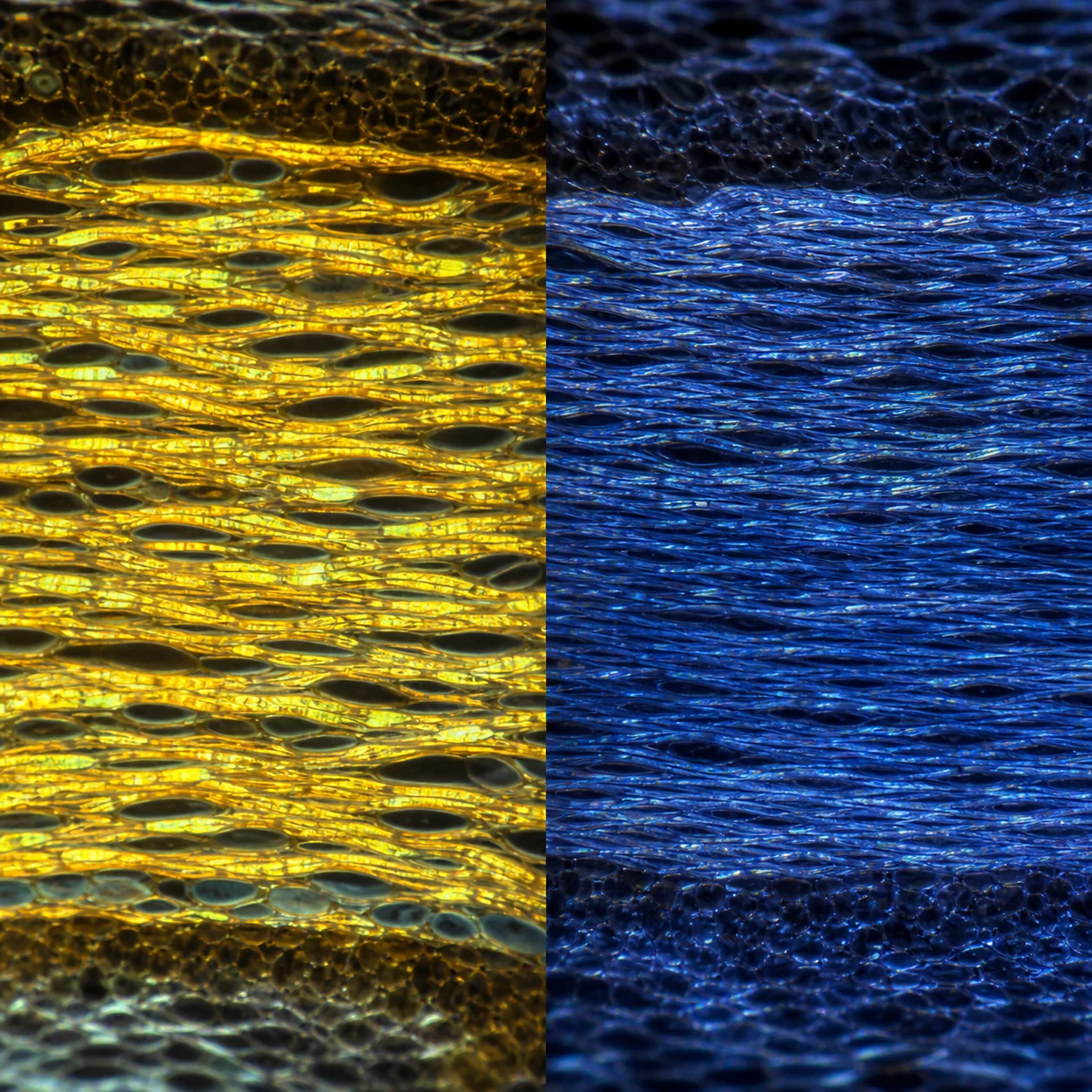
The color comes from physical structure rather than blue pigment painted into the eye. The tapetum contains organized collagen. When the spacing between those structures changes, so does the way incoming light interacts with them. Summer and winter samples show different collagen arrangements that correspond with the visible shift in reflection. The same broad principle produces structural color elsewhere in nature: microscopic spacing selects and scatters light, allowing a material to change appearance without swapping one dye for another.
Researchers have investigated how a living reindeer eye could make that structural change. During the dark season, the pupil remains dilated for long periods to admit as much light as possible. Studies propose that the prolonged state affects fluid movement and pressure inside the eye. Increased pressure could compress collagen in the tapetum, narrowing the spacing and moving the reflected color toward blue. Experimental work with related eyes and measurements of tissue structure support parts of this explanation.
The proposed pressure route remains partly unresolved rather than a completely established chain of cause and effect. The firm observations are the seasonal color change, altered collagen spacing, and an association between the winter state and improved low-light sensitivity. Not every biological step connecting darkness, pupil position, pressure, tissue structure, and vision has been established with equal certainty. A reindeer eye is living tissue, not a color chip that changes after one simple input.
The comparison also depends on observing the right surface. A casual viewer sees the dark pupil and iris, while researchers examine the reflected light coming back from deeper in the eye. The dramatic seasonal colors belong to that returning light. In photographs, they can resemble gold foil in summer and saturated blue glass in winter, but neither description captures the microscopic organization producing the effect. The useful question is not simply which color looks brighter. It is how the reflected light is redistributed through the retina before it exits toward an observer.
There is another reason winter vision in reindeer is interesting: the landscape is not uniformly dark. Snow reflects the limited available light, and twilight can dominate for hours. Contrast may matter as much as brightness when an animal must find food, follow a herd, and notice predators. A tapetum that increases the probability of capturing scarce light could be useful even if the resulting image sacrifices some fine resolution. Nature often optimizes for a task, not for the cleanest photograph.
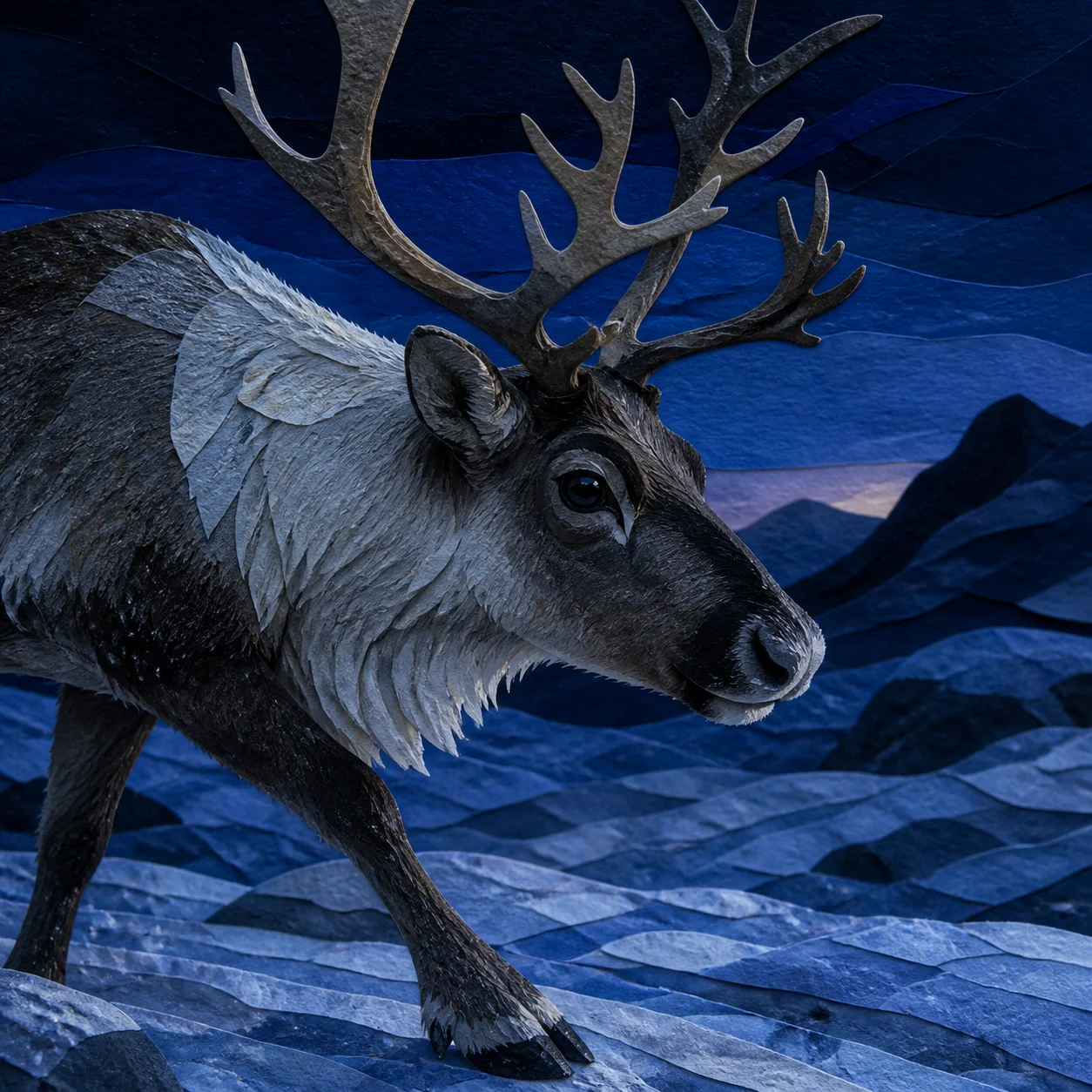
The seasonal transformation also fits a larger reindeer visual system adapted to the Arctic. Their eyes must operate across an annual range far wider than the indoor-to-outdoor changes a human experiences in a day. The tapetum provides an adjustable layer behind the photoreceptors, changing the optical environment without requiring a new retina each winter. When summer returns, the tissue shifts back toward its brighter gold or turquoise appearance.
Calling the process an eye-color change is accurate in the most startling sense and misleading in the familiar one. The visible iris is not changing for decoration. A hidden reflector is reorganizing at microscopic scale. What looks like a dramatic blue makeover is the outward sign of a functional trade: redirect light differently when the Arctic gives you less of it.
The beauty of the system lies in its refusal to separate anatomy from season. Winter is not only outside the reindeer, in the snow and polar night. It reaches into the spacing of collagen behind the retina. The animal's eye carries its own seasonal landscape: gold in abundance, blue when every photon counts.