




 Share








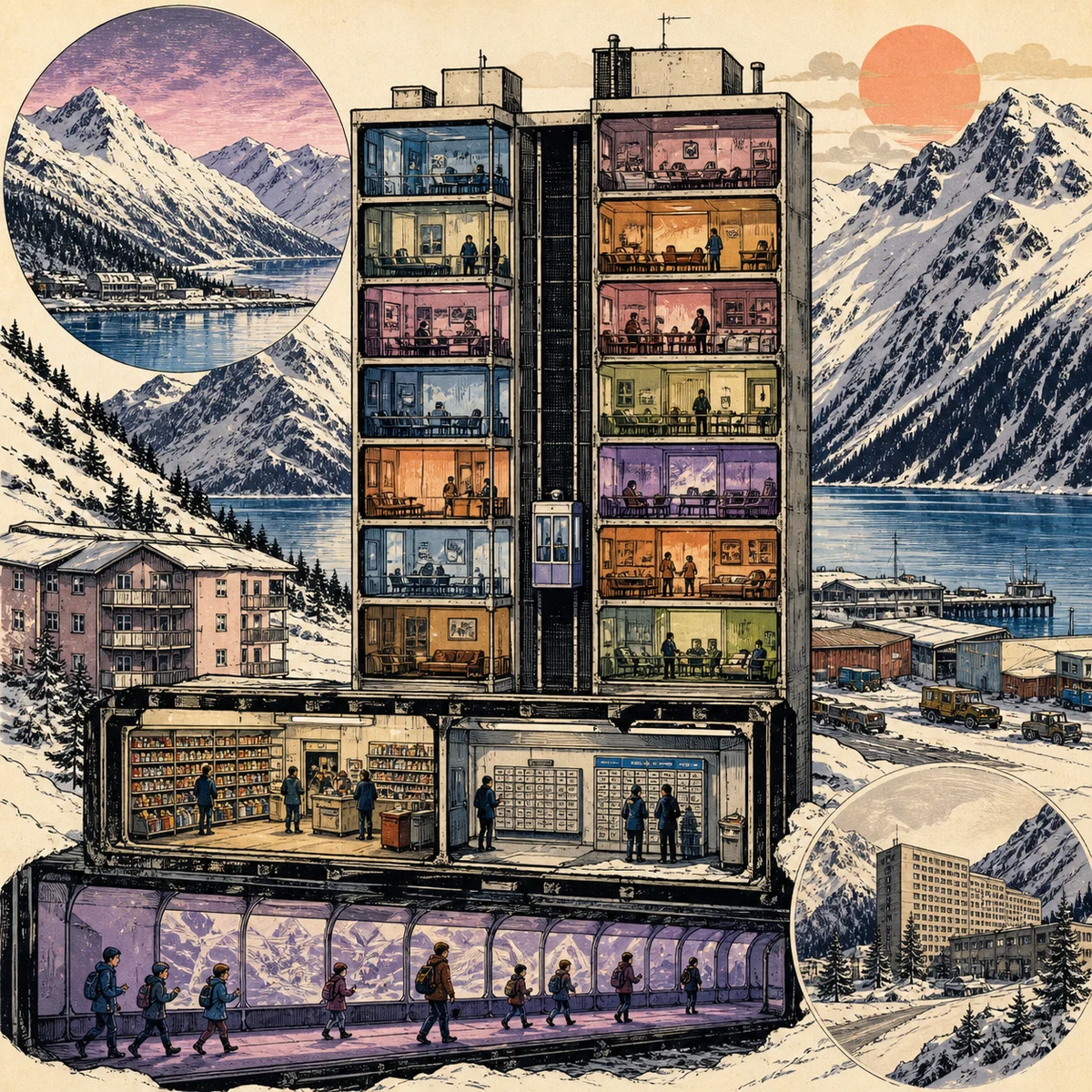
Whittier, Alaska, occupies a narrow strip between Prince William Sound, steep mountains, and weather that can make a short outdoor errand feel ambitious. Its unusual housing pattern began with military construction during the mid-20th century and continued because buildable land remained scarce. The result is Begich Towers, a large apartment building that functions as far more than a stack of homes.
The city’s 2020 comprehensive plan listed 197 units in Begich Towers and another 80 in Whittier Manor, plus a small number elsewhere. Not every tower unit is residential: commercial zoning on several floors allows businesses and service providers to operate inside. More recent city planning material describes the building as home to most residents, a general store, and the post office, with a tunnel connecting it to the school. An elevator ride can therefore replace part of a neighborhood commute.
That reality is interesting enough without the internet’s favorite exaggeration. Whittier is not a town where literally everyone lives under one roof. People also live in Whittier Manor and other housing, and the city includes a port, rail facilities, roads, public-safety buildings, and outdoor workplaces. Begich Towers is a striking adaptation to geography, history, and climate: a concentrated community whose front door opens onto many of the services another town would distribute across blocks.
Sources