Share
Share







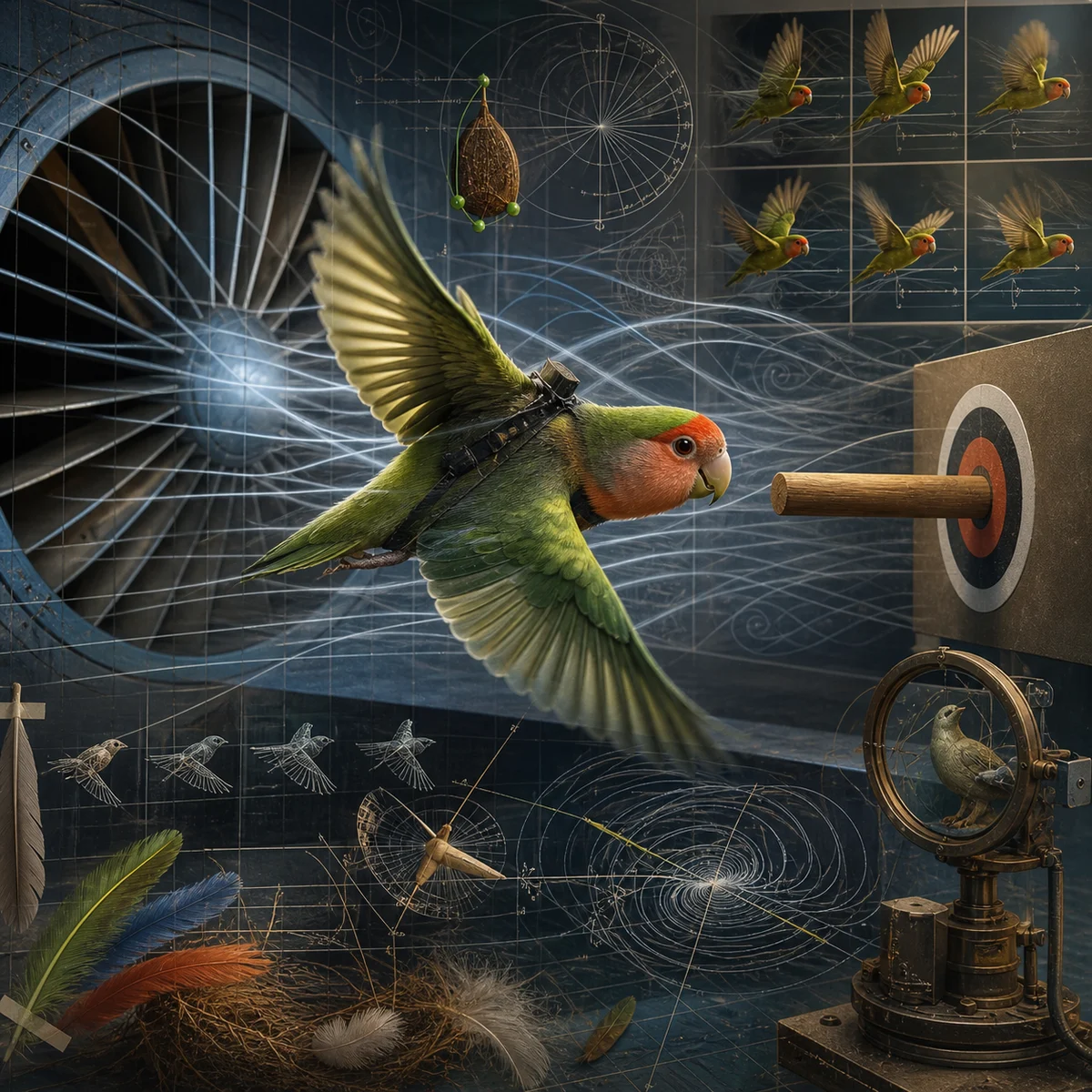
In a wind tunnel, trained lovebirds flew short routes toward a visual goal while air crossed their path at 45 degrees. The birds kept their gaze directed toward the destination, but their bodies yawed into the wind. Head and body therefore solved different parts of the task: the head stabilized visual aim while the body adopted an angled aerodynamic posture.
Researchers paired flight measurements with a computer model. The model indicated that forces on the flapping wings could passively turn the body into the crosswind, much as airflow aligns a weathervane. That interpretation reduces the amount of moment-by-moment active correction the bird would need. Passive stability and active control can cooperate: mechanics orient the body while the nervous system maintains a goal-directed gaze and flight path.
The weathervane claim is a model-supported explanation for trained lovebirds in short experimental flights, not a universal rule for every bird, gust, or maneuver. Real outdoor winds vary in speed and direction, and species use different wings and strategies. The measured result remains crisp. In a controlled crosswind, the lovebird's head pointed where it intended to go while its body allowed aerodynamics to point partly where the air came from.
Sources