Share
Share







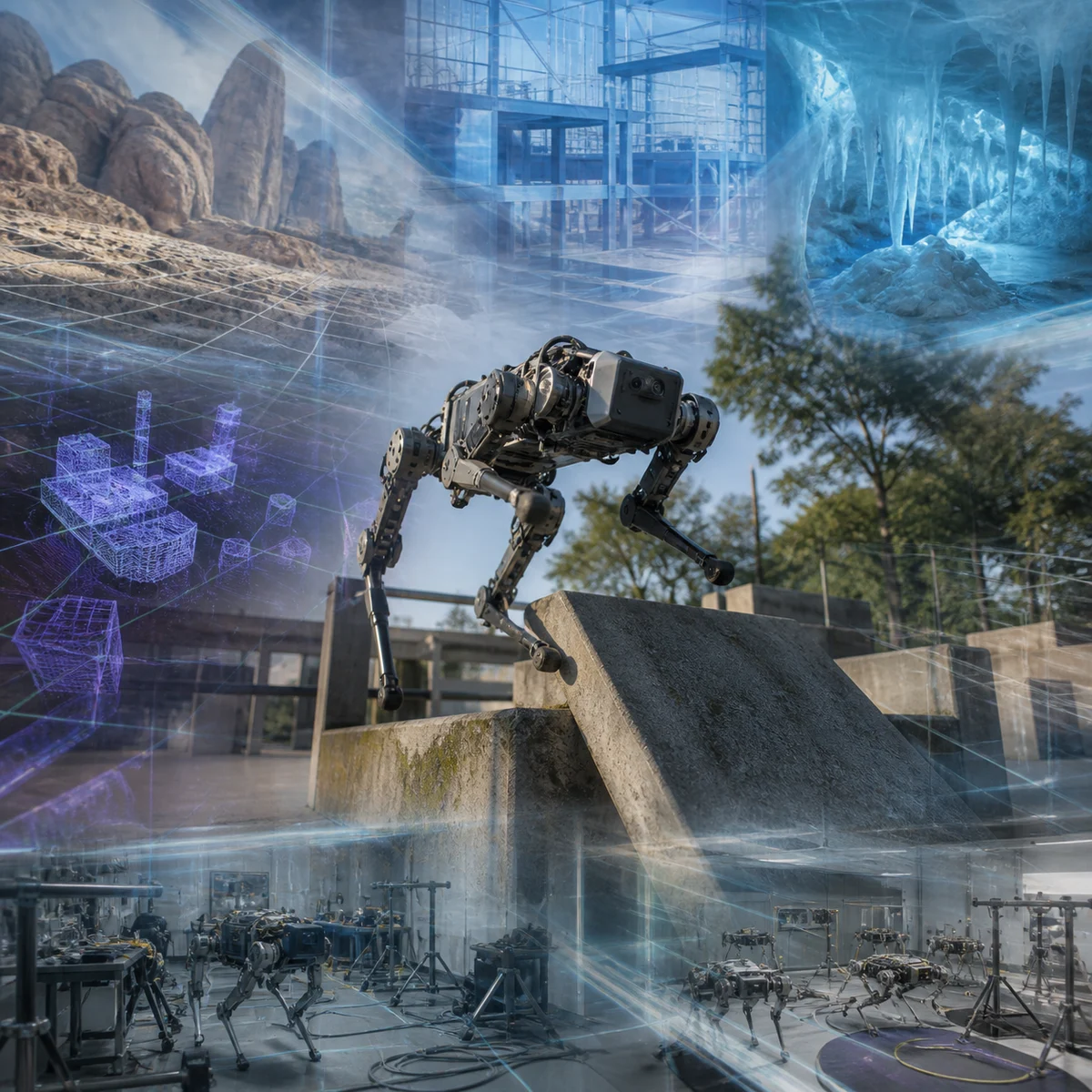
Training a robot to cross obstacles usually requires images of the world it will encounter. MIT's LucidSim instead created synthetic visual scenes and paired them with physics simulation. The generated images supplied varied appearances; the simulator supplied information about what the quadruped could physically do.
A policy trained in that artificial environment was transferred to a real four-legged robot. The machine navigated an obstacle course without first collecting a matching library of real-world training images. Diversity in the synthetic scenes helped prevent the robot from memorizing one exact look for a step, barrier, or surface. It had to connect visual patterns with actions that worked under simulated physics, then carry that connection into the lab.
“Machine dreams” is a metaphor, not a claim that the robot imagined while asleep. The result belongs to the demonstrated robot and tasks, not every terrain a quadruped might meet. Still, the route from invented image to real movement is striking. The robot practiced in worlds that were visually generated, then placed its feet in this one.
Sources