Share
Share







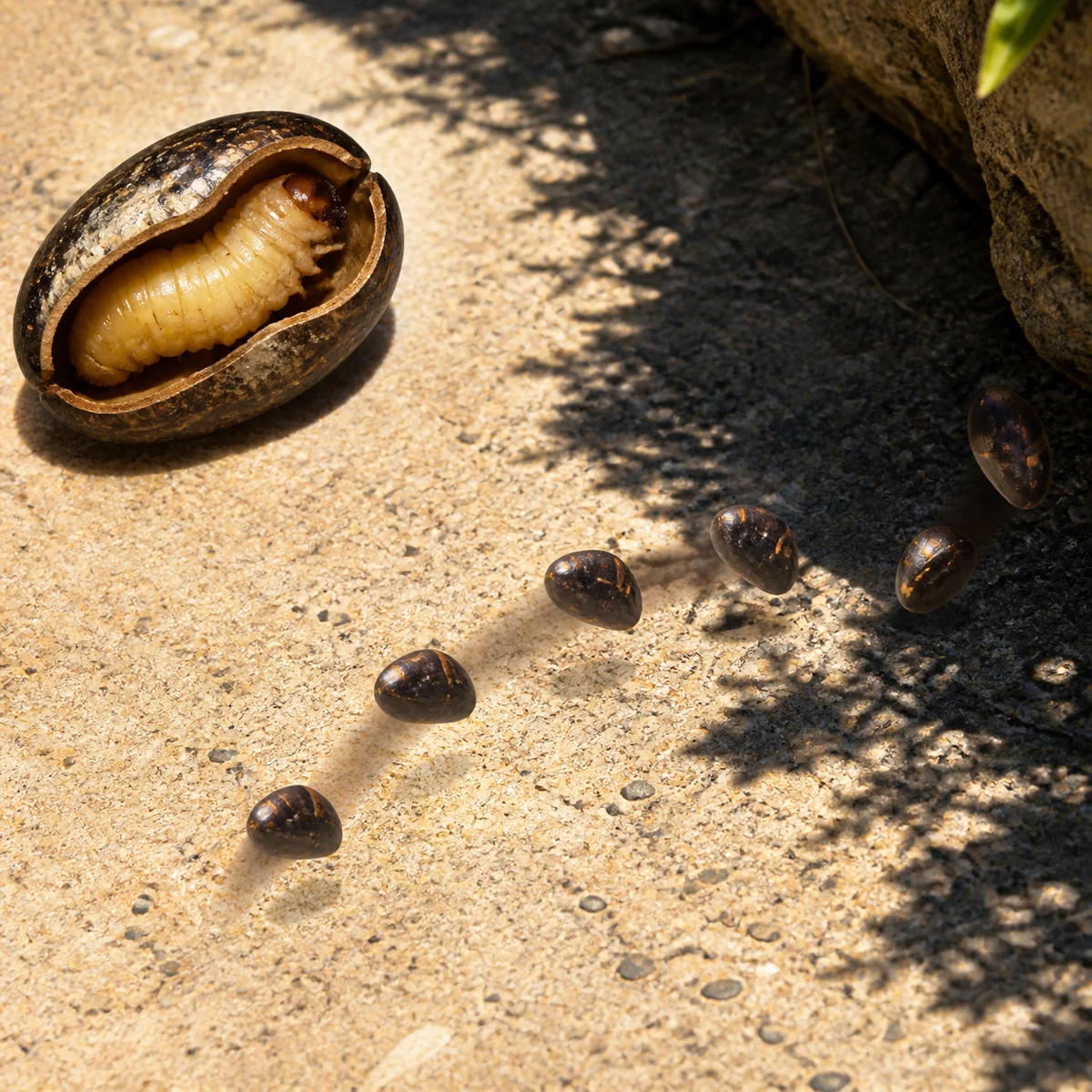
A Mexican jumping bean moves because it is occupied. Inside the hollow seed case, a moth larva pulls against the inner wall. Each contraction shifts the shell, producing hops, rolls, and abrupt changes of direction. The tiny animal cannot see the route outside, but experiments show that its movement responds to environmental conditions.
When researchers changed heat and light, larvae altered the timing and pattern of their contractions. Those changes helped the seed cases move away from conditions that could become unfavorable, especially excessive warmth and exposure. What looks like random jitter can therefore produce a useful outcome without requiring the animal to know an external map.
The experiments demonstrate stimulus-dependent behavior, not conscious planning by a larva steering with a private wheel. Its options are constrained: contract, pause, and change the mechanical relationship between body and shell. Yet repeated local responses can shift the entire shelter toward safety. The bean jumps because something inside is solving heat one tug at a time.
Sources