




 Share








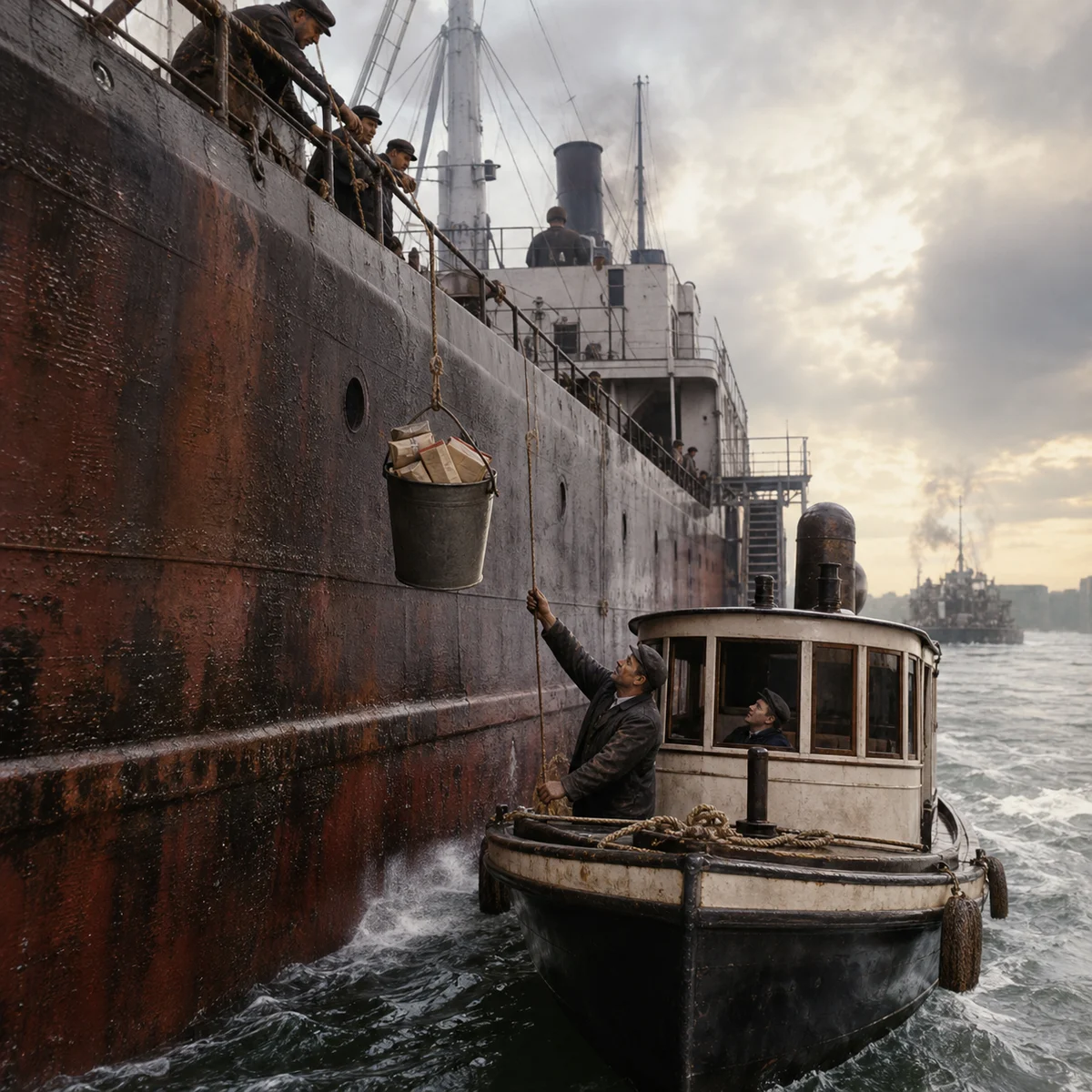
A mail carrier on the Detroit River needs a helm. The 45-foot J.W. Westcott runs alongside passing freighters and transfers letters and packages without requiring the larger ship to stop. Crew members above lower a rope attached to a steel pail, the mail boat loads it, and the container rises to the recipient's deck.
The company behind the service began moving messages and supplies between shore and vessels in the nineteenth century, when river traffic created communities of workers who could not simply visit a neighborhood post office. The Westcott later became an official mail boat for the U.S. Postal Service, folding that old ship-to-shore solution into the national network.
Its routing detail is wonderfully concrete: 48222 is documented as the first non-military floating ZIP Code. A sender can address mail to a person aboard a named vessel, and the postal system directs it toward a boat capable of finding another boat. The delivery point moves, but the address remains useful.
Calling it the world's only floating post office would overreach across many kinds of postal history. The narrower facts carry more texture. The Westcott serves active freighters, works mid-river, and uses a rope-and-pail transfer developed for maritime conditions. Ordinary mail survives a change of geometry: curb becomes current, porch becomes deck, and the final handoff swings through open air above the water.
Sources