Share
Share







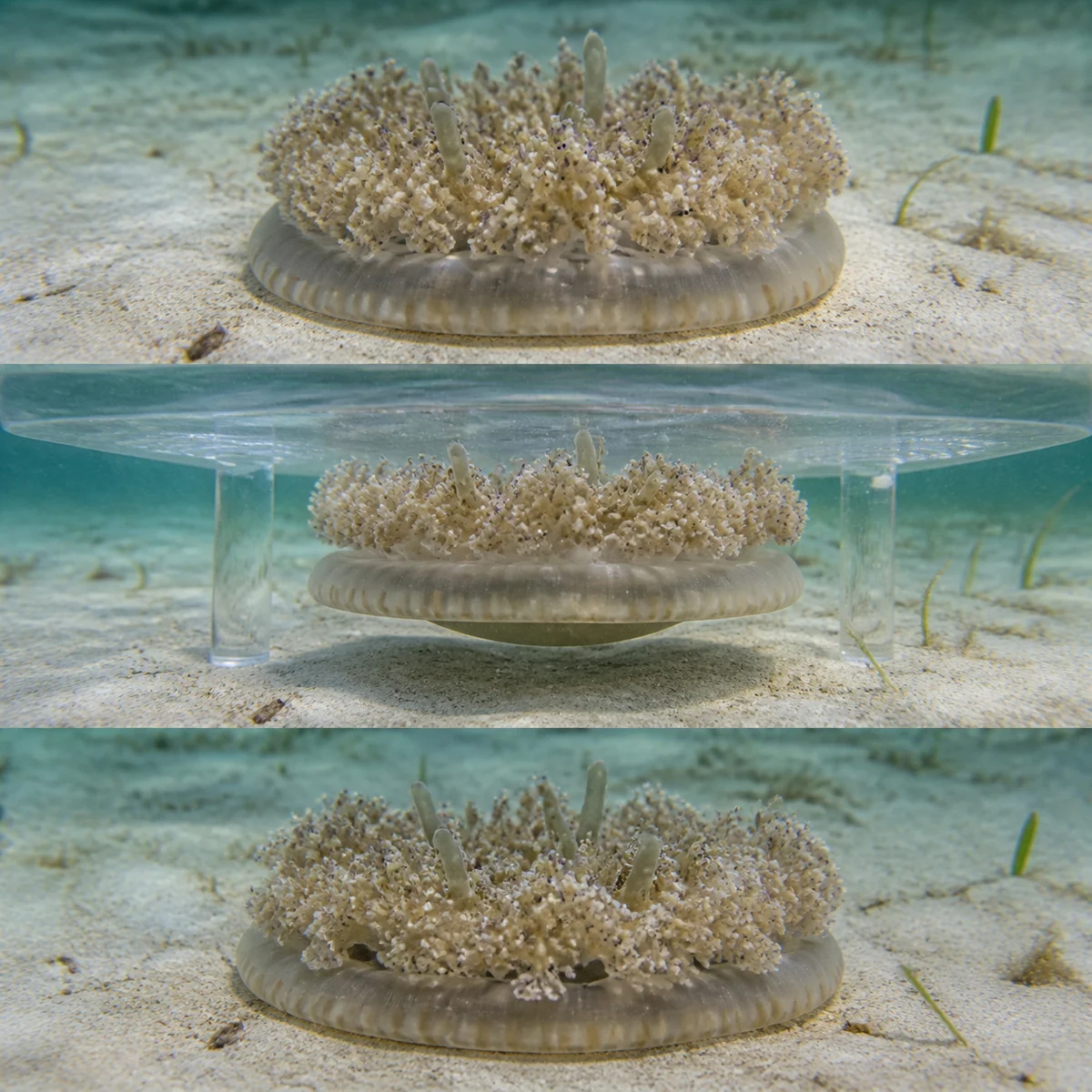
Cassiopea jellyfish spend much of their time resting upside down, pulsing on the seafloor. Researchers asked whether slower nighttime pulsing was merely inactivity or a sleep-like state. The animals met three behavioral criteria used across species: their activity dropped, they responded more slowly to disturbance, and they later showed rebound after researchers deprived them of rest.
The response test separated sleep from simple stillness. When displaced from their resting position, inactive jellyfish took longer to resume normal behavior, showing reduced responsiveness rather than paralysis. When repeatedly disturbed, they compensated afterward with greater sleep-like inactivity. A decentralized nerve net, not a vertebrate brain, was enough to organize those changes.
That does not mean jellyfish experience human sleep stages, dreams, or the electrical architecture measured in a mammalian brain. The study identified a state that satisfies behavioral hallmarks of sleep. Its importance lies in how far back it pushes the question. If an animal with no centralized brain regulates rest, reduced responsiveness, and rebound, then some core functions of sleep may have evolved before brains became concentrated into the organ we usually imagine closing down for the night.