Share
Share







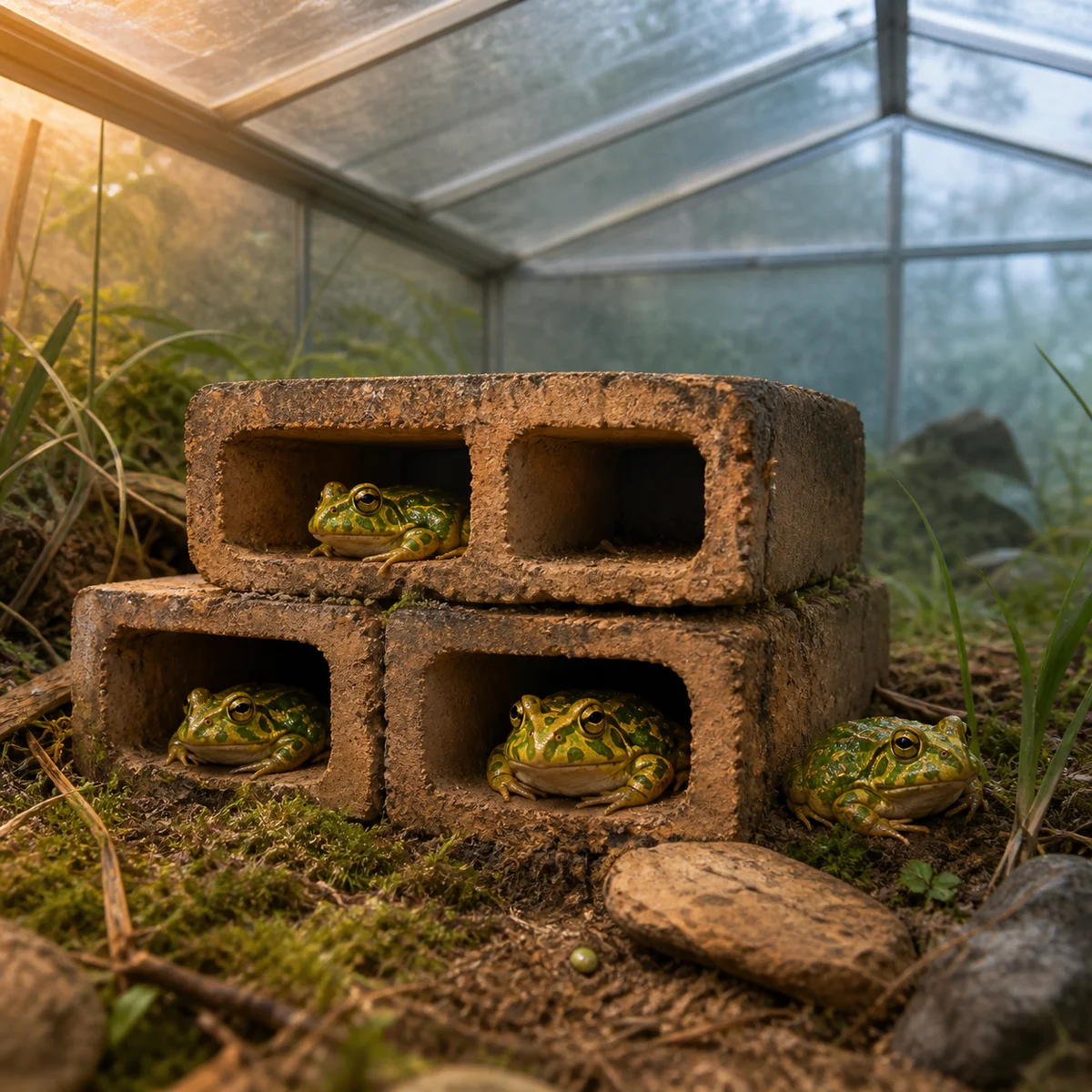
Chytrid fungus has devastated amphibian populations, but for green and golden bell frogs, the useful treatment room can look like a small pile of masonry. Researchers built simple shelters from common bricks, added greenhouse-like warmth, and let sunlight turn the cavities into hot refuges. The endangered frogs entered voluntarily.
That extra heat mattered because the fungus tolerates a narrower temperature range than its host. Frogs using the warm shelters raised their body temperatures enough to clear infections. When recovered animals later encountered the pathogen again, they showed greater resistance, suggesting that heat exposure did more than offer a brief escape. The shelters also provided the sort of tight hiding places frogs already seek, translating a laboratory insight into a cheap, passive structure for semi-natural settings.
The result is promising, not universal. The experiments focused on green and golden bell frogs under controlled and semi-natural conditions. Amphibian species differ in their heat tolerance, behavior, habitat, and response to chytrid, so brick saunas cannot be declared a cure for every infected frog. Their appeal is more specific: for a vulnerable species willing and able to use them, a warm hiding place can tilt a deadly biological mismatch decisively in the frog's favor.