Share
Share







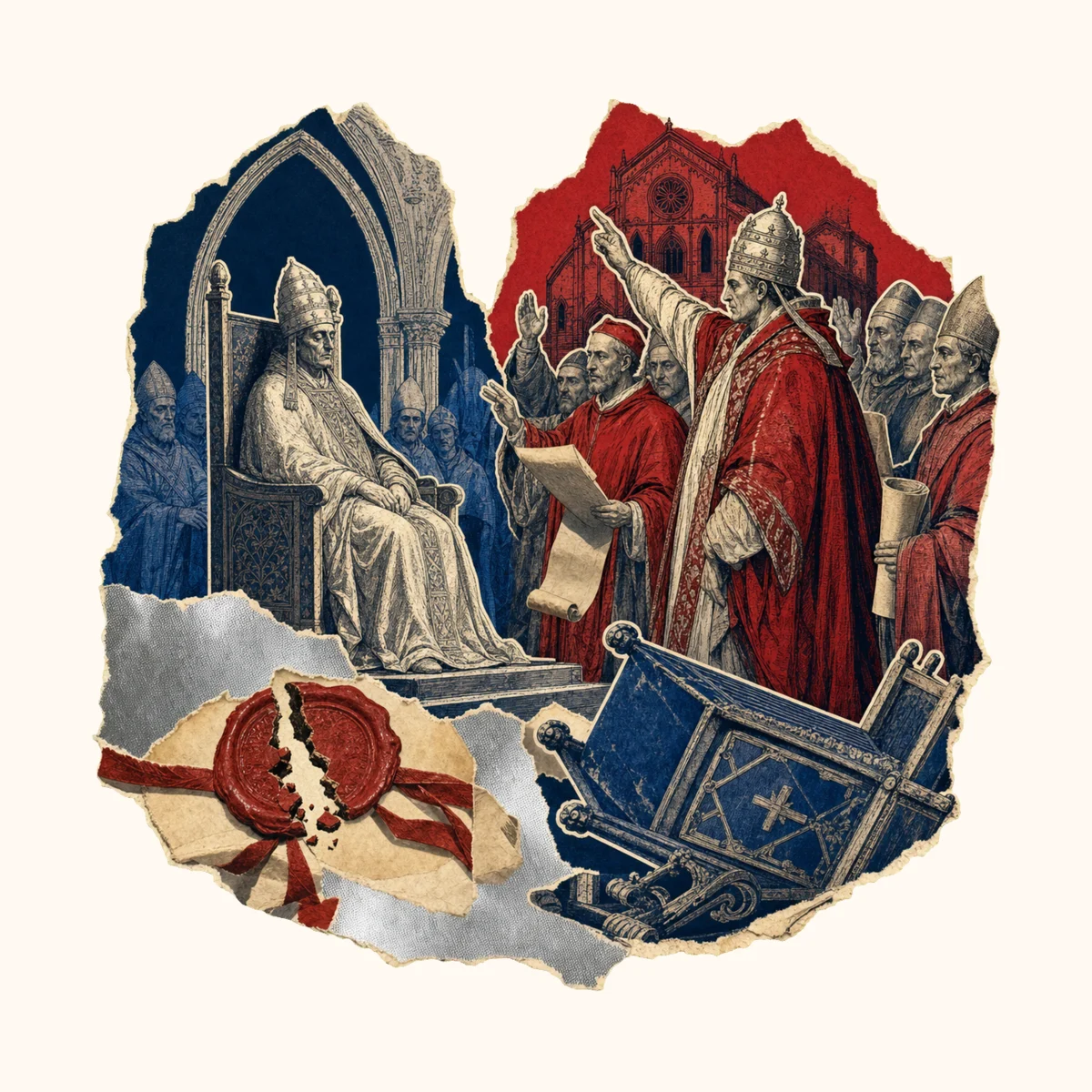
In the year 897, the halls of the Basilica of St. John Lateran in Rome witnessed a spectacle that even the most imaginative minds of the Middle Ages could not have conjured. Pope Stephen VI, driven by a vendetta that defied the boundaries of life and death, had the corpse of his predecessor, Pope Formosus, exhumed for a posthumous trial. Yes, a trial.
Formosus, who had passed away nine months prior, was dressed in papal vestments and propped on a throne to face charges of perjury and unlawfully ascending to the papacy. A deacon was appointed to speak for the deceased pontiff, as Stephen VI hurled accusations with fervor. The tribunal declared Formosus guilty, a verdict that led to the symbolic mutilation of the corpse—its right hand's blessing fingers were severed, and all of Formosus's acts as pope were annulled.
The bizarre proceedings, known as the Cadaver Synod, were not just a macabre display but a reflection of the intense political rivalries of the time. The factions of Guy of Spoleto clashed with those of Germanic influence, and the papal throne was a prize worth any grotesque spectacle.
The aftermath was swift and brutal. Public outrage boiled over, and Stephen VI was deposed and later met his end in the confines of a prison cell. Subsequent popes would annul the synod's verdicts, restoring Formosus's honor and returning his body to a proper resting place.
The Cadaver Synod remains a chilling reminder of the lengths to which power struggles can drive men, even beyond the grave.